
From Zoning to Governance: How Communities Are Managing 200,000 Hectares of Marine Ecosystems
By Lia Syafitri, Aurore Maxey, and Tess de Jongh
In a monumental case, the zonation of the Karimata Marine Nature Reserve opened 83% of the area for community access and co-management, allowing space for settlements, cultural activities, and small-scale fishing. The ten-year management plan, now being drafted, turns that zonation map into concrete action plans on how the reserve will be managed, building on conservation work that communities have led since 2021.
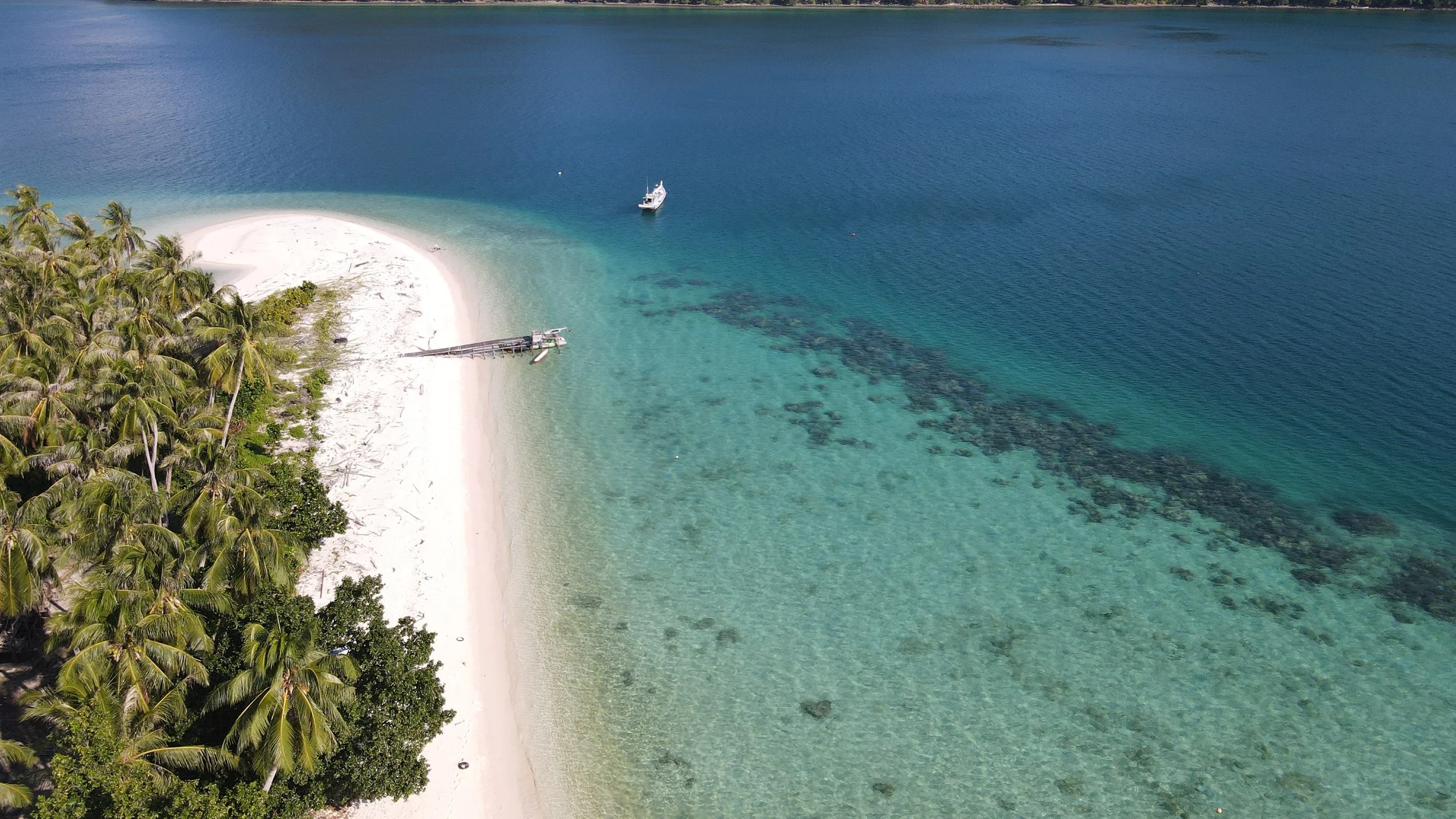
Karimata covers 190,714 hectares, most of it water, roughly 120 kilometres off the coast of West Kalimantan.
To address the challenge of conflicts and illegal activities in the area caused by the exclusion of communities in any management or decision-making, Karimata's rezoning drew new lines on the map. The collaborative process, with government and community stakeholders, established the core areas and their different functions within the reserve, including access areas for local fishers and designated strict core protection zones.
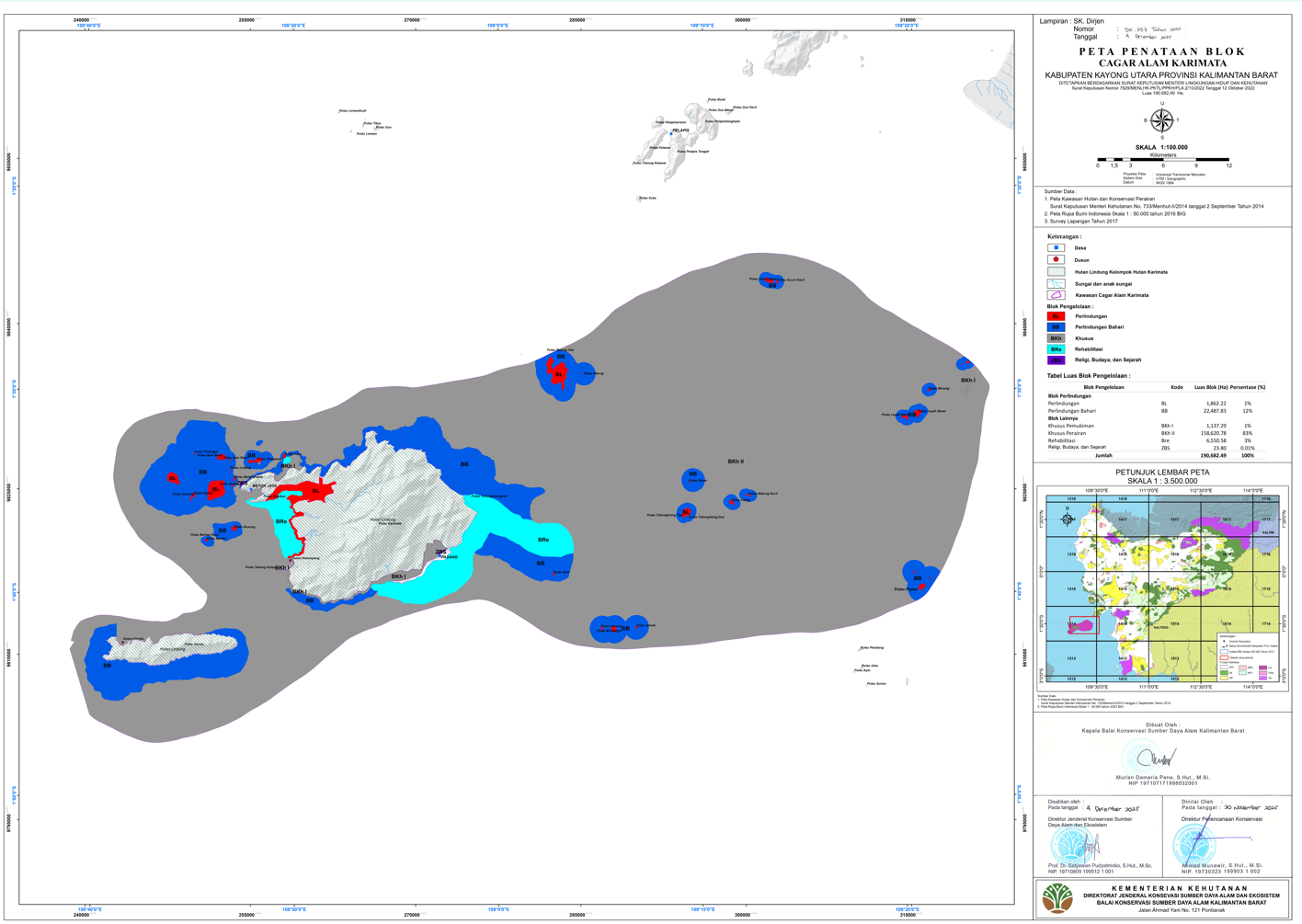
Fig. 1: Map of the Karimata Marine Nature Reserve after the ratification of the new zoning, opening up 83% of the reserve for community co-management
However, zoning is only one part of the process. After the successful rezoning in December 2025, practical questions remained about how each area is managed: what activities are allowed? Who is involved in monitoring? How are decisions made when conditions change? And what happens when rules are broken?
Those questions are what the ten-year management plan (the Rencana Pengelolaan Jangka Panjang, or RPJP) sets out to answer. In July 2026, communities from across the Karimata Islands sat down in a public consultation with the West Kalimantan Natural Resources Conservation Agency (BKSDA Kalbar) and Yayasan Planet Indonesia (YPI) to work through the draft management plan. They pressed on access to natural resources, on legal certainty for households that depend on the reserve, and on whether the plan would connect to village development and access to basic services.
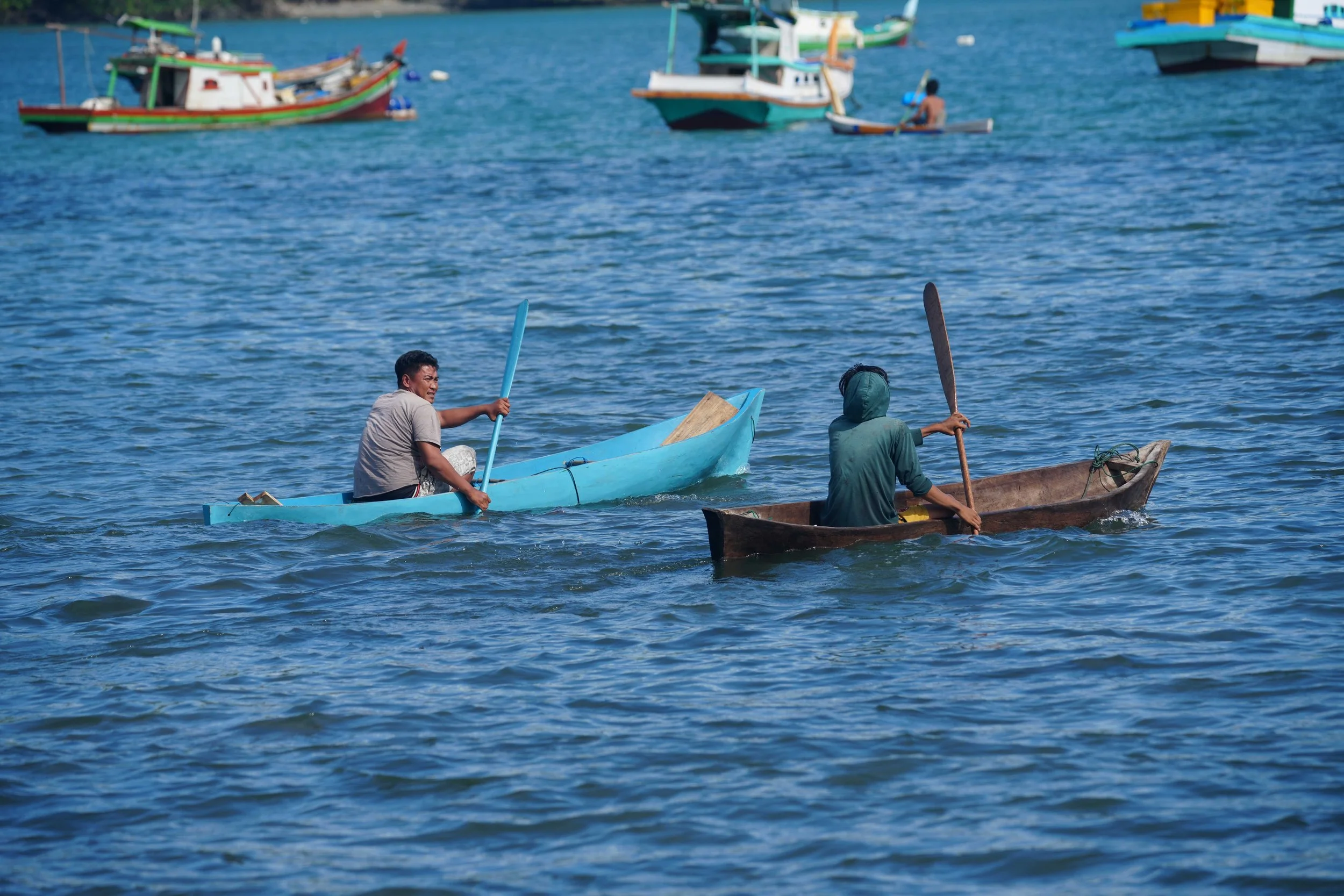
Around 2,500 people live across the Karimata Islands. The December 2025 rezoning brought settlements, cultural activity, and small-scale fishing inside recognised special blocks covering 83% of the reserve
About Karimata
Karimata is a group of islands 120 kilometers off the coast of West Kalimantan, in North Kayong regency. The marine nature reserve, spanning 190,714 hectares, is mostly water, encapsulating a chain of small islands where 2,500 residents live. Betok Jaya and Padang, villages within the reserve, are home to fishing families who have lived off small-scale fishing and farming for generations, longer than the reserve has existed.
Designated as a marine nature reserve in 1985, under Indonesian law, permanent settlement was not permitted, leaving families there in a legal limbo. Sudden restrictions on where they could fish or hold religious and cultural events pushed them further to the margins and reduced their access to health care and education.
From zoning to governance
Durable conservation involves more than setting aside areas for protection. It includes decision-making on how those areas are managed and the role of the people living in and around them — the area’s governance.
The rezoning of Karimata Marine Nature Reserve was ratified by the Ministry of Environment and Forestry on 12 December 2025. It established so-called special blocks: areas within the reserve that allow for limited to full access by local communities, now covering 83% of the reserve, compared to 3% before the rezoning. These special blocks accommodate long-standing settlements, religious and cultural activity, traditional small-scale fishing, and daily economic life. Each block requires its own set of rules to respond to different use types, its socio-ecological characteristics, and external pressures. These rules are compiled in the reserve’s long-term management plan.
(Read the earlier article on rezoning Karimata: Back to the drawing board: Rezoning a Marine Protected Area.)
“The plan is a highly strategic step, not just an administrative obligation, but a master document that sets the direction for management over the next ten years. That covers everything from protecting the area and conserving biodiversity to research and strengthening conservation partnerships, in line with the reserve’s core functions.”
The data informing the plan
The plan does not draw on abstract ideas. It draws on real-time data, collected in collaboration with communities in Karimata over the past years.
Since 2021, community groups from both Betok Jaya and Padang village within the reserve have worked alongside BKSDA Kalbar and YPI to strengthen community governance, livelihood development, and official participation in reserve management. Today, SMART Patrol teams monitor biodiversity and report human activity, fisheries enumerators record catches, and turtle monitors protect nesting sites. The data they have collected informs the assessment of the reserve's condition that underpins the plan, meaning the people who live in Karimata are not only subjects of the document but also contributors to the evidence behind it.
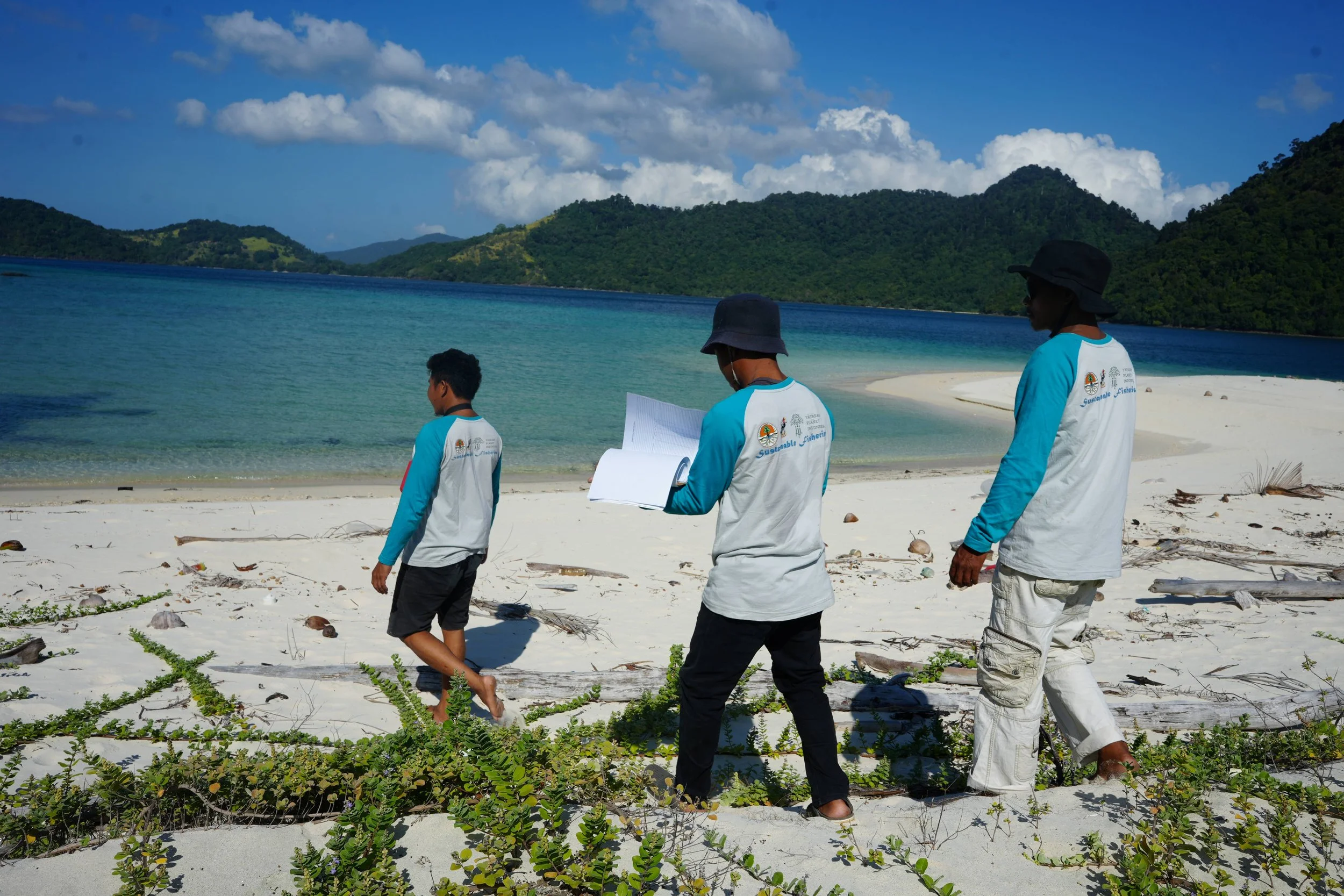
SMART Patrol teams from Betok Jaya and Padang have recorded human activity across the reserve since 2021.
The reef’s condition is improving. In addition to community-collected data, reef surveys show that Karimata still supports high marine biodiversity, with more fish families, genera, and species recorded than in the 2022 baseline. It also found the composition of the fish community shifting, with predatory species down sharply and herbivores up. Having this type of ecosystem data and knowledge of human use of the area informs management plans, and continued monitoring allows for adaptive management strategies, ensuring the most vulnerable parts get protected.
For fishing families in Betok Jaya and Padang, the health of the reef is closely tied to everyday life. These waters support local fisheries and marine transport, and are also part of the culture and livelihoods of the communities who depend on them. Rather than species counts, they care about whether the reserve will continue to support their day-to-day life.
Existing participatory management practices and monitoring measures are why the RPJP, is not starting from scratch. With the RPJP covering 2027 to 2036, it draws on work already running to shape strategies for area protection, community monitoring, and institutional strengthening.
What the plan commits to
Drafting the RPJP began by identifying the reserve’s Key Conservation Values (Nilai Penting Kawasan): its coral reefs, mangroves, seagrass, and turtle nesting habitat. The team then looked at the current condition of each, what would need to be done over the next ten years, and how progress would be monitored. These ecosystems are not treated separately in the plan. Coral reefs and seagrass are connected to the mangroves and, further inland, to the beaches where turtles lay their nests.
The ten-year targets
- Coral cover maintained between 50 and 70 percent
- 442 hectares of seagrass maintained
- 964 hectares of mangrove kept intact
- Four main turtle nesting sites protected
Ten management strategies
Source: 10 Strategi Pengelolaan CA Karimata, BKSDA Kalimantan Barat
Who decides what
The plan sets out 10 strategies for holding that system together. Five of those ten strategies describe ecological work. The other five describe who does it and under what authority. That is where the arrangement gets more complicated.
Much of the community involvement described in the plan already runs through the community governance body (CGB) in Karimata. Through it, communities draft shared agreements, coordinate natural resource management, run conservation activities, and deal directly with the government authority, BKSDA.
More on how that governance body works: Redefining Conservation in Karimata: A Model for Community-Led Marine Governance.
Under the plan, communities have a role in management, but they do not have formal authority over the reserve. They take part in discussions, contribute to the plan, and coordinate on-the-ground work through the CGB structure. BKSDA, however, remains responsible for decisions about how the reserve is managed.
In response to the limitations that the designation of Karimata as a marine nature reserve provides for community co-management, Yayasan Planet Indonesia has been working with BKSDA Kalbar and the district government toward a formal Conservation Partnership in Karimata. Such a partnership allows for communities to be recognized under Indonesian law as recognised partners in managing a protected area. We have been working since 2022 to get to where we are today, and the rezoning has been a big milestone in this effort.
"Conservation won't succeed if communities are only recipients of policy," said Novia Sagita, CEO of Yayasan Planet Indonesia. "We see conservation as stronger when communities are involved as part of management, with room to participate in implementation. This matters, so that the policies developed aren't just sound on paper, but can actually be applied to conditions and lives of the people in Karimata."
What came out of the public consultation
In July, communities, government, academics, and partners reviewed management priorities together, discussed challenges, and crucially tested whether the document matched conditions on the ground.
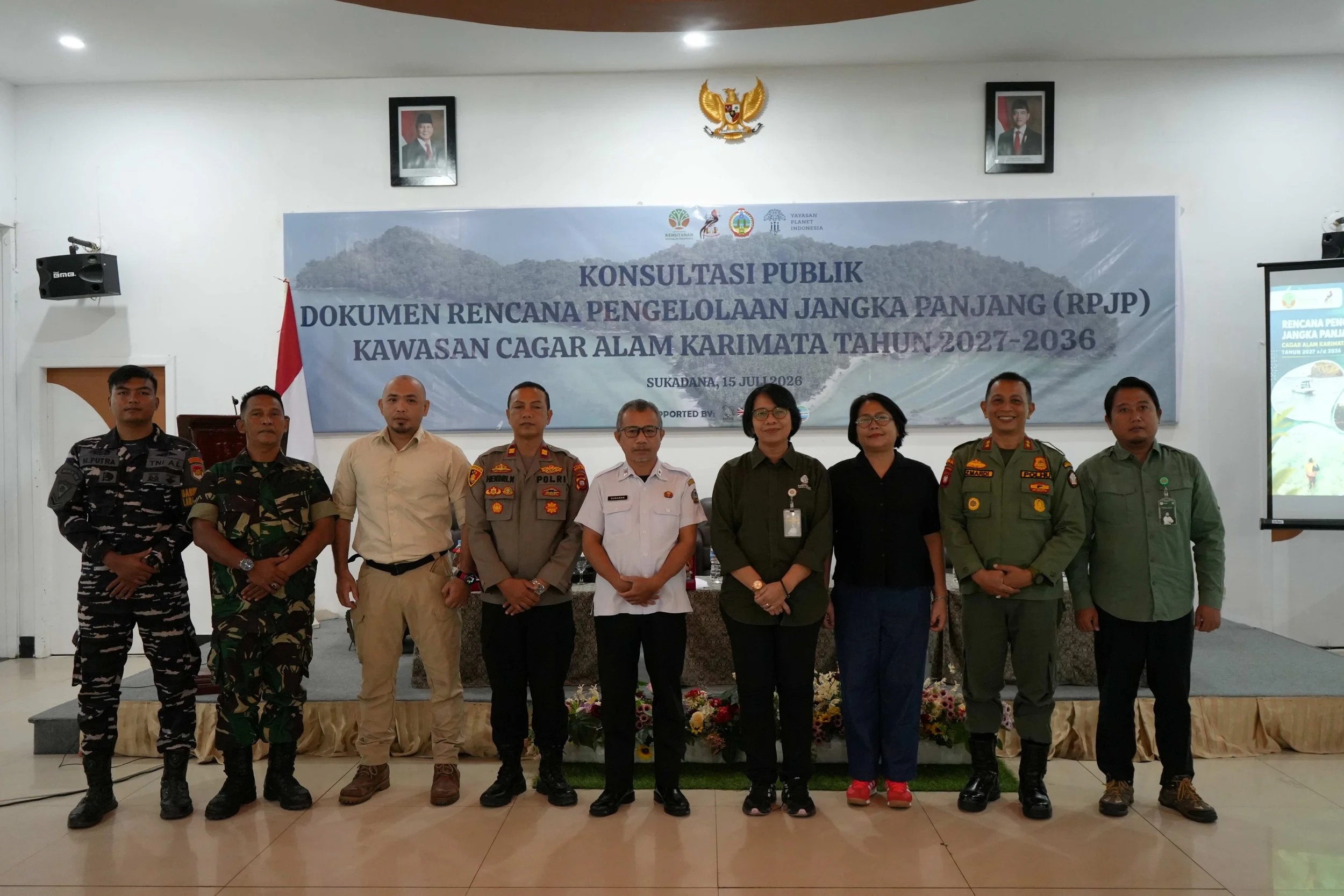
Public consultation on the draft RPJP. Sukadana, 15 July 2026.
The village heads who spoke had already taken part in the consultation on the rezoning, and both are regularly involved in CGB activities in their villages. Their input in Sukadana came after hearing the presentations from BKSDA Kalbar and the North Kayong district government. Positions were formed in the room, based on what was tabled.
Local government representatives argued the document was too weak on socioeconomic content, pushing for wellbeing indicators and explicit links to infrastructure and basic services. Community representatives spoke from direct experience of living alongside a conservation area, raising access to natural resources, legal certainty for households that depend on the reserve, and opportunities for community-based tourism and cultural development. Further input pointed to management strategies that go beyond biodiversity protection to support sustainable livelihoods, more concrete waste management, and economic alternatives with communities as the main actors.
“We hope the plan becomes a bridge between conservation interests and community needs. With this document, area management can also run in alignment with and be integrated with village development programs, including supporting infrastructure.”
BKSDA Kalbar responded that drafting the plan is an ongoing process of refinement, and that input, including stronger socioeconomic indicators and coordination on basic community needs, will be incorporated into that refinement before the document is ratified.
The next ten years
The consultation is the beginning of a shared commitment to long-term management of Karimata and the conservation of its reefs, mangroves and beaches. Once the document is ratified, the outcome will depend on consistent implementation over ten years through collaboration between BKSDA Kalbar, local government, communities, and partners.
For YPI, the plan's success is measured not only by the indicators but also by whether community institutions grow strong enough to become the main driver of reserve management. The document helps set the direction, but daily collaboration within a conservation partnership will enable truly inclusive and participatory management.
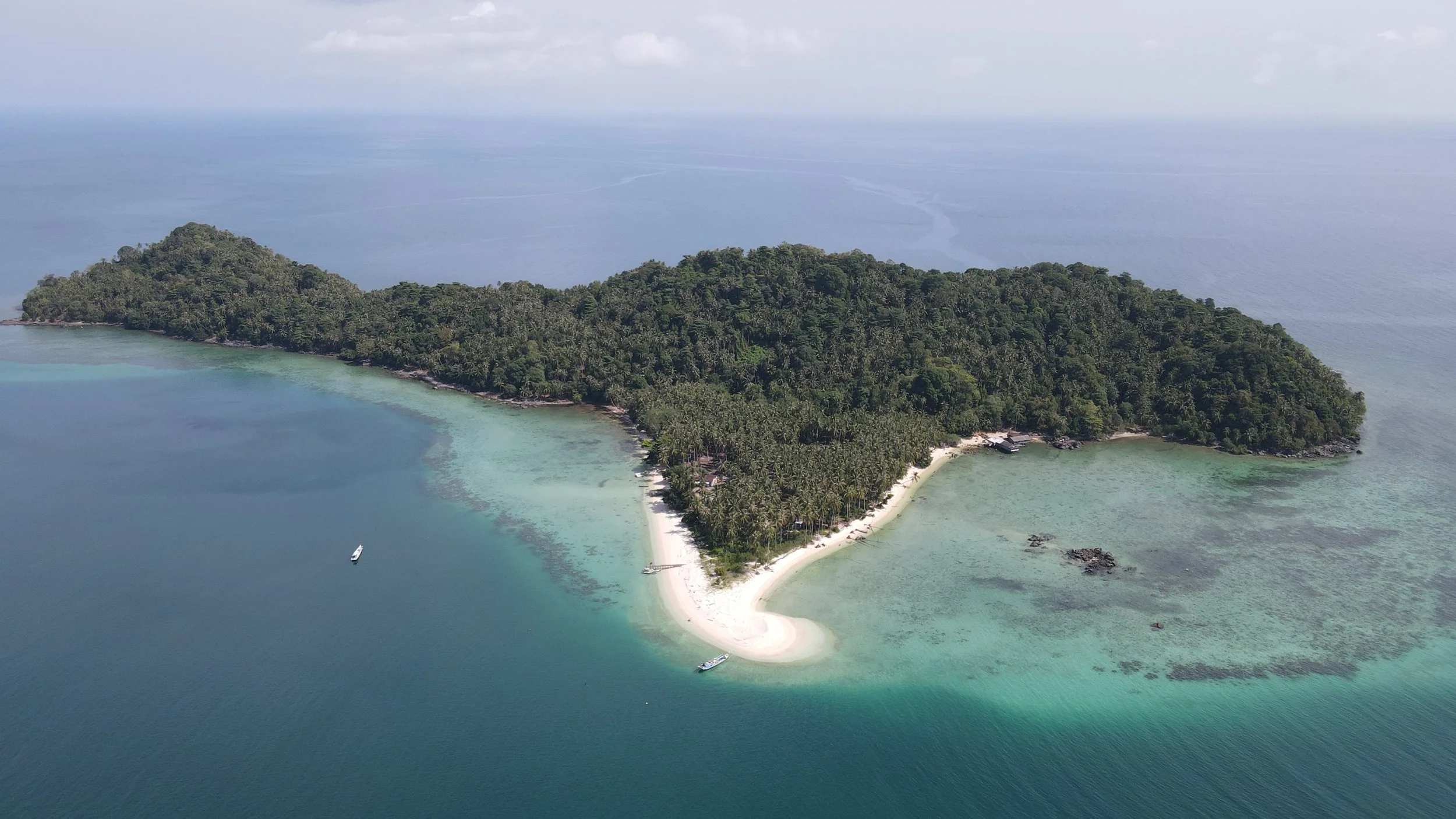
Karimata's islands and reefs, under a shared plan until 2036.
If you have any questions, please reach out via admin@planetindonesia.org. Sign up for our newsletter and follow us on our social media Facebook here, Instagram here, and LinkedIn here to get timely updates on our activities, an insider’s look into the lives of front-line conservationists, and ongoing programs.