Back to the drawing board: Rezoning a Marine Protected Area.
By Hanna Runtu, edited in English by Tess de Jongh
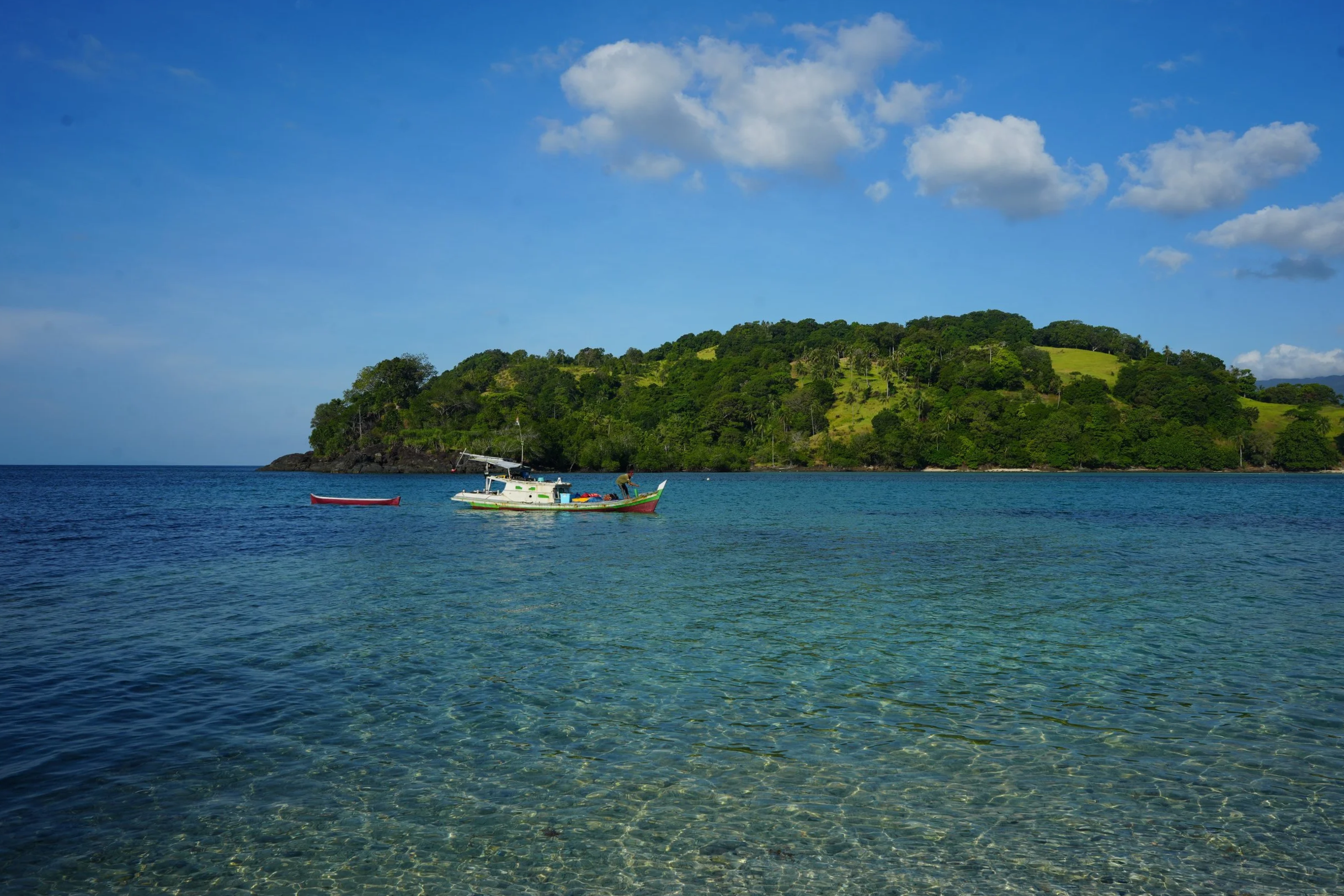
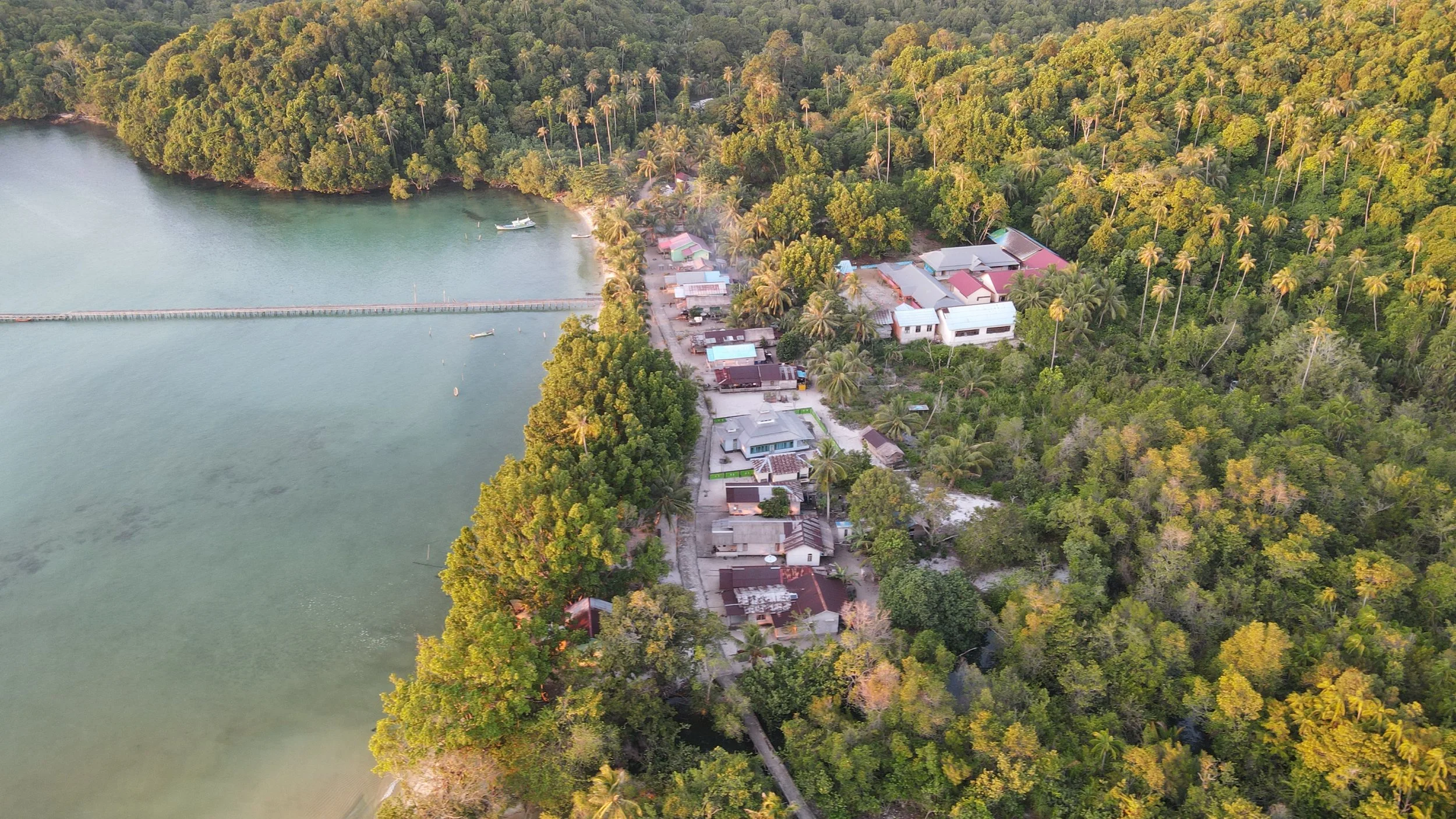
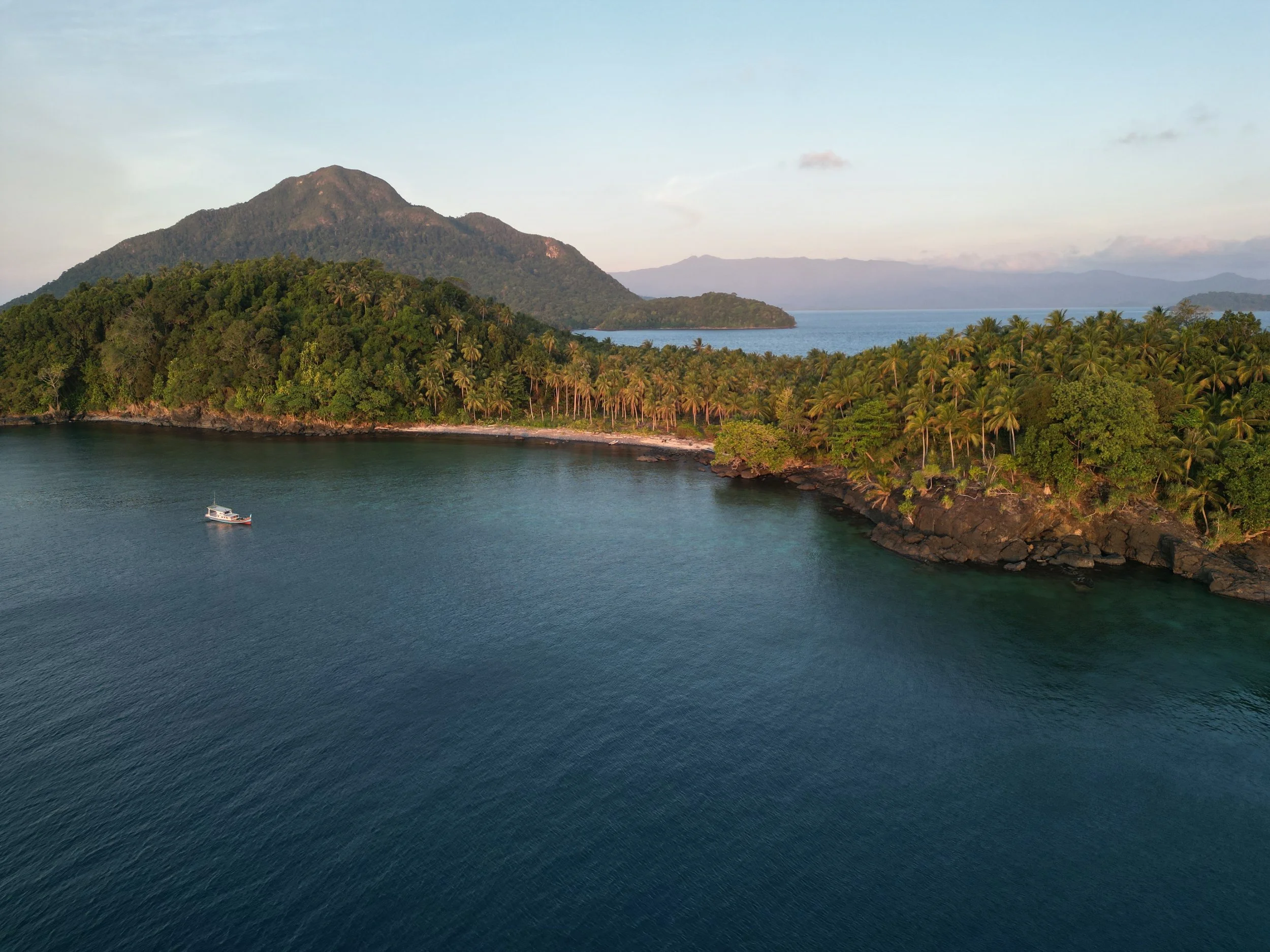
The Karimata Islands, 120 km off West-Kalimantan’s shoreline, are known for their rich biodiversity. Coral reefs backed by lush green hills create an idyllic scene. It is also an area with a rich cultural heritage, where fishing communities have lived off fishing and seafood collection for generations.
In 1985, the area became a Marine Protected Area (MPA) by the Indonesian government, with the aim of conserving the unique wildlife and natural resources of Karimata. However, MPAs that are categorized as nature reserves do not allow for permanent human settlement. This has led to a contradictory situation, as the communities that have lived here for generations found themselves in a legal limbo. This is their response when their reality did not match the new legal requirements.

The island communities in Karimata have long been stewards of the land and sea, sustaining themselves through fishing and small-scale farming. The arrival of the MPA meant they suddenly had legal restrictions on where they could fish or hold religious and cultural events. The ruling also limited the availability of public services such as health care and education.
The exclusion of communities in any management or decision-making caused local conflicts to bubble up. The sense of ownership and responsibility has shifted from those who had been living here for generations, and as people struggled to make ends meet, some were forced to turn to extractive and illegal activities. Overfishing, the use of destructive fishing practices such as bombing, fishing in restricted areas, and the collection of turtle eggs became all too familiar with a lack of law enforcement or clear regulations. These extractive behaviours led to increased pressure on the ecosystem, fish and wildlife populations declined, and a negative spiral ensued, one in which people are excluded from the system.
How MPA zonation can offer a pathway for collaboration
The establishment of Marine Protected Areas presents the challenge of the goal of ecosystem protection, with the balance of sustainable livelihoods for the people who live amongst them. In Karimata, the sea is a multi-purpose space, offering various ecosystem services: wildlife habitat, a cultural space, and a source of food, medicine and income for island communities. To maintain all these services, area zonation - when well informed - can offer a foundation for addressing these conservation challenges.
Zoning provides a practical foundation for fair and adaptive marine management by clearly defining how different parts of the seascape are used and protected. Within an MPA, zones range from core no-take areas to co-managed use zones and residential areas, recognizing both people and biodiversity as part of the ecosystem.
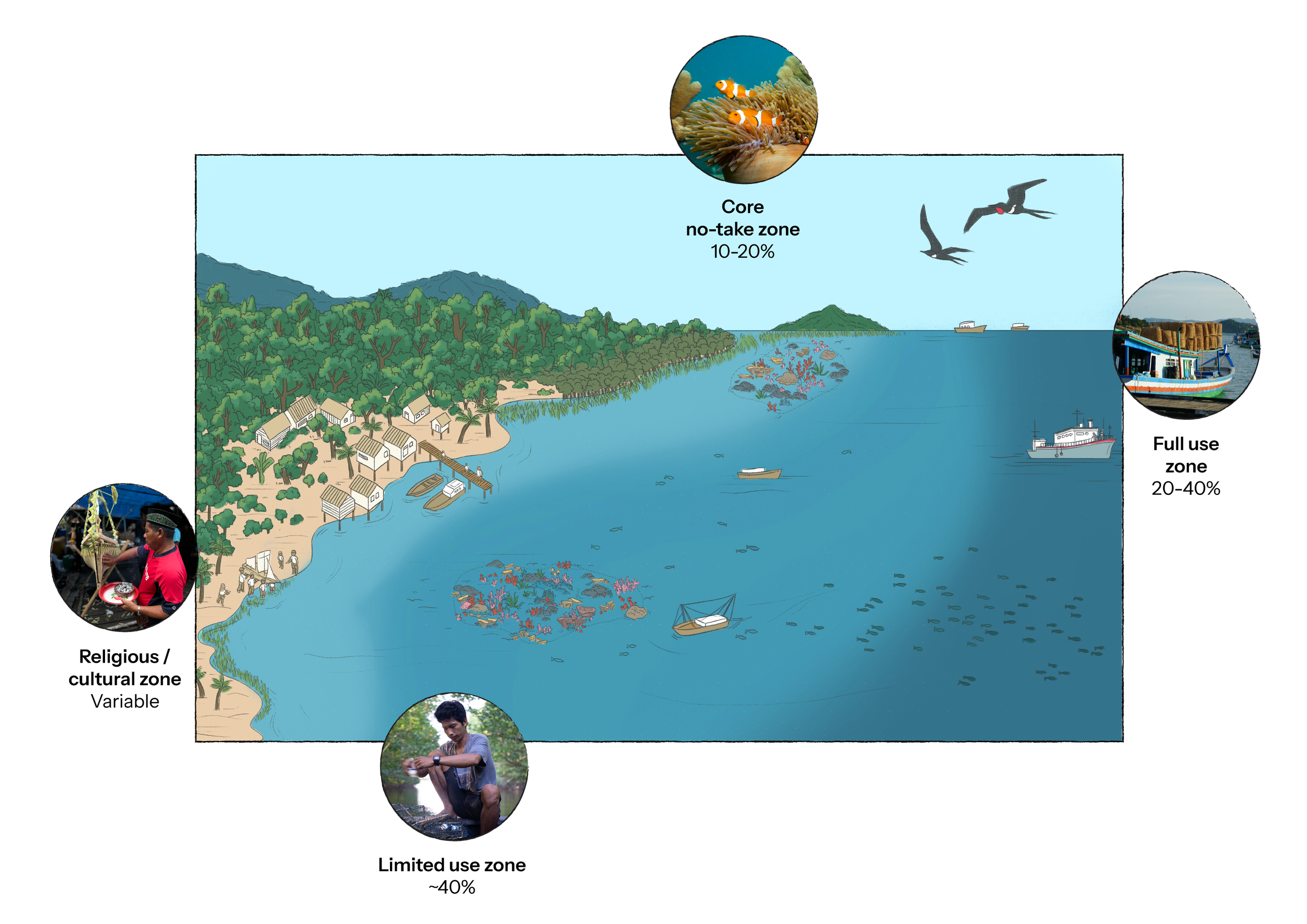
Fog 1. an illustrated example of what rezoning in a marine protected area could look like.
Core no-take zones act as reef refugia and fish banks, supporting stock recovery across the wider seascape. In co-management/ limited use zones, including rehabilitation and special blocks (blok rehab dan blok khusus), communities and authorities can jointly apply adaptive management measures such as periodic closures, gear or boat restrictions, and limits on extraction. Religious and cultural zones safeguard ocean ceremonies and biocultural connections.
From the community perspective, representatives of the Karimata Islands District Government emphasized the importance of recognizing the existence of residents who have long lived in this area:
“Long before the establishment of the Karimata Marine Nature Reserve area in 1985, People have settled and built villages in this area. Therefore, it is important for conservation policies to take their presence into account. The community does not oppose conservation, but hopes that the area's status will also provide space for humans to live and thrive."
"We've lived here for generations. If nature is destroyed, we're the ones who lose out. But if we're involved, we can help protect these seas and forests."
— A resident of Padang Village, Karimata Islands.
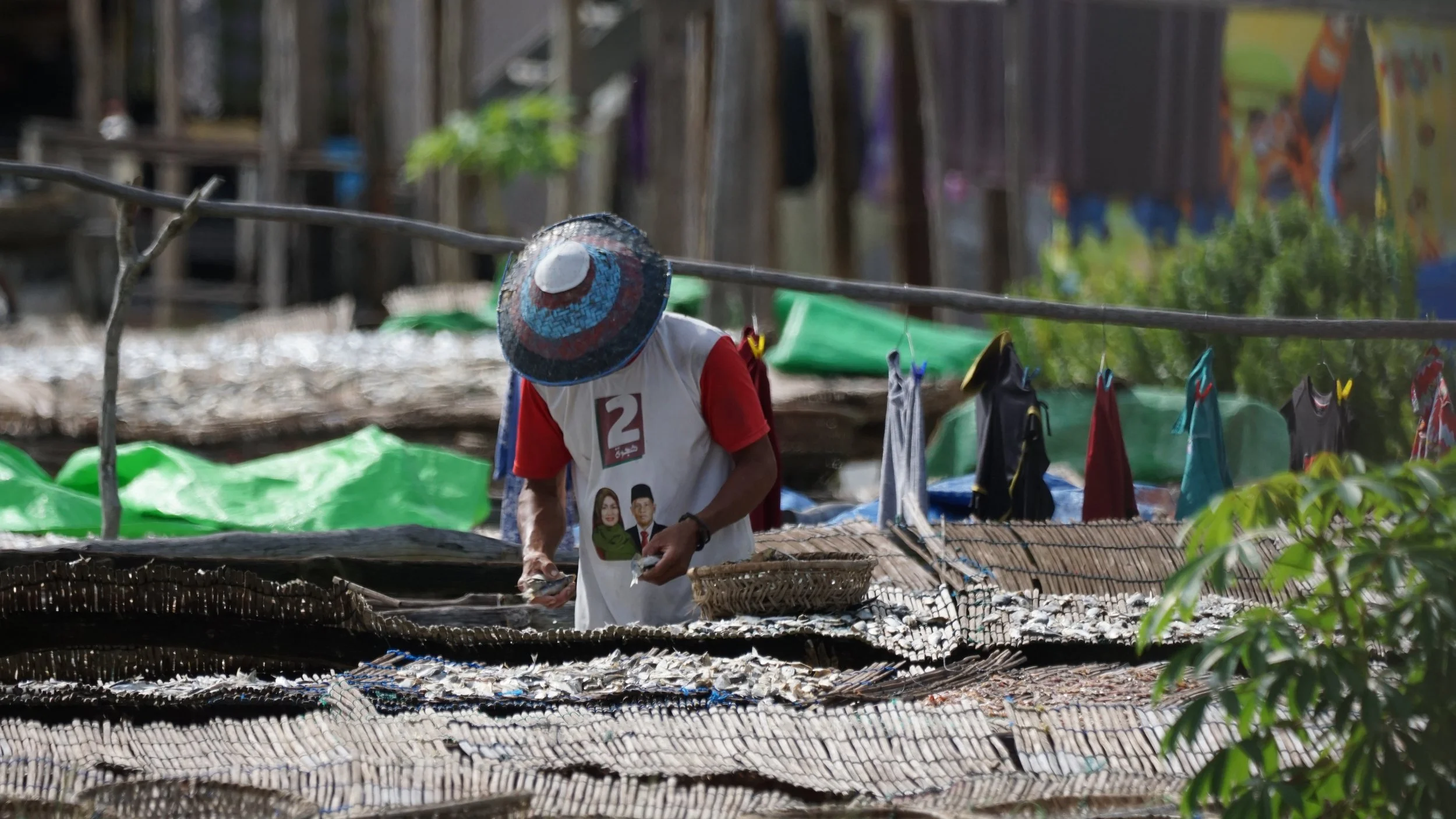
The process in Karimata
Since 2022, Planet Indonesia has been working together with Karimata’s communities, government authorities and supporting institutions to establish an official Conservation Partnership (Kemitraan Konservasi). In 2025 progress was made as this group of stakeholders began actively working together on the re-zonation of the Karimata MPA as a foundation for a management system that includes both people and nature.
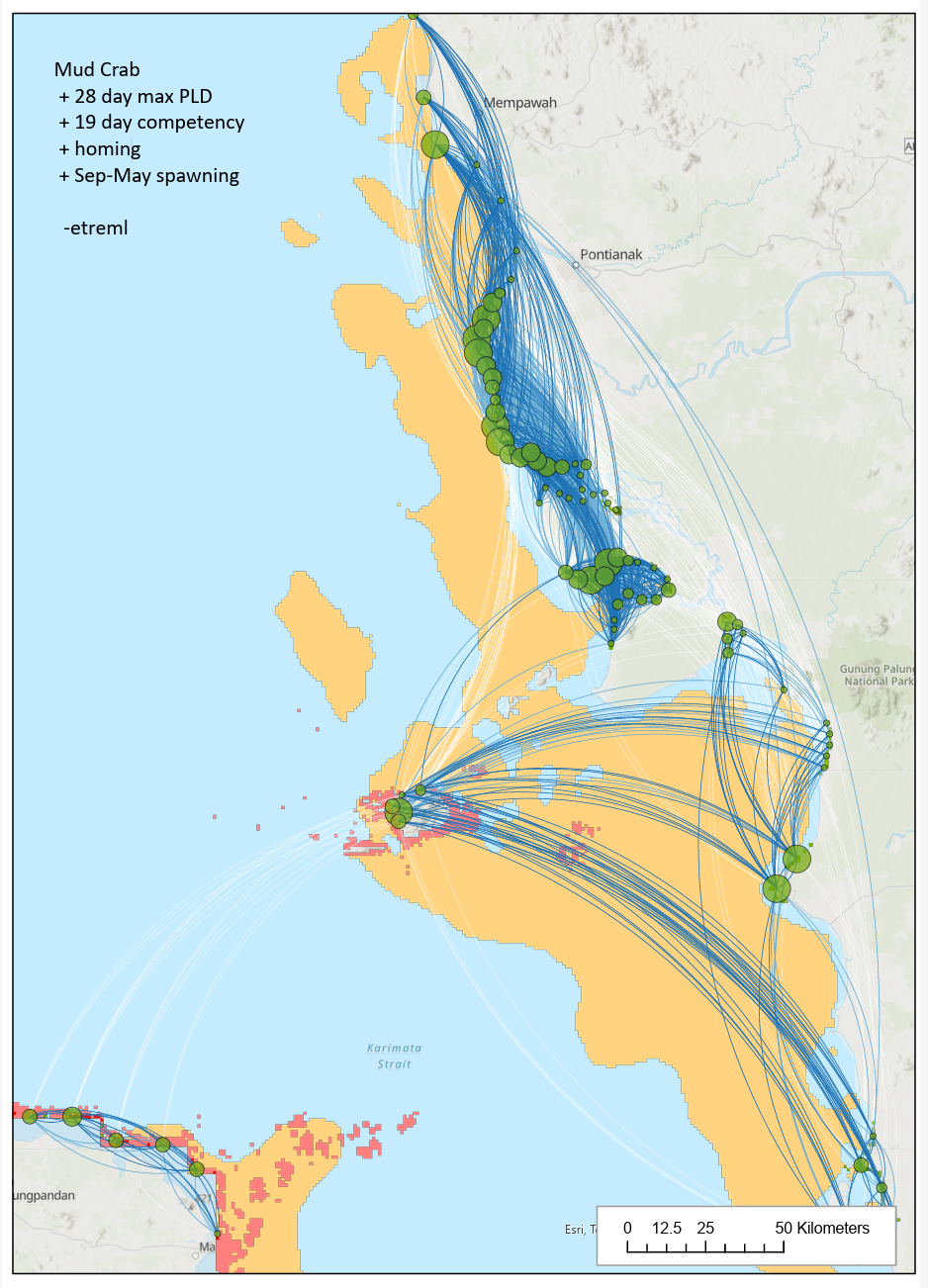
Fig 2. Mudcrab Larval monitoring
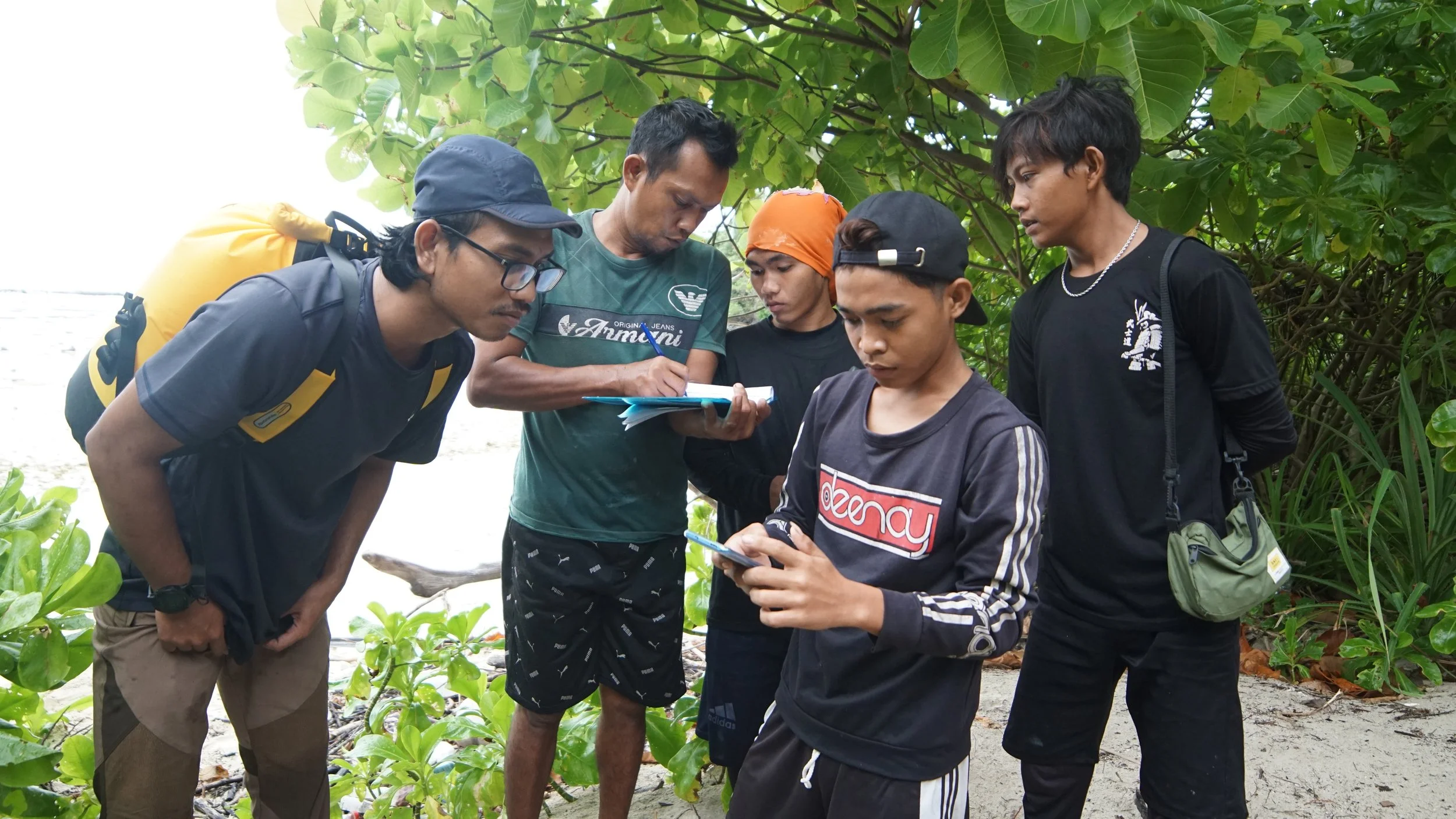
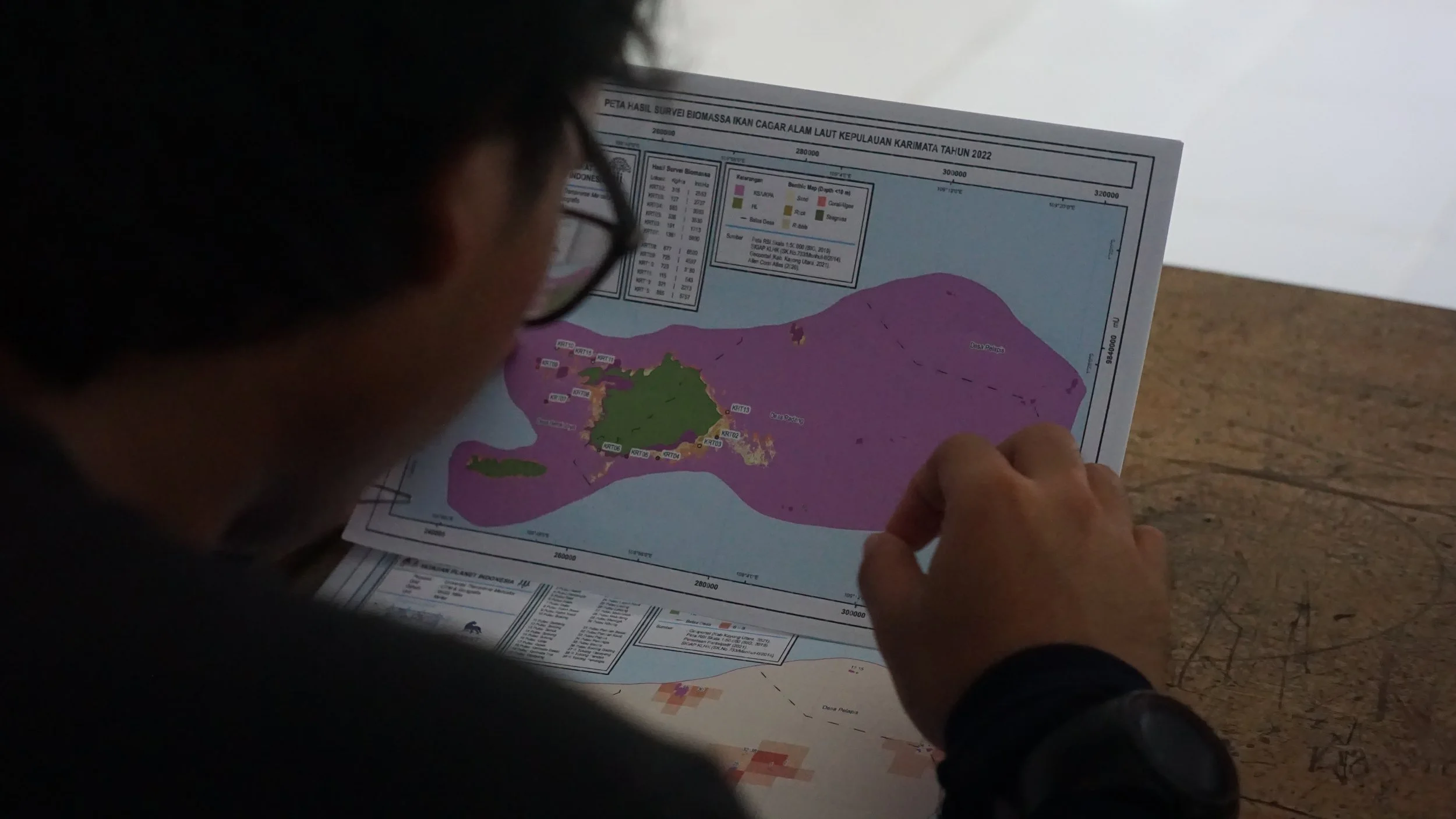
The process involved using a combination of scientific and participatory approaches. Larval modeling (an example in fig 2) and hydrological studies were used to determine areas critical to the fish life cycle and the distribution of larvae, ensuring protection of areas of high ecological value. Meanwhile, participatory mapping involved communities in mapping their own management areas—recognizing local knowledge, social needs, and the dynamics of use that have been passed down through generations.
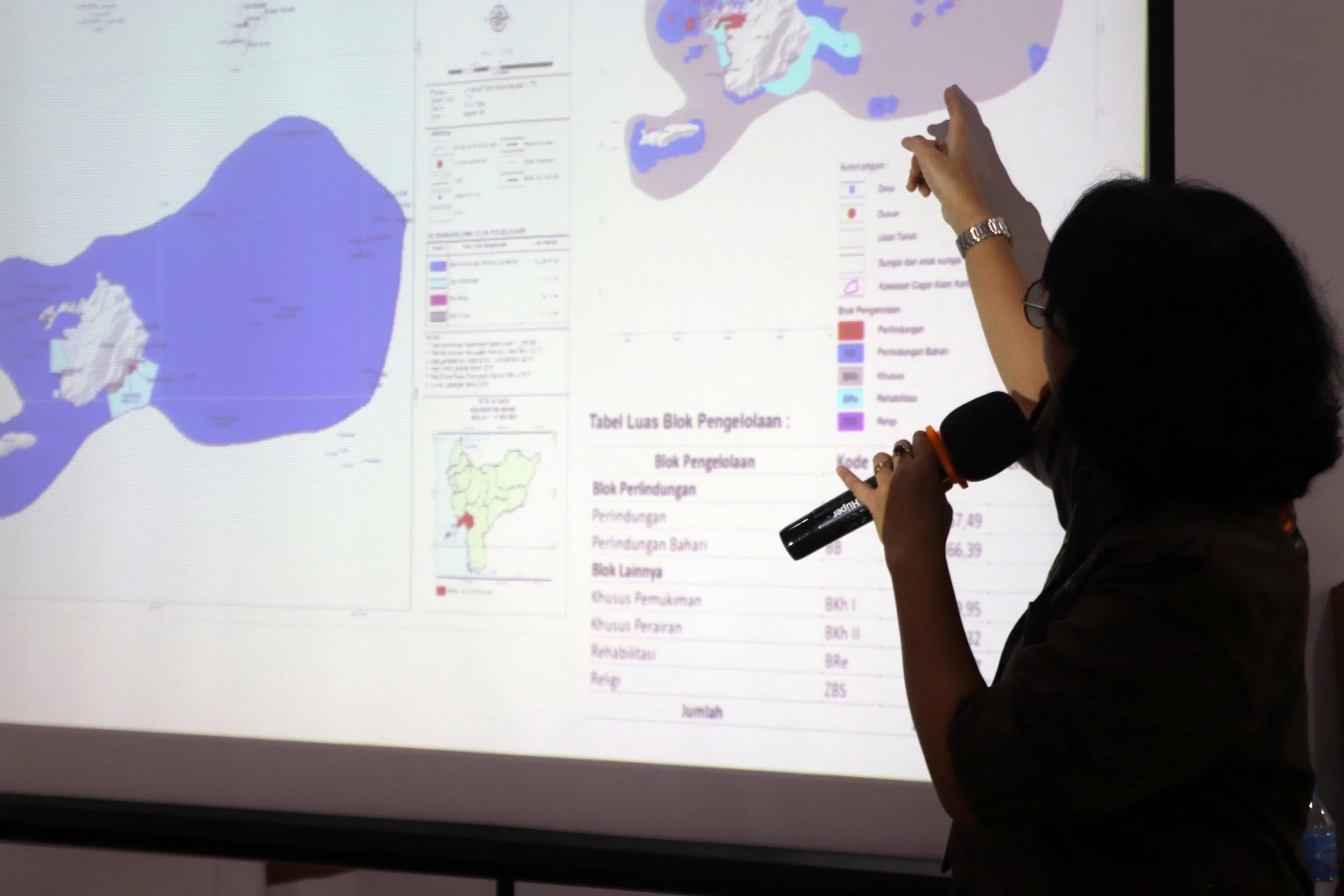
Combining these different data sources, the new zonation now consists of well-informed core no-take zones that connect unique hotspots for biodiversity conservation and fish stock rehabilitation across the area. Next to these, a major achievement is the establishment of special blocks, making up 83% of the MPA, accommodating long-standing settlements, religious and cultural activities, traditional small-scale fishing, and the community's daily economic activities.
In addition to recognizing the community as part of the ecosystem, the special blocks also allow for the development of essential infrastructure such as telecommunications, electricity, and transportation, as long as it does not disrupt the area's ecological function. With this approach, Karimata management is aimed at ensuring that conservation and well-being can coexist within a fair and sustainable system.
Semah Laut
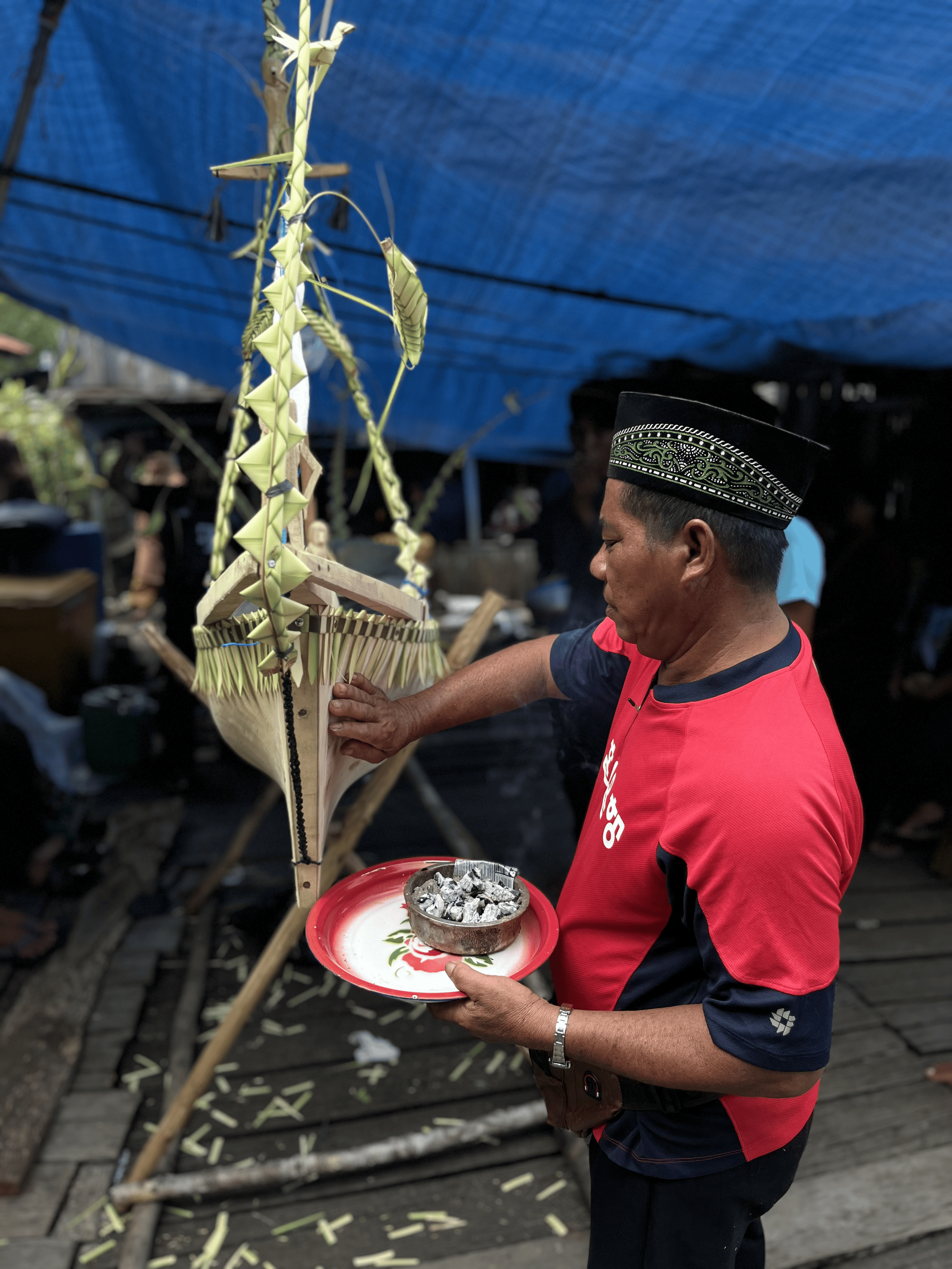
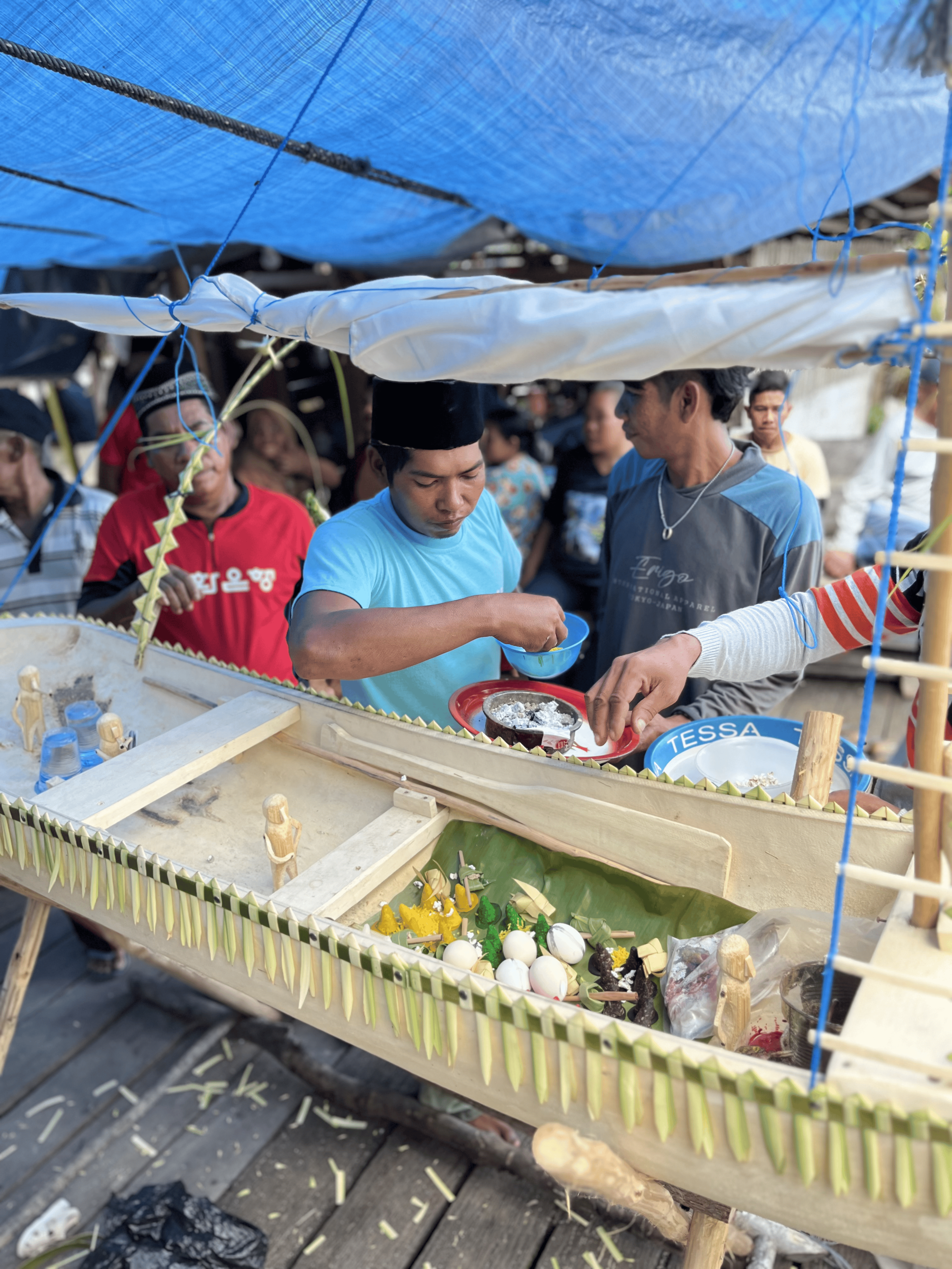
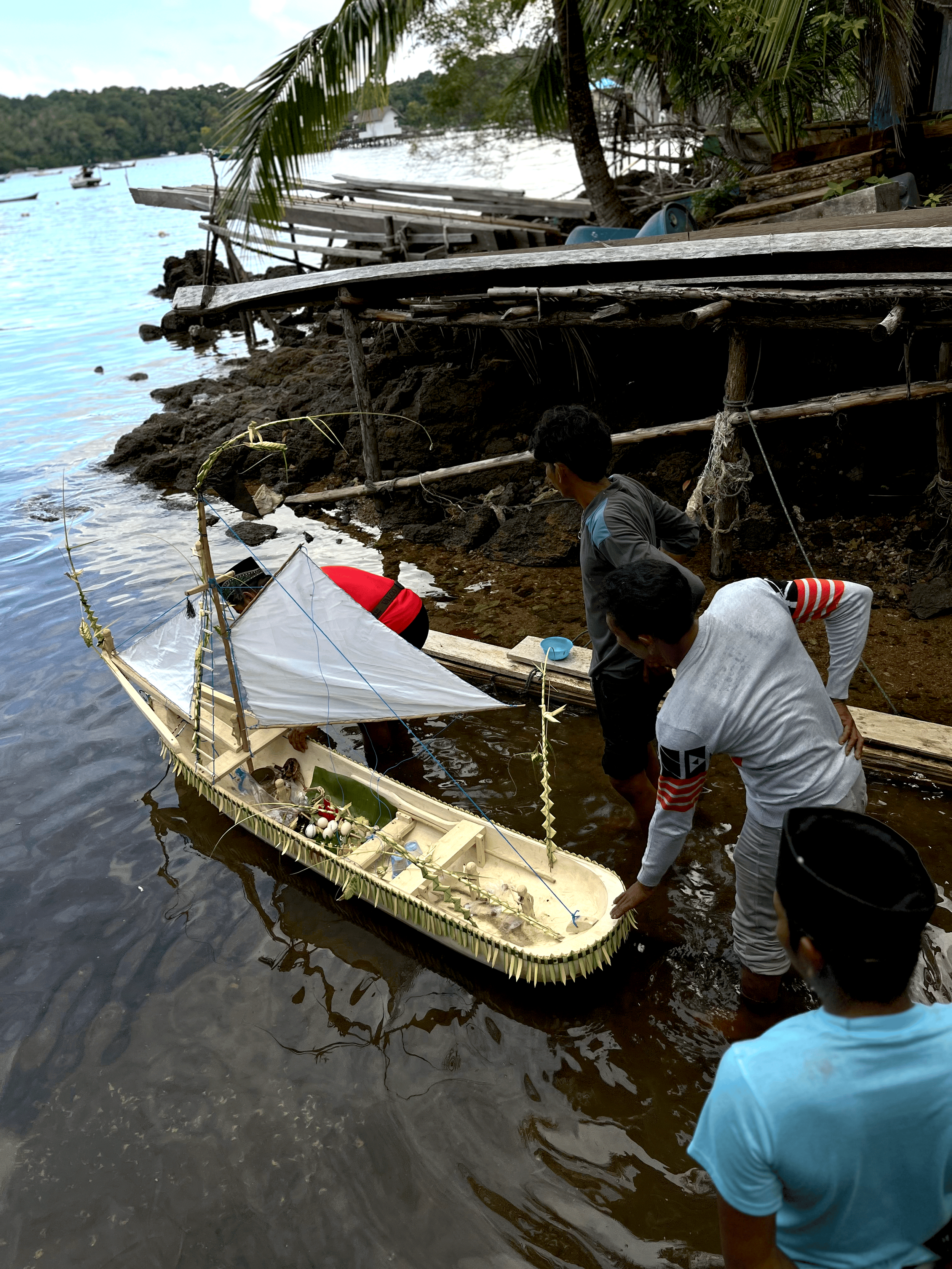
Within these special blocks, comes the recognition and space for religious and cultural practice and ritual. One of the most important and popular ritual traditions takes place here every April. Coinciding with the end of the mackerel season, ‘Semah Laut’ is a manifestation of gratitude for life and a request for safety. Beginning with an evening dance with drum and gong music; it includes many ritual practices and prayers at specific sacred sites like the one pictured below at the Palembang River. Read more about Semah Laut in our field notes bulletin.
Engaging public society
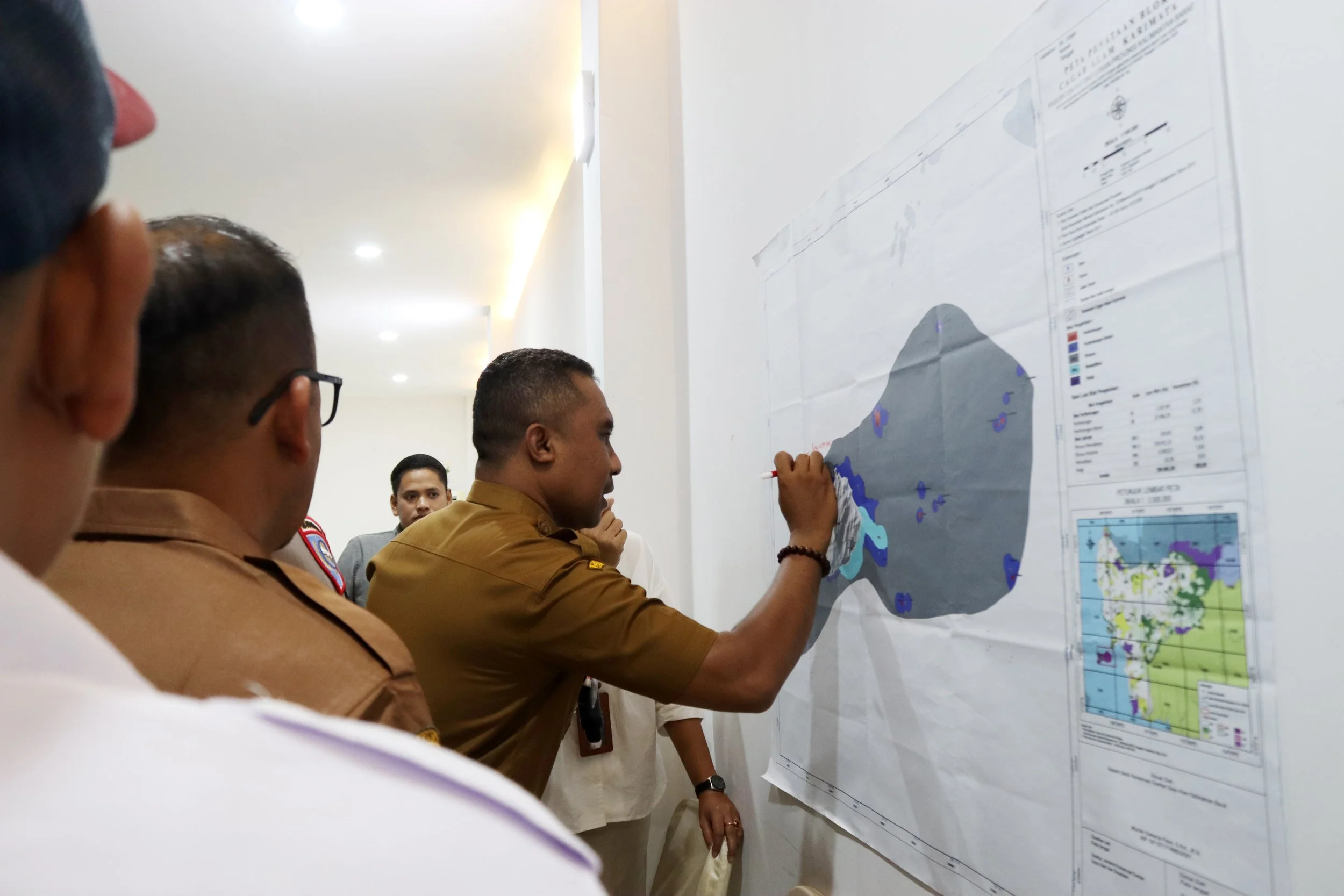
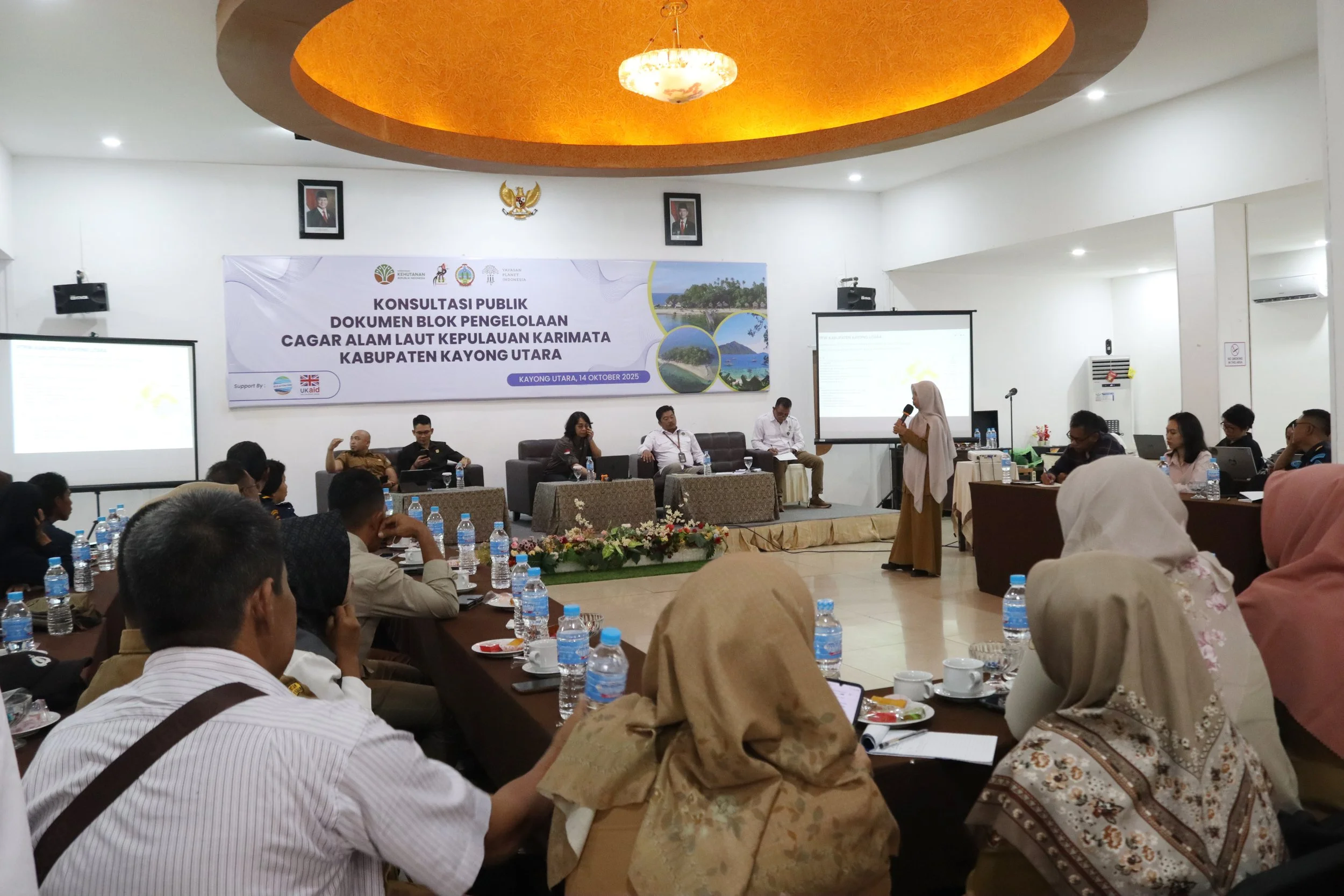
An important part of the rezoning process is public consultation, where stakeholders from civil society, government and local organisations come together to discuss the future of the areas they inhabit. Public consultation offers a crucial space to ensure every decision is born from dialogue and trust. It embodies the principles of Free, Prior, and Informed Consent (FPIC), ensuring that community voices are heard and respected from the outset of the planning process. It also allows different parties to understand the challenges they face.
“For BKSDA (government entities), public consultation meetings provide a platform for them to learn about the challenges faced by communities in protecting their areas. The BKSDA, as the authorized stakeholder, requires this information to advocate for community rights.” - Ms. Murlan.
The public consultation forum brought together ideas and experiences: local knowledge combined with policy and science. The Kayong Utara Regency Regional Development Planning, Research, and Innovation Agency (BAPERIDA) highlighted the importance of collaboration between conservation and the blue economy for sustainable development. The Public Works and Spatial Planning Agency (PUPR) also emphasized the integration of regional spatial planning with conservation area management. This cross-stakeholder engagement demonstrates that when planning is built on trust and participation, development can go hand in hand with environmental sustainability and community well-being.
The Outcome
On the 12th of December 2025, the new zonation plan, after several public consultations and revisions, was ratified by the Ministry of Environment and Forestry, laying the foundation for new ways of working together to protect Karimata’s unique biodiversity whilst allowing sustainable development that supports local livelihoods.
Collaboration for Karimata’s Future
This rezoning of Karimata’s MPA marks a crucial milestone for the future management of the area. Conservation success depends not only on policy or science, but also on the ability of all parties to collaborate—bridging scientific knowledge, community experience, and the direction of equitable and sustainable regional development.
In line with Planet Indonesia's core pillar of Rights and Access, this ensures that every individual and community has the right to participate in, manage, and equitably benefit from the natural resources they care for. Through a community-based management model, PI supports indigenous peoples and local communities in gaining access to the land, sea, and resources they depend on—while respecting local social and cultural values.
"The Karimata Islands Marine Nature Reserve is not only an area of extraordinary biological richness, but also a symbol of the harmonious relationship between humans and nature. However, beneath its beauty, we face various challenges—from pressure on coastal resources to the impacts of climate change affecting the lives of people and their ecosystems. Therefore, management of this area must be adaptive, inclusive, and science-based.” - Novia Sagita, CEO of Planet Indonesia
For us at Planet Indonesia, conservation success is not measured by the extent of protected areas, but by the extent to which the land is managed for the benefit of communities and nature. Good conservation doesn't mean closing off access, but rather opening up space for participation, learning, and gaining economic benefits from fair and sustainable natural resource management.
Our commitment to this is realized through facilitating the recognition of community management rights over customary territories and traditional waters, strengthening community institutions, increasing the capacity of women and vulnerable groups, and collaborating with government and conservation organizations to promote socially and ecologically just policies. Long-term on-the-ground support is Planet Indonesia's way of ensuring that community access rights are not just on paper but are actually implemented in area management practices.
With a spirit of collaboration and respect for community rights, Karimata is expected to become an example of fair, participatory, and sustainable marine conservation area management—protecting nature, strengthening communities, and leaving a sustainable environment for future generations.
This work has been made possible with the support of Blue Action Fund and the Uk Government via the Biodiversity Challenge Fund.