
An Offense Against Adat, an Offense Against Nature
by Roni Bia Santo and Lusianus Agato Riaresky
How the Tadan community is seeking legal recognition of the customary rules (adat) that have protected its forest for generations.
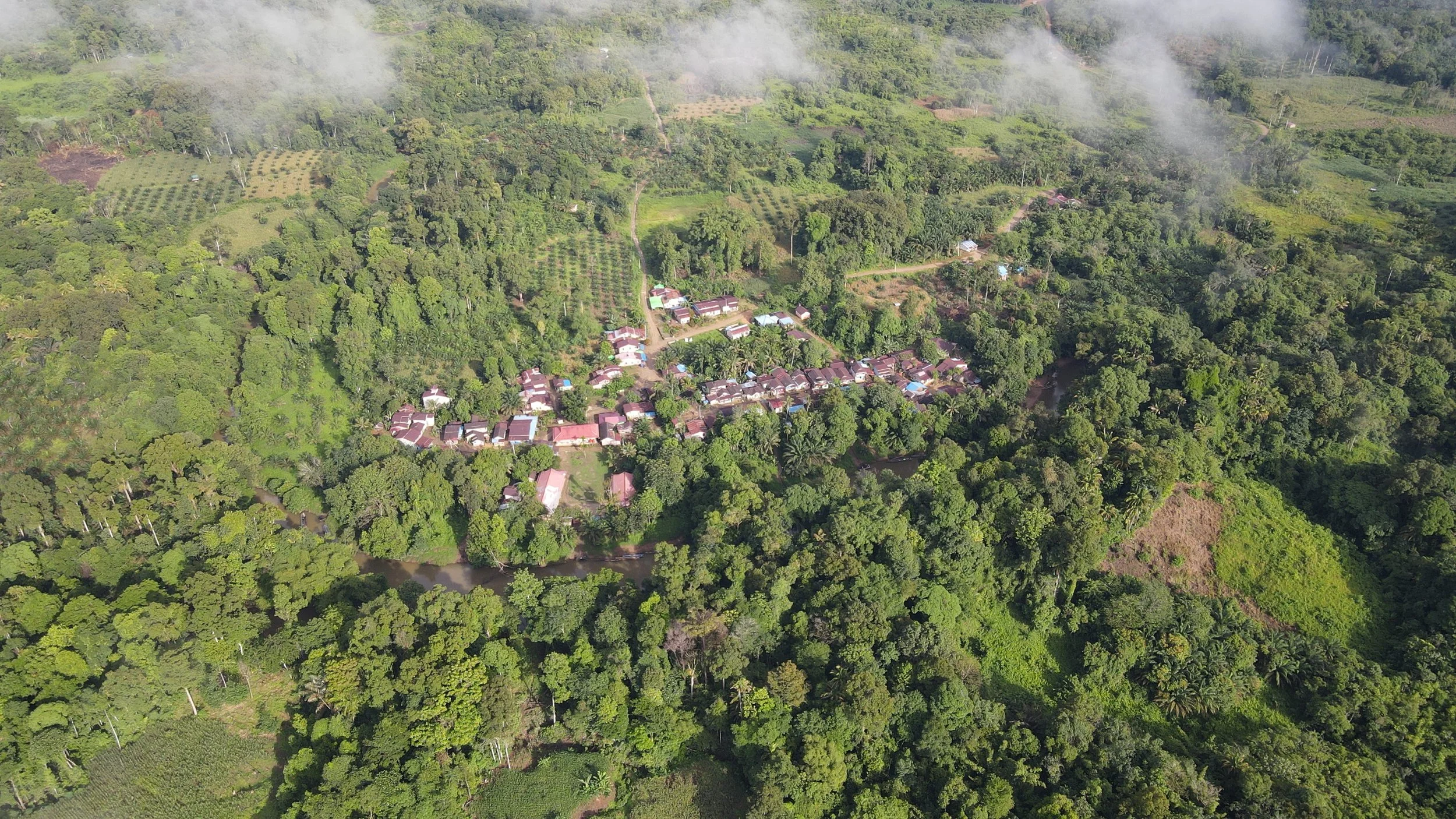
The Tadan hamlet landscape at sunrise.
"Without legal recognition from the state, this customary forest could disappear at any time."
Pico, customary chief of Tadan village, says this quietly, his eyes fixed on the forest standing just beyond the customary longhouse, in Bengkawan, in the misty, mountainous, central forests of Borneo. From where he sits, the canopy is still intact. Tall trees still stand close together, some protected for generations, because they are believed to be an inheritance from the ancestors that must never be cut carelessly. Under their canopy, birdsong breaks the morning quiet, while the Biang River flows calmly nearby, sustaining daily life in the village. From the air, though, the picture looks different: Tadan's customary forest appears as a green island surrounded by oil palm plantations. That contrast is a daily reminder to the community that the space they protect is never entirely safe.
He recalls how his ancestors once moved from place to place searching for somewhere rasi, a place that would bring safety, health, and a good livelihood, before finally settling here, in what is now Tadan village. From that point on, the forest became part of daily life, protected through customary rules (adat) passed down through generations.
For Pico, the greatest threat isn't the loss of trees themselves. What worries him is the possibility that the community could lose the right to keep caring for the forest their ancestors left behind. Despite generations of stewardship, the Tadan community does not yet have formal legal recognition of its customary rights over this land, a gap it is now working to close by seeking recognition as a Masyarakat Hukum Adat.
"Our relationship with our ancestors is special. This forest is their legacy, and it's our responsibility to protect it," - Pico.
That relationship gave rise to customary rules still followed today. Community members are not permitted to poison the river to catch fish, cut trees without permission, clear land at will, or hunt within the customary forest. Timber for building homes can still be used, but only with the permission and agreement of the customary institution, so that use never exceeds what the community actually needs. Together, these rules have shaped how the forest is used for generations, limiting extraction while allowing families to continue relying on it for their livelihoods.
Breaking these rules is treated as an offense against adat as much as against nature, and it carries a defined penalty. Social pressure and community fines help reinforce these rules. Anyone who hunts wild boar in the customary forest must hand over the entire catch to the customary institution, pay a customary fine equal to twice the animal’s value, and release another animal of the same species back into the forest. For protected species, different sanctions apply under customary law, and cases may also be referred to the relevant government authorities. Community leaders say these sanctions were more common in the past. Today, they are rarely needed because most residents know and follow the customary rules. Until those obligations are met, the violation remains an outstanding customary debt.
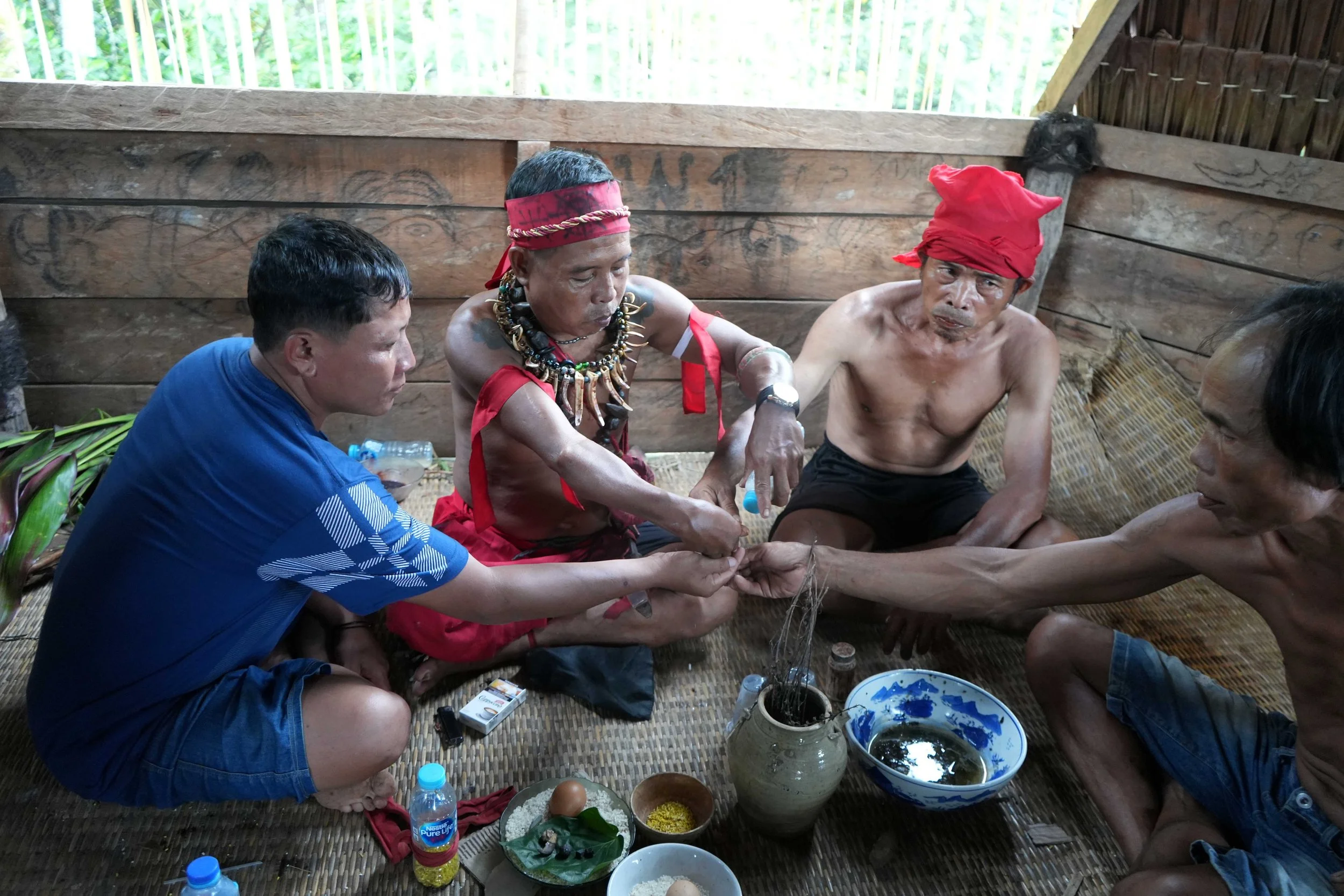
A customary ritual performed by the Tadan community before our interview
Notably, most of these rules were never formally written down. For years, they lived through oral tradition, passed on through parents' guidance, village deliberation, and collective memory, and were followed simply because they were part of everyday life. Timed with the Gawai Adat Kampung (the village's annual customary harvest ceremony), the Tadan community began documenting this oral history, its rules, and its customary institutions for the first time, through a Masyarakat Hukum Adat (MHA) Community Profile.
For the community, the profile supports the customary forest recognition process while also documenting customary knowledge, rules, and institutions that have long been preserved through oral tradition.But a changing landscape has brought a different kind of challenge. Today, oil palm plantations sit directly alongside Tadan's customary forest, bringing industrial activity to the edge of land the community has protected for generations. The community has experienced land-related conflict in the past. Rather than focusing on what has already happened, community members are looking ahead. They worry that without formal legal recognition, they may not have a strong legal basis to defend their customary territory if similar disputes arise again.
"If a company or an outside party claims this area, we won't have a strong legal basis to stand on," Pico says, his voice carrying real concern, not because he fears losing ownership of the forest, but because he fears the community losing its right to keep protecting the forest its ancestors left behind.
That concern is what has driven the Tadan community to seek recognition as a Masyarakat Hukum Adat. For them, formal recognition would give stronger legal standing to the customary territory and the rules that have guided its protection for generations.
Legal recognition also changes the community's legal relationship with the forest. Under Indonesia's Social Forestry schemes, such as Village Forests (Hutan Desa) or Community Forests (Hutan Kemasyarakatan), communities receive permission to manage areas of state forest, but the state retains the underlying rights and decision-making authority. These schemes create important opportunities for local stewardship, but communities remain managers rather than full rights holders.
Recognition as a Masyarakat Hukum Adat, by contrast, acknowledges that the forest forms part of the community's customary territory. Rather than simply granting permission to manage the land, the state recognizes the community's authority to govern it according to customary law. This provides stronger tenure security and greater control over how forests are protected and resources are managed. Increasingly, securing Indigenous peoples' rights is recognized as one of the most effective ways to strengthen long-term conservation while supporting the communities that have cared for these forests for generations.
Passing Customary Knowledge to the Next Generation
Before seeds are planted, they're first ritually washed in a ceremony accompanied by prayers and ancestral recitations, an act of respect toward nature and a request that the harvest bring blessings. Even the timing of collecting seeds still follows signs from nature, like shifts in weather or birdsong.
For Melti, these practices are simply part of everyday life in Tadan.
"When the birds are noisy, we hold off. Our elders say it's not yet the right time to collect the seeds," Melti says, smiling.
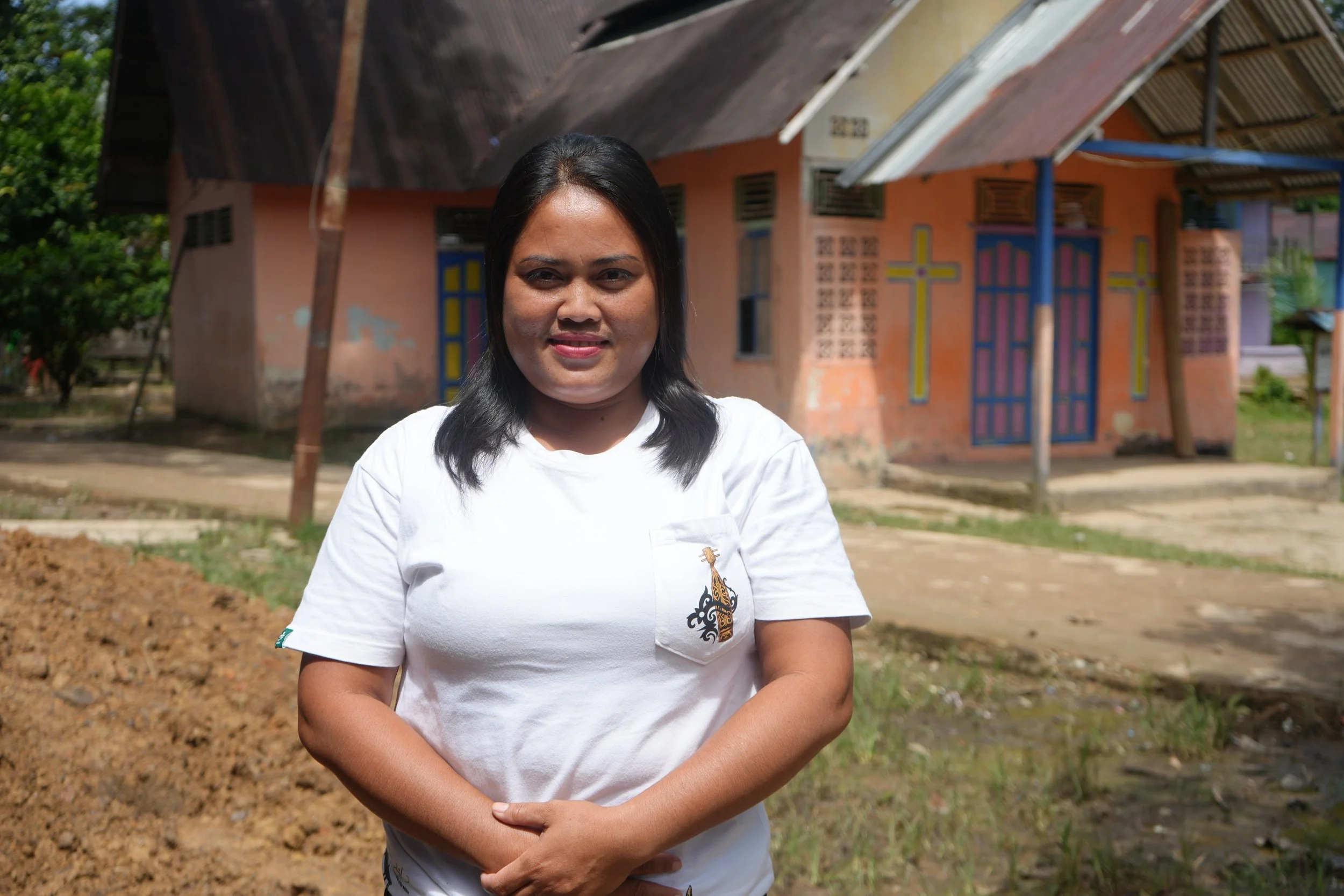
Melti, 34, a women's representative from Tadan hamlet.
Knowledge like this is rarely written down. Instead, it is passed from one generation to the next through everyday practice. Women also carry knowledge of medicinal plants, which many families still rely on before visiting the nearest health clinic. That connection to the forest also shapes how younger community members think about the future.
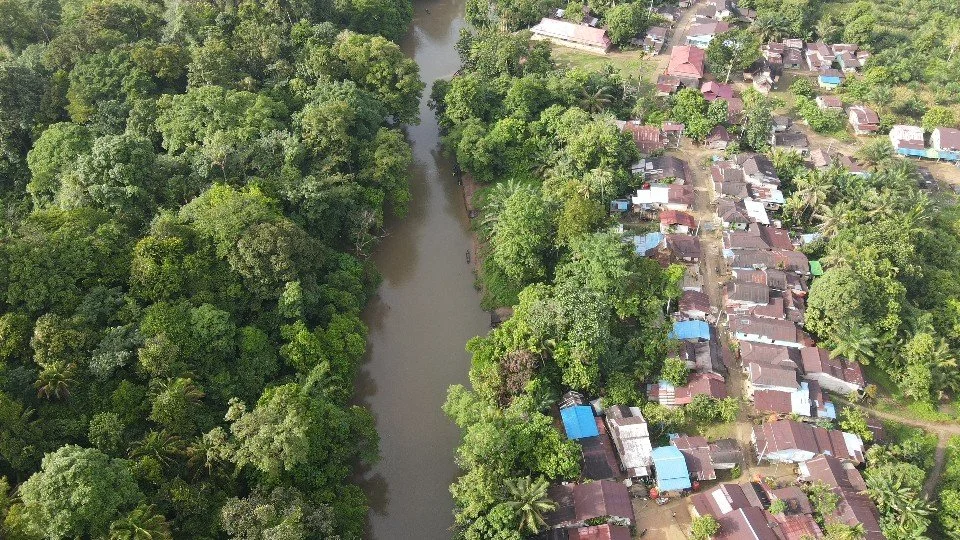
The Biang River, which sustains life in Tadan hamlet
"We want to strengthen our territory's identity. Without documentation behind us, land disputes are a real risk. We're also planning ahead because companies simply have more power than we do. Our hope is that this forest is truly protected and well managed, so our grandchildren can still see it whole," Okmi says
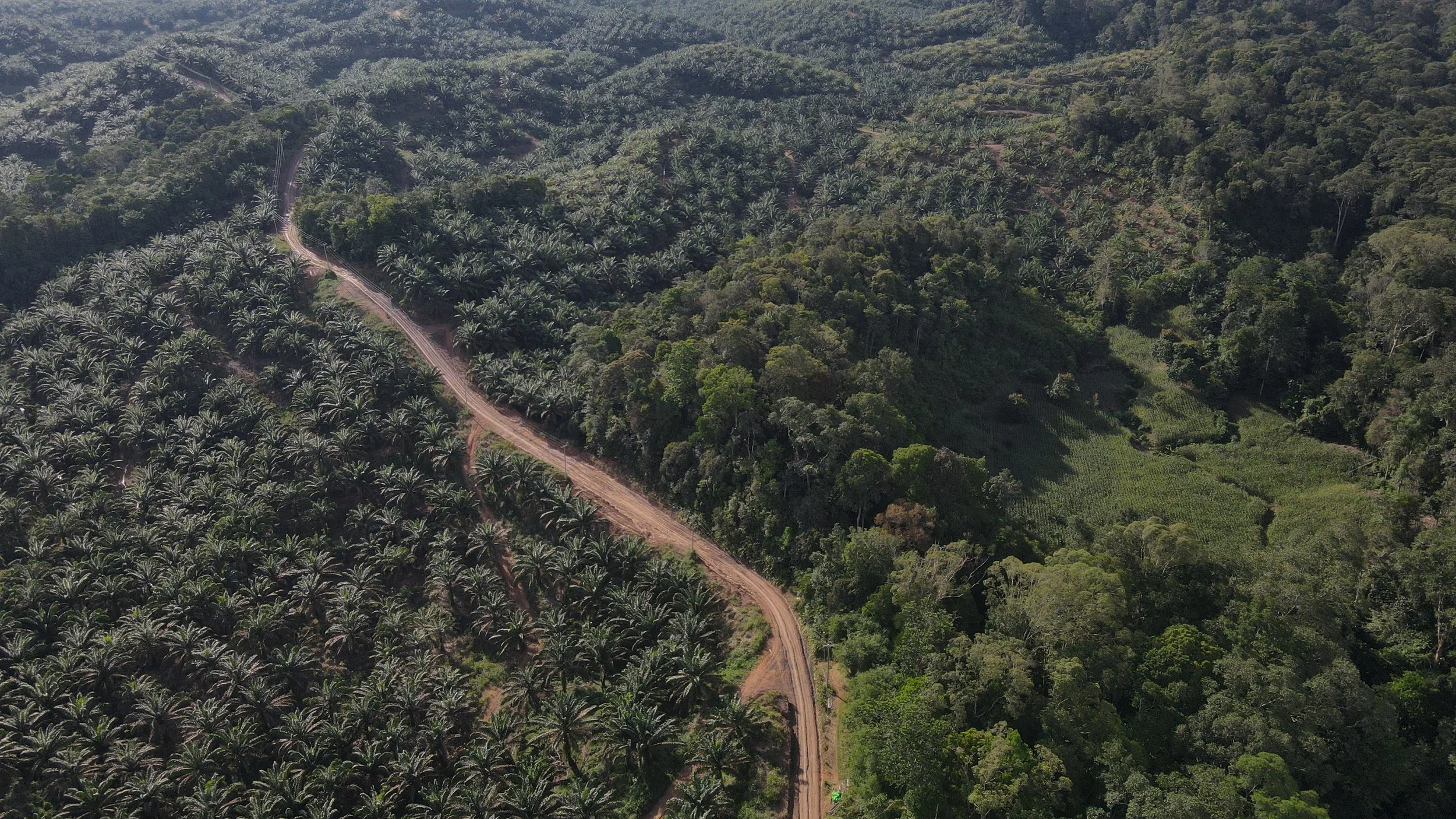
An aerial photo of Tadan's customary forest, estimated at around 60 hectares based on initial information from the village head, with a definitive measurement still underway, surrounded by oil palm plantations.
"Having this protection or legality from the government gives us strength, so that people don't cut the forest carelessly. This customary forest has existed for a long time, but now we want its protection recognized by the state too. What we're fighting for shouldn't stop with us; we hope our grandchildren can still learn the different types of timber and carry this work forward," he says.
A Community-Led Initiative Protecting the Forest's Future
For Agato, Yayasan Planet Indonesia's Bengkayang Landscape Manager, the most striking part of this process hasn't been the paperwork or the length of the steps involved; it's been the community's own energy. From the start, Tadan's residents came forward with stories, memories, and the customary rules they've long upheld, the things they wanted documented so future generations and the state would recognize.
"This community has been waiting a long time for this process. Seeing that energy makes us, as their partner, even more motivated to support them," Agato says.
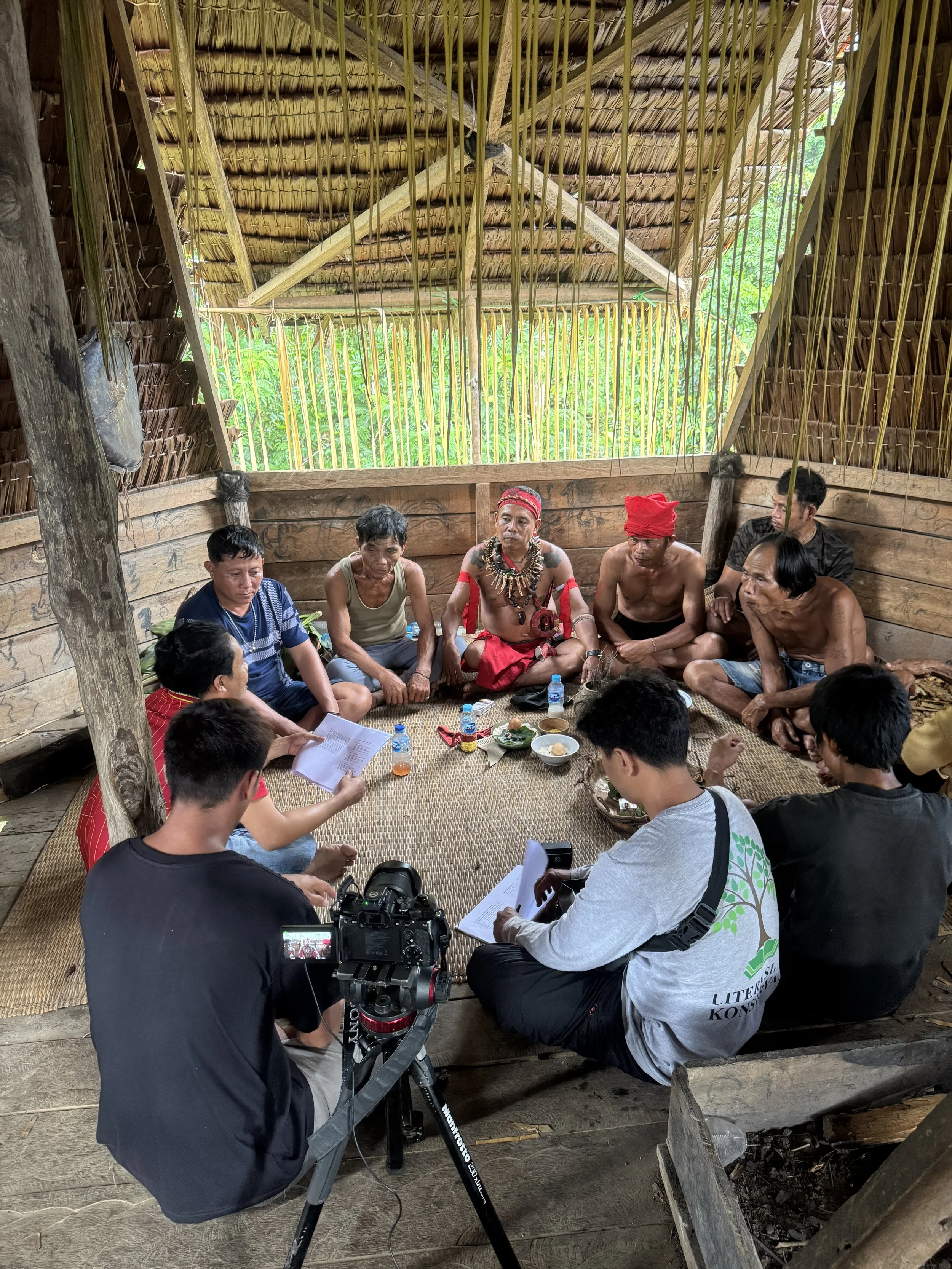
Community members share knowledge and customary history as part of developing the Masyarakat Hukum Adat Community Profile.
Tadan has now completed the public socialization stage and is preparing its Masyarakat Hukum Adat (MHA) Community Profile. The document brings together the community’s history and maps its customary territory using historical evidence, two of the key requirements for submitting an application. By law, recognition follows three stages. Preparing the Community Profile is part of the first, known as identification. Once it is submitted, the application moves to verification and validation, where a technical team appointed by the district government reviews the evidence. If the application meets the legal requirements, the final stage is formal recognition through a district government decree establishing Tadan as a Masyarakat Hukum Adat.
For many communities, this process can take years. Across Indonesia, one of the main reasons applications stall is incomplete legal documentation. That makes Tadan’s Community Profile more than an administrative requirement. It is the first time much of the community’s oral history has been documented in writing, preserving knowledge that until now has largely been passed from one generation to the next.
Tadan’s efforts reflect a broader movement across Kalimantan. As of December 2025, the island was home to 57 legally recognized customary forests, more than anywhere in Indonesia, except Sumatra. Many other communities, however, are still working through the same recognition.
In Tadan, the forest has long been governed through customary rules, long before the community began pursuing formal recognition as a Masyarakat Hukum Adat. Recognition will not change how the community cares for the forest. Instead, it gives greater legal certainty to practices that have guided its protection for generations.
For Okmi, that future is measured not by documents alone, but by what the next generation inherits: “Our hope is that this forest is truly protected and well managed, so our grandchildren can still see it whole.”
If you have any questions, please reach out via admin@planetindonesia.org. Sign up for our newsletter and follow us on our social media Facebook here, Instagram here, and LinkedIn here to get timely updates on our activities, an insider’s look into the lives of front-line conservationists, and ongoing programs.