

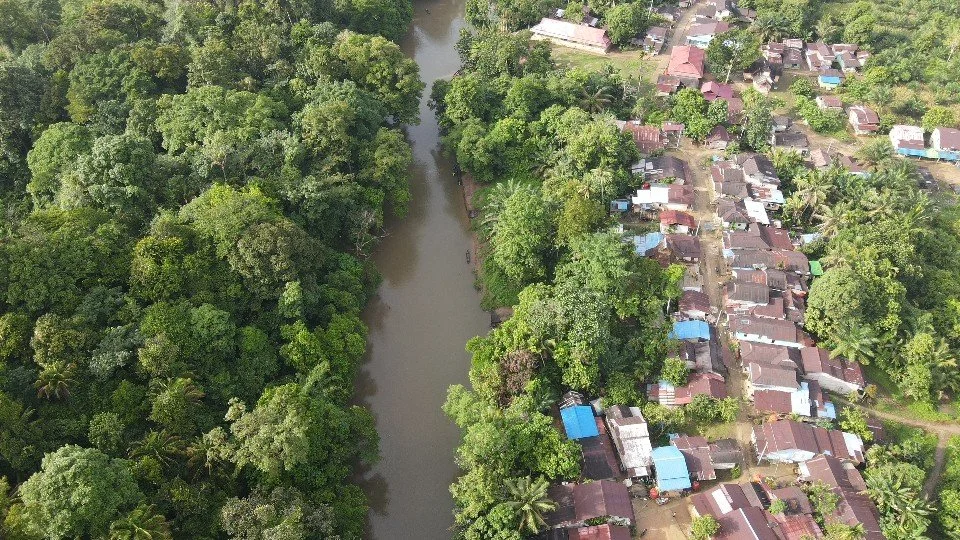
Pico, customary chief of Tadan village, says this quietly, his eyes fixed on the forest standing just beyond the customary longhouse, in Bengkawan, in the misty, mountainous, central forests of Borneo. From where he sits, the canopy is still intact. Tall trees still stand close together, some protected for generations, because they are believed to be an inheritance from the ancestors that must never be cut carelessly. Under their canopy, birdsong breaks the morning quiet, while the Biang River flows calmly nearby, sustaining daily life in the village. From the air, though, the picture looks different: Tadan's customary forest appears as a green island surrounded by oil palm plantations. That contrast is a daily reminder to the community that the space they protect is never entirely safe.
Read More