
Borneo Ranger Conference 2025: Standing on the Frontline of Community-Led Conservation
By Lia Syafitri and Rodiansyah
In late 2025, representatives from 25 patrol teams from across West Kalimantan travelled to the capital of Pontianak to participate in the first-ever Boreno Ranger Conference. Celebrating their achievements and sharing their knowledge in a landmark forum.
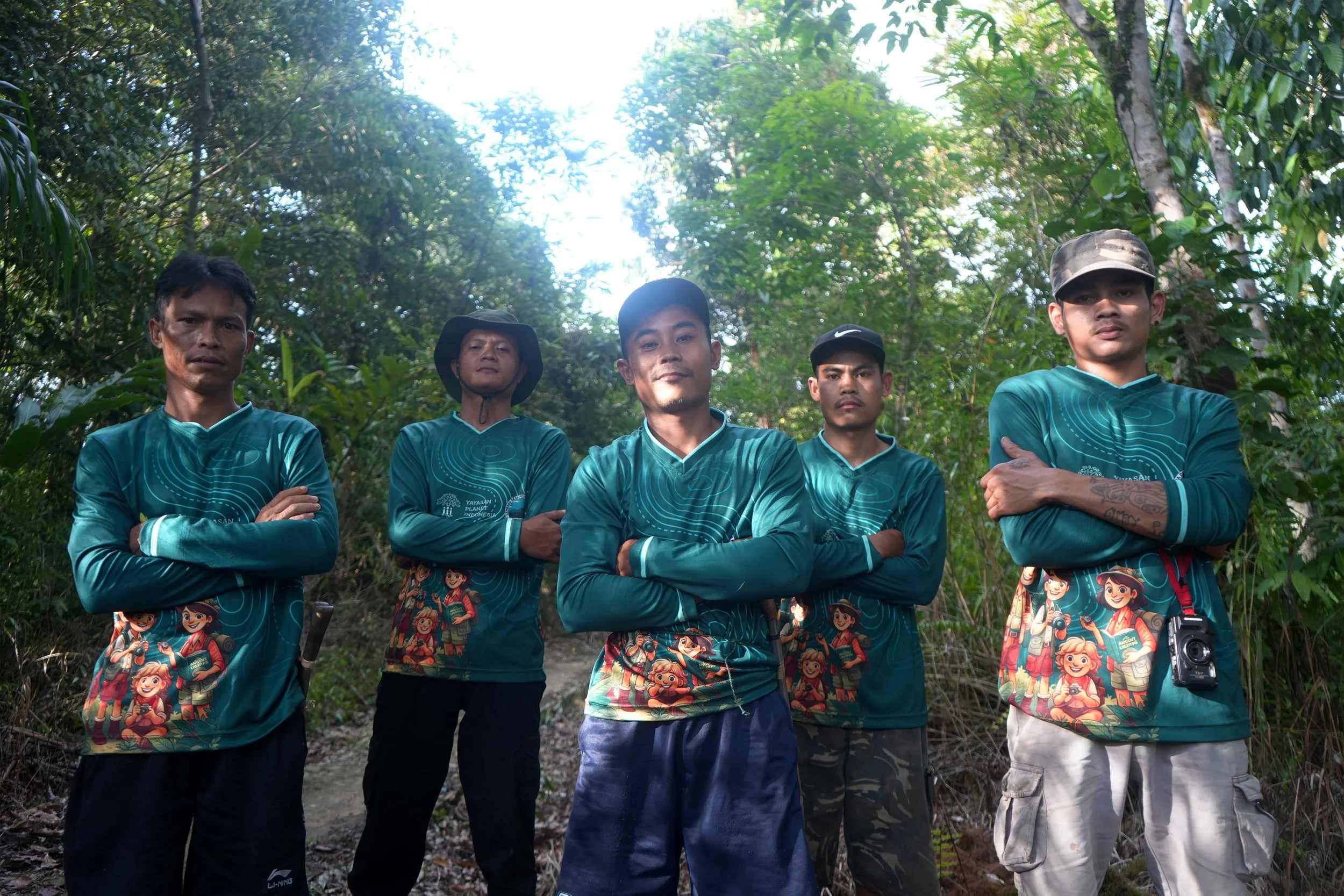
SMART Patrol Team, LDPH Temawang Bulai, standing as guardians of the Temawang Bulai Village Forest in Sintang District, West Kalimantan. Protecting the forest is part of a responsibility carried forward across generations.
A pair of Helmeted Hornbills cuts across the sky above the green expanse of Borneo’s rainforest. In coastal waters, fish and crabs thrive beneath dense mangroves, while sea turtles return to sandy shores to lay their eggs, securing the continuity of life for future generations. These moments, often unseen, are signs of healthy functioning ecosystems, of life.
If we look closer, we find the people who make this possible. Moving quietly through forests, along rivers, and across coastal waters, community patrol teams observe, document, and protect wildlife and their habitats. They are the Borneo Rangers, community members standing on the frontline of conservation in West Kalimantan.
Community Patrols as the Foundation of Protection
Since 2018, Planet Indonesia has partnered with communities to conduct SMART Patrols, a community-based monitoring approach grounded in data and local stewardship. This programme forms a core pillar of efforts to protect six priority species groups in West Kalimantan: Horbills, most importantly the Helmeted Hornbill (Rhinoplax vigil), the Sunda Pangolin (Manis javanica), Sea turtles, The Bornean Orangutan (Pongo pygmaeus), gibbons (Hylobates sp.), and proboscis monkeys (Nasalis larvatus).
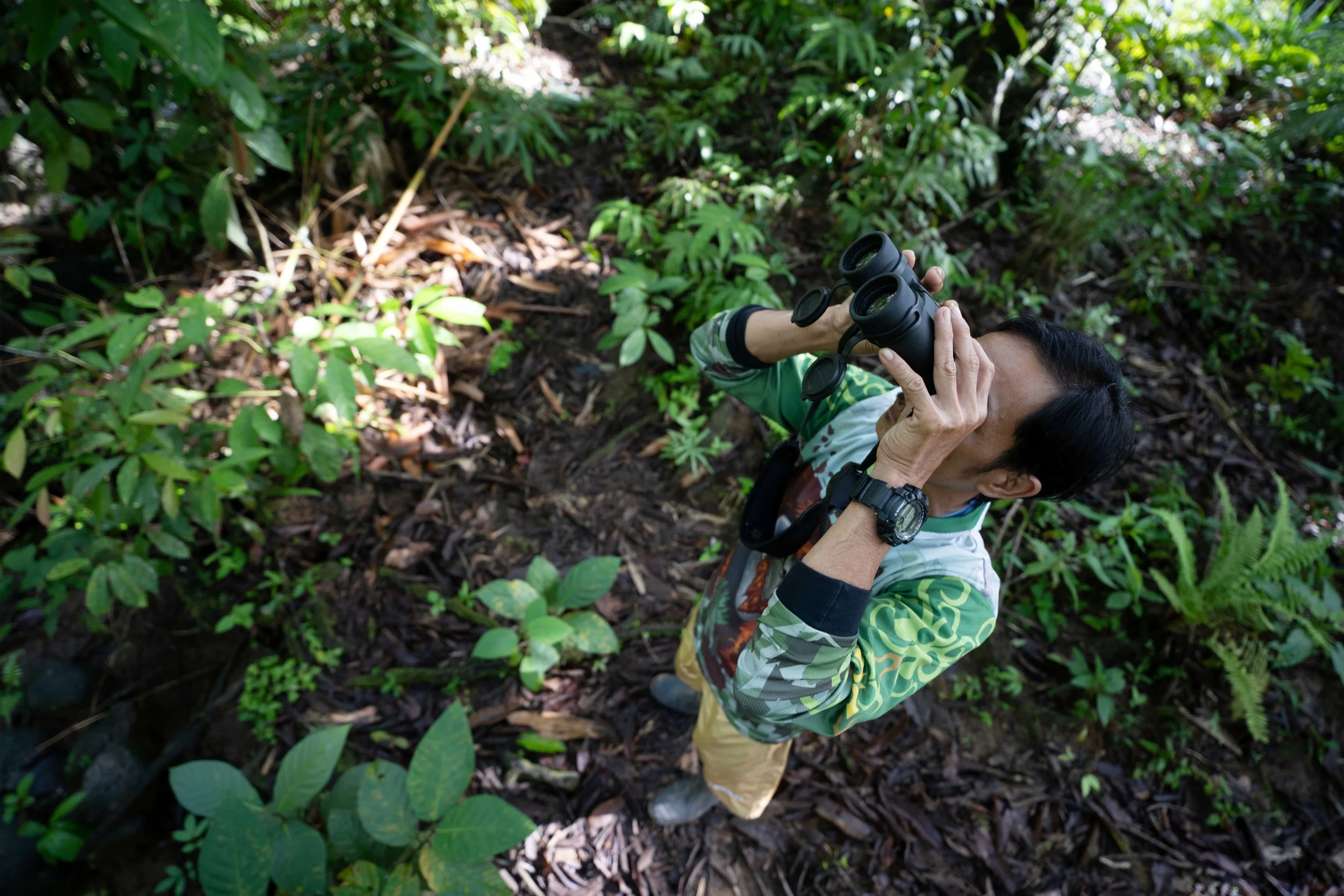
Sudirman, SMART Patrol Sepan, monitoring wildlife and forest conditions in the Gunung Naning Protection Forest, West Kalimantan. Patrol work focuses on observing signs of life and identifying potential threats to habitat.
SMART patrols are formed through an open community selection, allowing people from diverse backgrounds to take part and protect their landscapes. Each month, patrol teams trek and monitor for 7–10 days across forest and coastal areas. When highly endangered or hunted species are present, such as the proboscis monkey or helmeted hornbill, specialised patrols take place more frequently, to monitor habitat conditions and signs of wildlife presence. These collective efforts are why hornbills still fly, turtles continue to nest, and coastal waters remain full of marine creatures.
The programme involves 25 patrol teams and 204 patrol members from six districts: Kayong Utara and Kubu Raya in coastal and marine areas, and Landak, Bengkayang, Sintang, and Sekadau in forest landscapes.
Actions Rooted in Courage, Care for Nature, and Commitment
The Borneo Rangers Conference
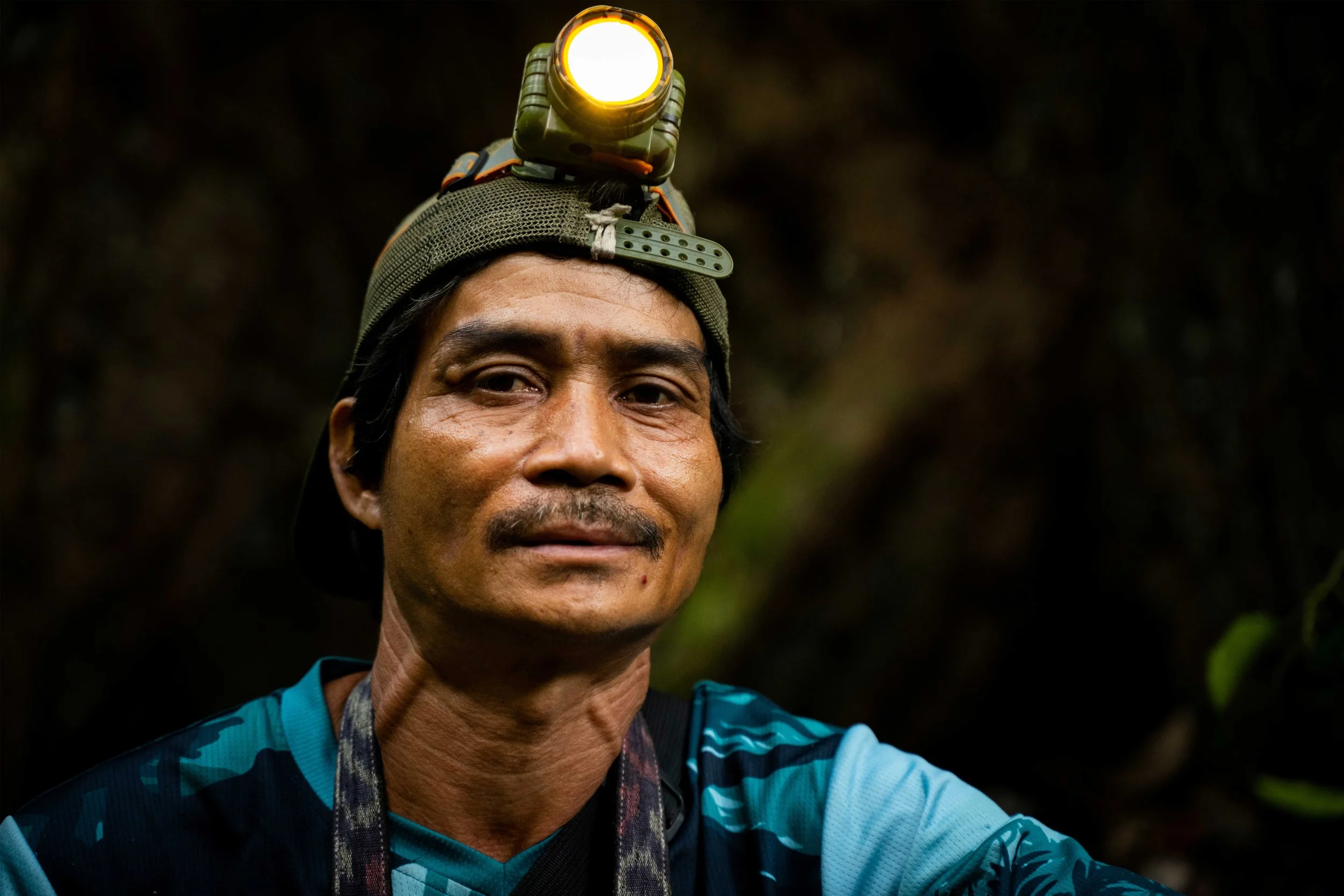
Itusius, Guardian of Tagong, from Tauk Hamlet, Landak District, West Kalimantan. He works with the SMART Patrol team to protect Tagong, the local name for the Helmeted Hornbill.
Across forest, coastal, and marine landscapes, patrol members carry out their work under demanding conditions. They are not only rangers, but parents, young people, women, and men who choose to spend long days and nights protecting the places their communities depend on.
The conference was created to recognise the rangers. Their courage that often goes unnoticed as they work quietly with discipline. Care for their natural surroundings, invested, day after day, in the landscapes they live in and depend on. Rangers move across steep ridges in Gunung Naning and Gunung Nyiut. They monitor mangrove forests and coral reefs in Kubu Raya and Karimata. In each place, they operate at the line between destruction and protection.
As pressures continue to increase, including climate change, habitat loss, and development. Patrol work continues as well. Each time a ranger leaves home, they carry risks that are rarely visible or fully understood beyond their community.
Rangers do not only protect nature; they safeguard what comes next. Their presence allows future generations to hear the forest, to find shade within mangroves, and to encounter wildlife as a living presence, not only through stories. Their work carries hope.
Celebrating them is celebrating the hope and hard work that is often unseen yet whose impact spreads far. Celebrating the choice to continue protecting, even when the world appears to be moving in the opposite direction. It is this dedication that makes the role of frontline conservation guardians truly valuable.
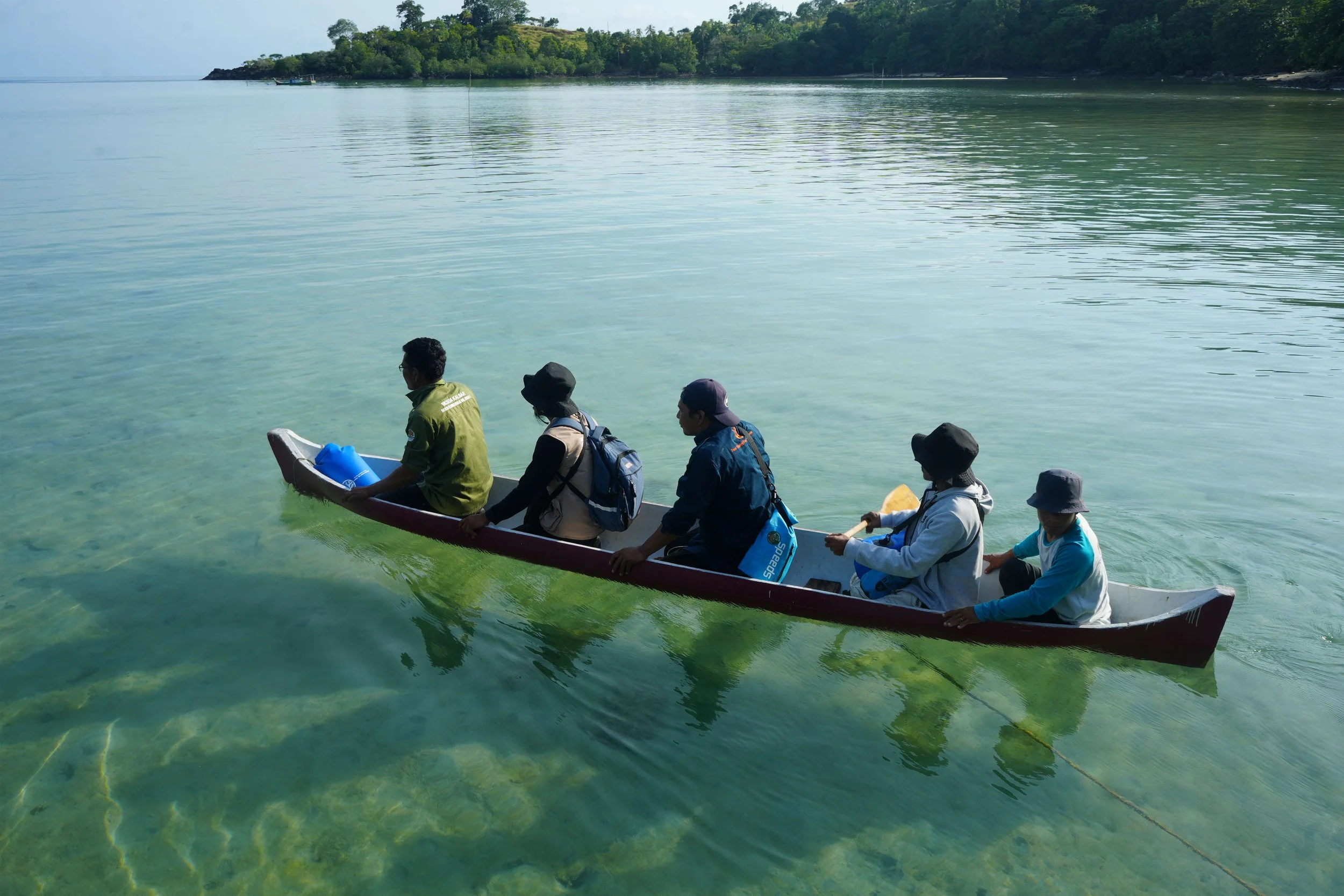
SMART Patrol Team, Betok Village, travelling through coastal waters of the Karimata Nature Reserve to monitor shorelines and small islands. Patrols support the protection of marine ecosystems and coastal livelihoods.
Strengthening the Role of Communities in Forest Monitoring
The Borneo Ranger Conference 2025 was not only a technical forum but also a platform for recognizing long-term conservation work. During the conference, awards were presented by Yayasan Planet Indonesia, the West Kalimantan Natural Resources Conservation Agency (BKSDA Kalbar), the West Kalimantan Provincial Environment and Forestry Office (DLHK), and the West Kalimantan Provincial Marine and Fisheries Office (DKP), to eight patrol teams that recorded increased wildlife encounter rates for six species. The assessment drew on field data collected consistently between 2018 and 2025 for species: Helmeted Hornbills, Rhinoceros Hornbills, Sunda Pangolins, gibbons, proboscis monkeys, and sea turtles.
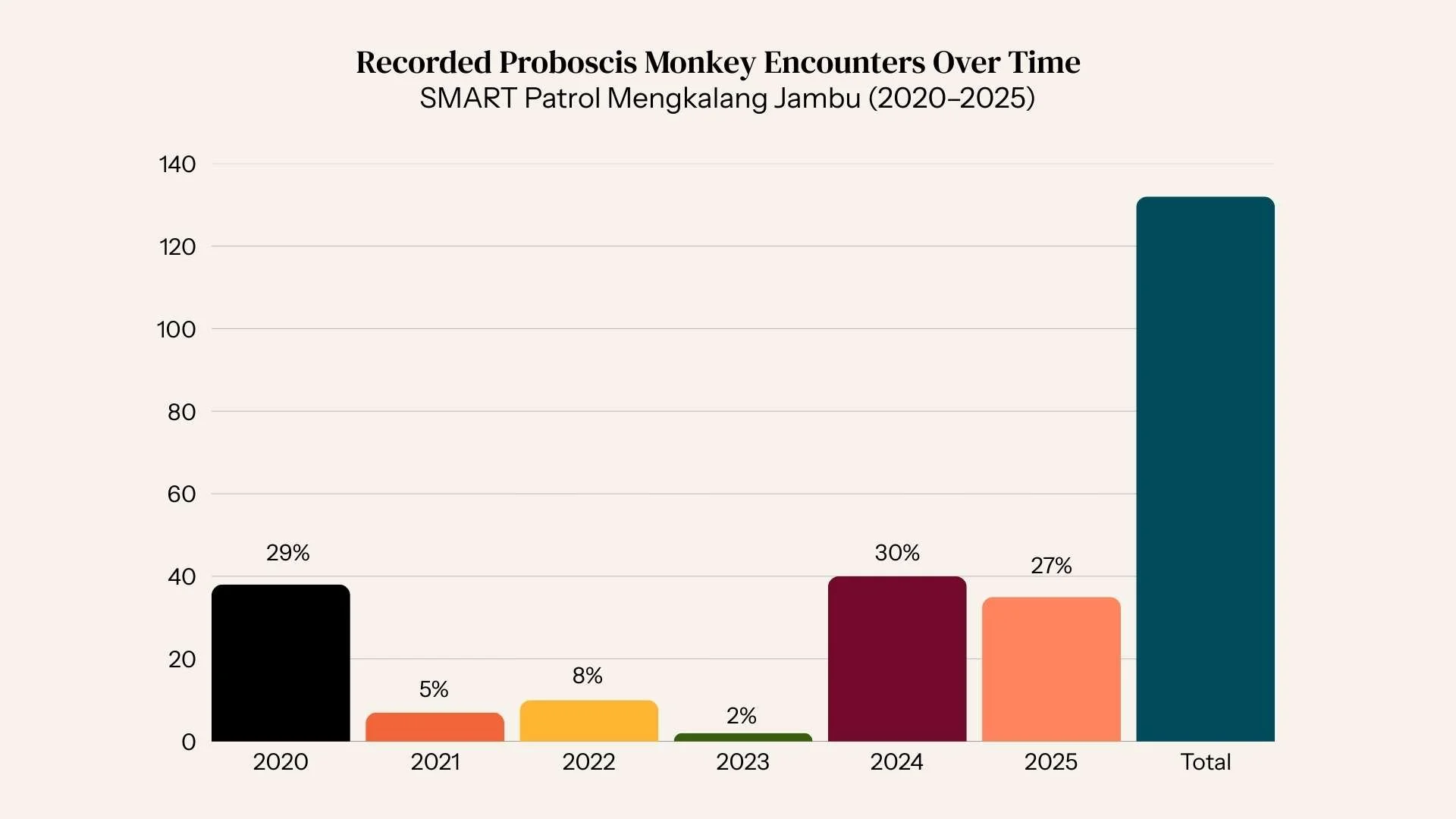
Recorded proboscis monkey encounters over time based on SMART Patrol data from Mengkalang Jambu (2020–2025).
Recognition was given to several patrol teams across West Kalimantan. These included the SMART Patrol Team and the Tauk Biodiversity Team in Landak District for increased encounter rates of Helmeted Hornbills (Rhinoplax vigil), and the Laek SMART Patrol Team in Bengkayang District for Rhinoceros Hornbills (Buceros rhinoceros). Other recognised teams included the Umbo SMART Patrol Team in Bengkayang District for Sunda Pangolins (Manis javanica); the Ladak SMART Patrol Team for gibbons (Hylobates spp.); the SMART Patrol Team and the Padang Turtle Monitoring Team in Kayong Utara District for sea turtles; and the Mengkalang Jambu SMART Patrol Team in Kubu Raya District for proboscis monkeys (Nasalis larvatus).
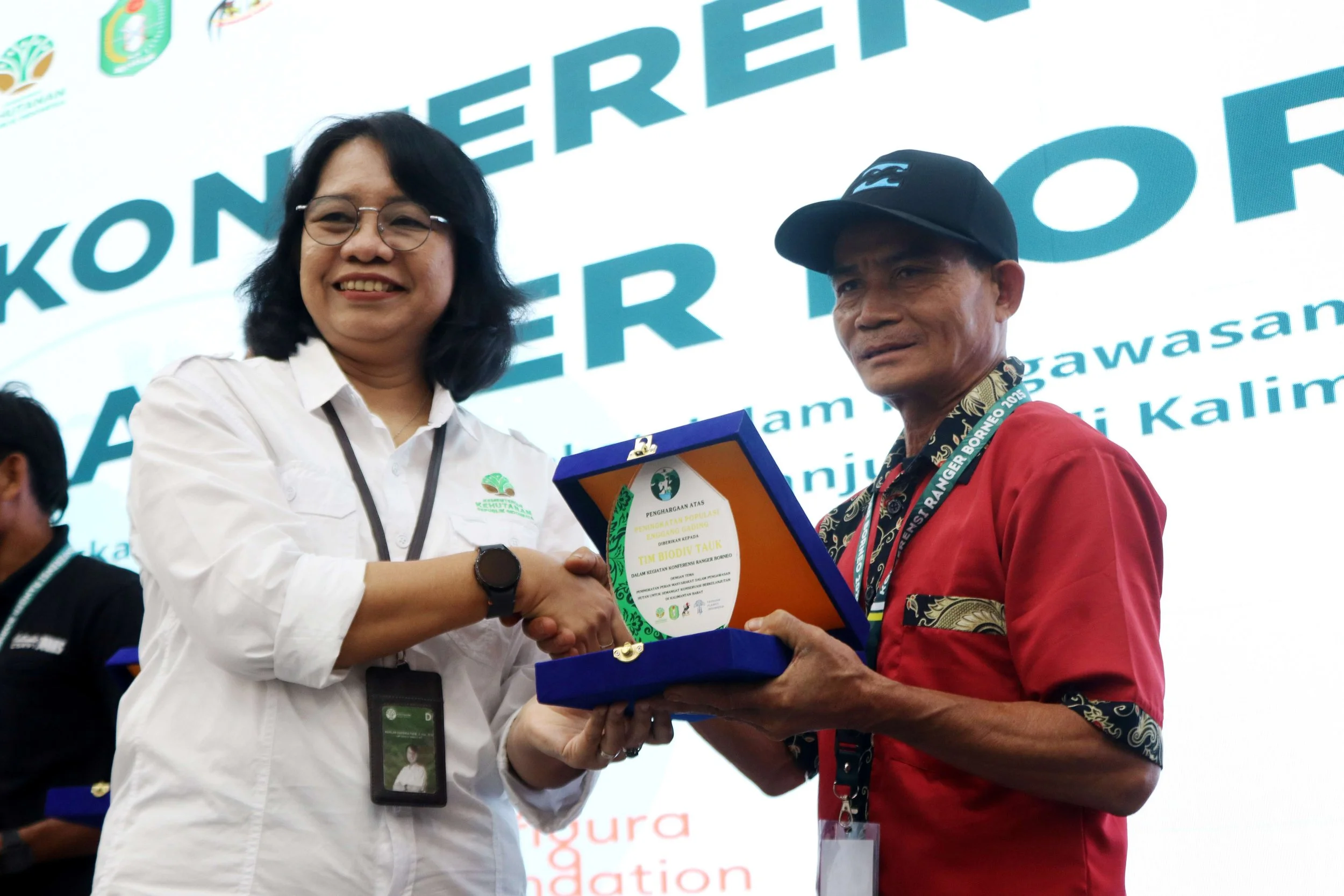
A representative of the West Kalimantan Natural Resources Conservation Agency presents an award to Itusius of the Tauk Biodiversity Team for increased encounters of the Helmeted Hornbill (Tagong) during the Borneo Ranger Conference.
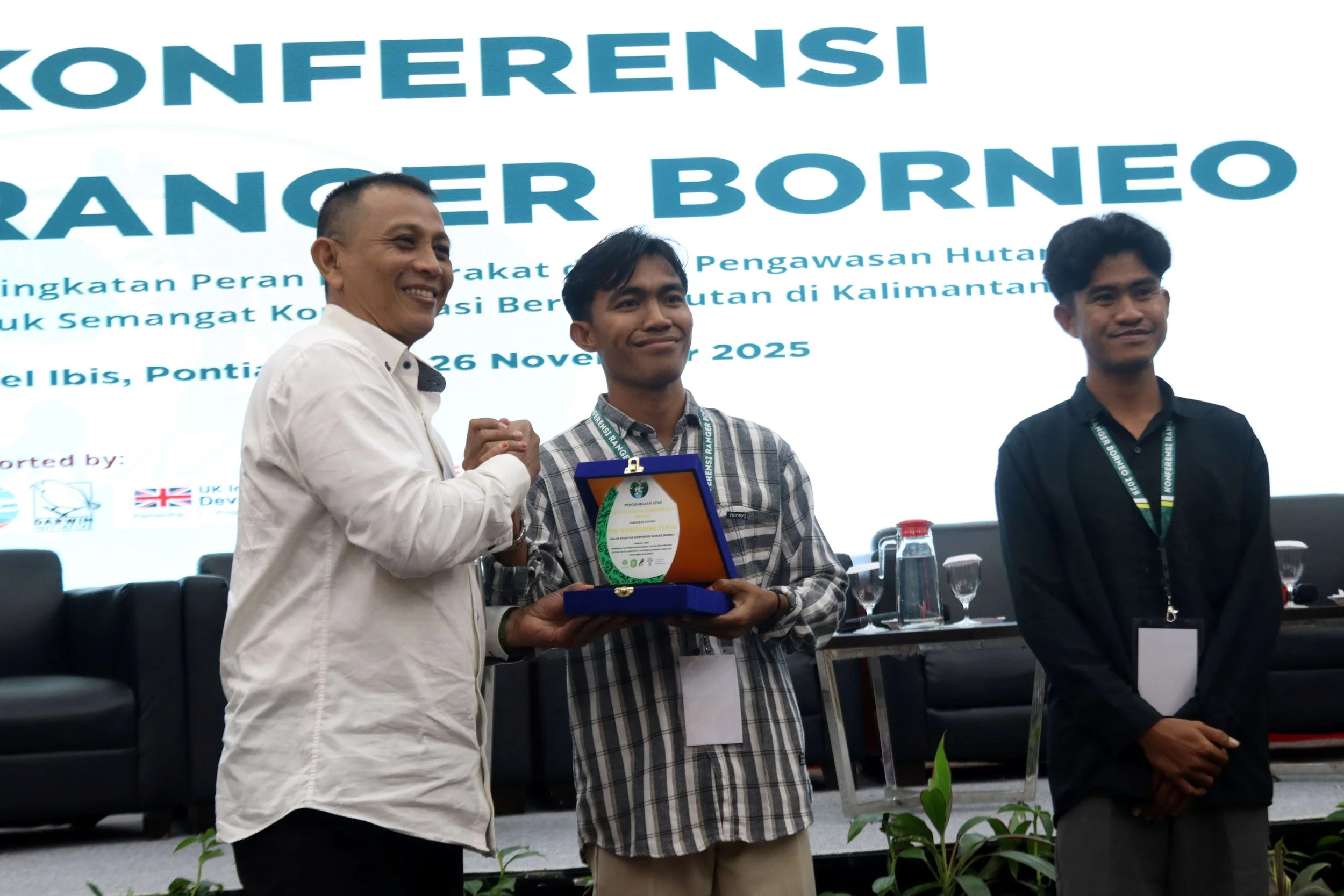
SMART Karimata patrol team receives recognition for their dedication to protecting coastal and marine biodiversity during the Borneo Ranger Conference.
The awards reflect consistent monitoring and reporting. Rangers remain active on the frontline of habitat and wildlife protection. Patrol teams continue to strengthen data collection and improve patrol quality. The information recorded through these efforts supports accurate biodiversity monitoring and conservation planning.
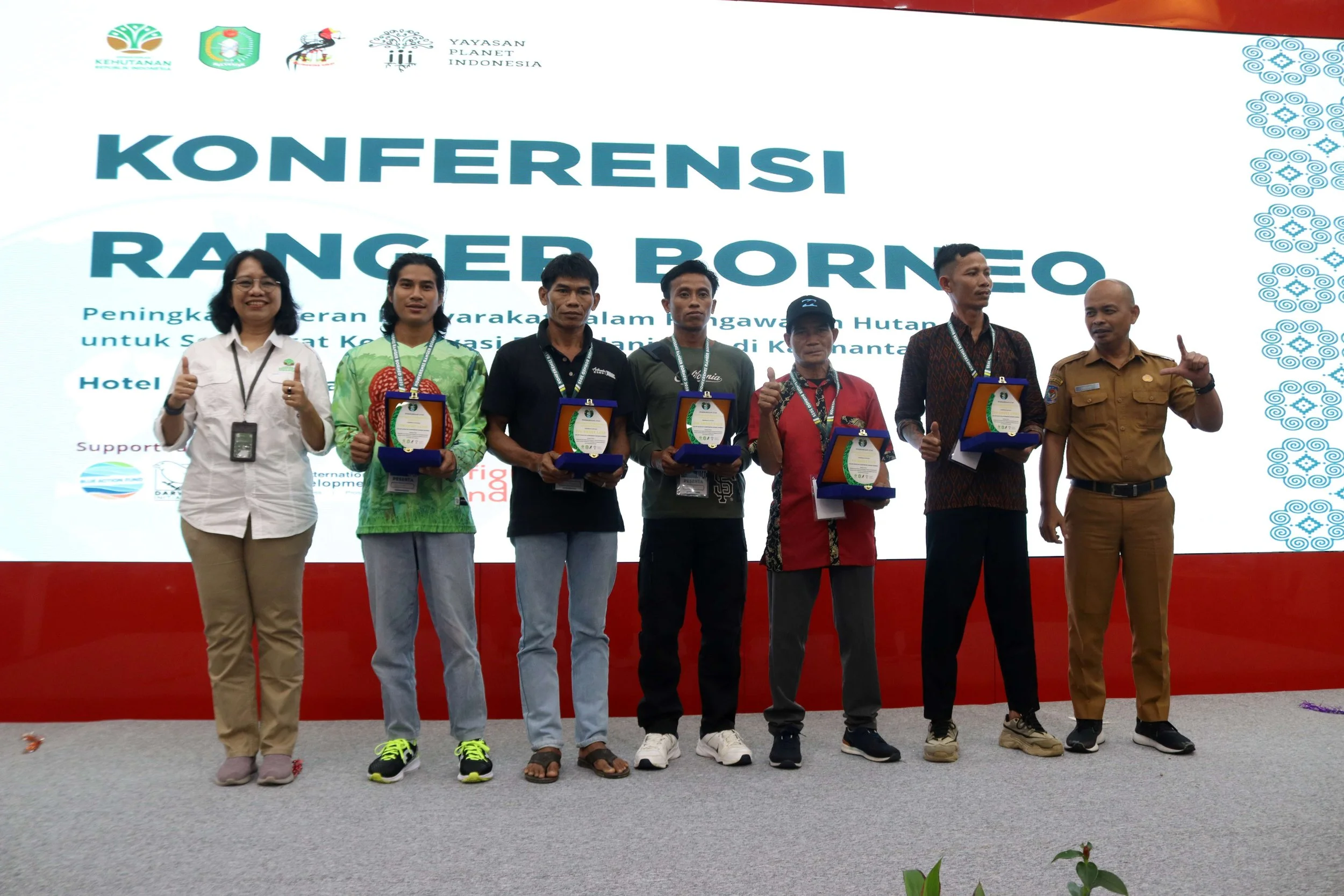
Patrol teams from the Gunung Nyiut terrestrial landscape pose together after receiving recognition for their role in protecting biodiversity and forest areas.
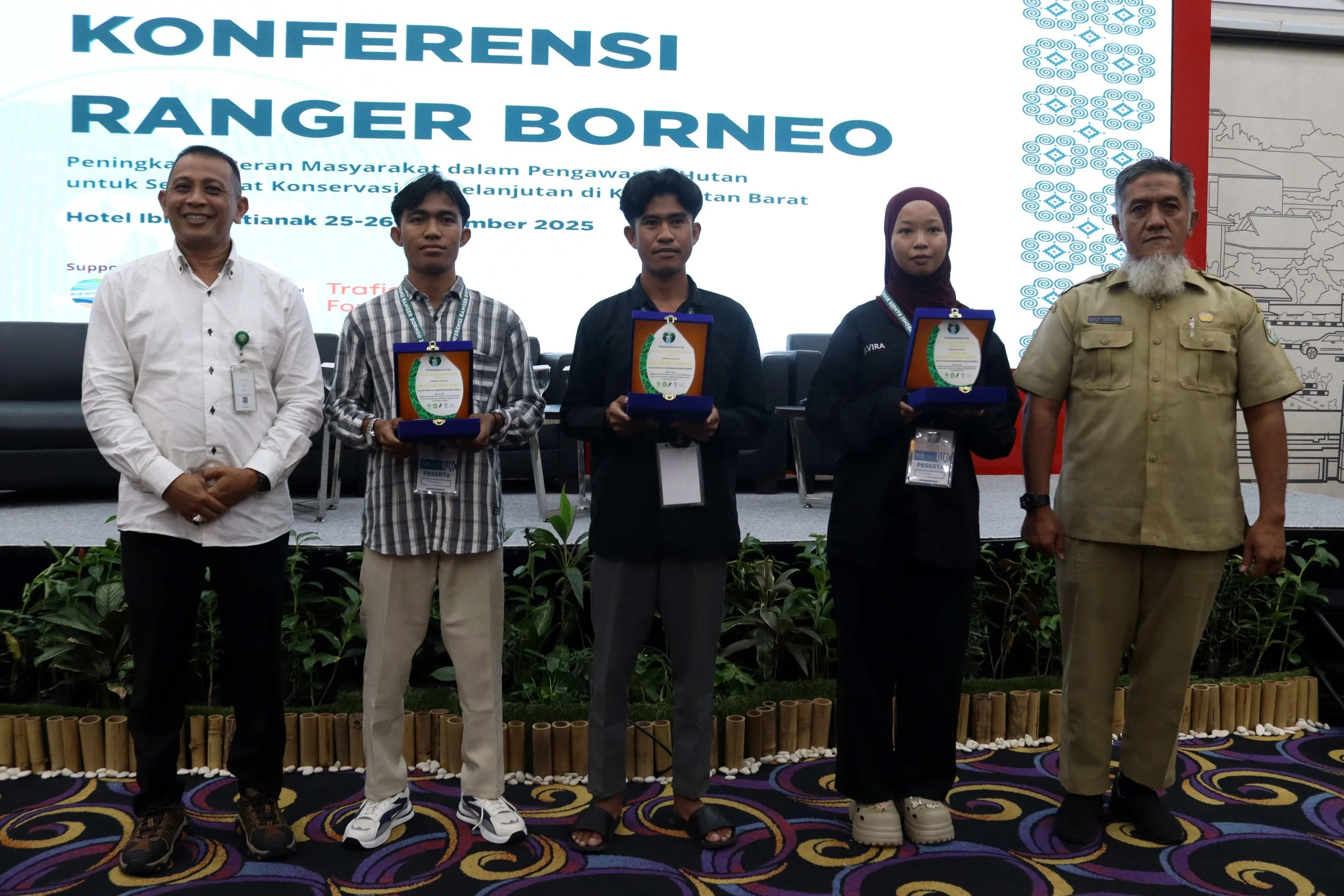
Award recipients from Kubu Raya and the Karimata coastal and marine landscape during the Borneo Ranger Conference.
Voices from the Rangers
The conference was held under the theme “Strengthening the Role of Communities in Forest Monitoring for Sustainable Conservation in West Kalimantan.” Yayasan Planet Indonesia worked alongside government partners, including the West Kalimantan Natural Resources Conservation Agency (BKSDA), the Provincial Environment and Forestry Office (DLHK), and the Provincial Marine and Fisheries Office (DKP), to support community-based monitoring within established legal and policy frameworks.
Several rangers shared experiences from patrol work and spoke about what keeps them involved in protecting forests, wildlife, and coastal areas over time.
“From Hunter to Guardian: “Once Carrying a Weapon, Now Carrying a Camera””
Antonius Edi
From Hunter to Guardian · SMART Patrol Laek, Bengkayang District
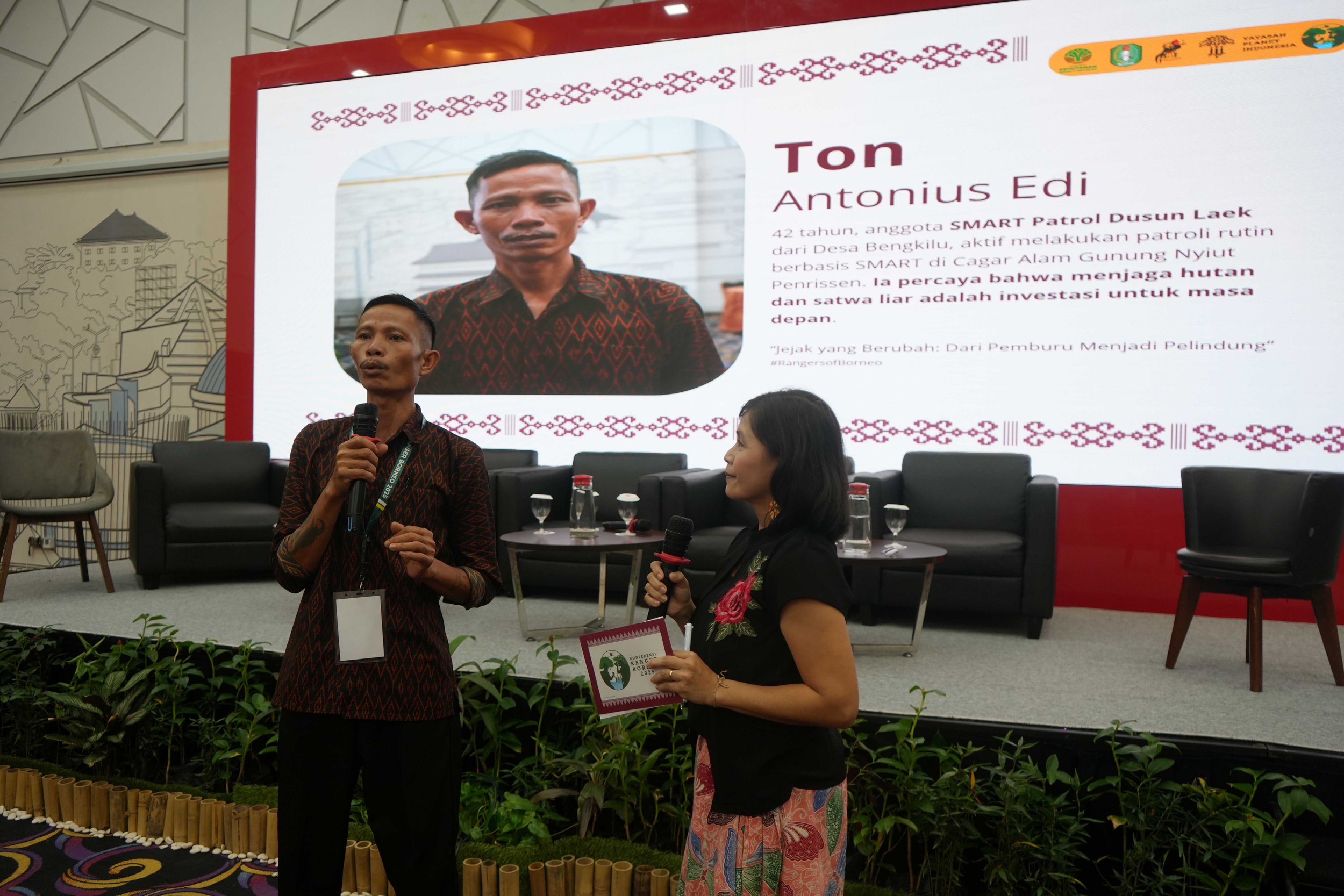
Antonius Edi shares his personal journey during a panel session, reflecting on his transition from hunter to community ranger.
Antonius Edi is from Laek Hamlet, Bengkilu Village, in Bengkayang District. He joined the Laek SMART Patrol Team in 2023. Through patrol work, his view of the forest shifted, from a place where resources are taken to a space that requires protection to support life over time.
“Especially for us as Dayak communities, where we live very close to nature. I used to enter the forest carrying a weapon, but now I carry a camera. I am different now, from hunter to guardian. Working together to protect wildlife in their forest habitats,” he said.
Edi also explained that over time, the decline in hunting activity in the village was not only due to the enforcement of rules, but also because of growing awareness within the community. When the opportunity arose to join patrol work as a forest guardian, it became a significant moment for him.
“The desire to be involved in forest protection had been there for a long time, even though the opportunity came later. When that opportunity finally opened, I was happy to take part directly as a member of the SMART Patrol Team,” he said.
Itusius
Guardian of Tagong · SMART Patrol Tauk, Landak District
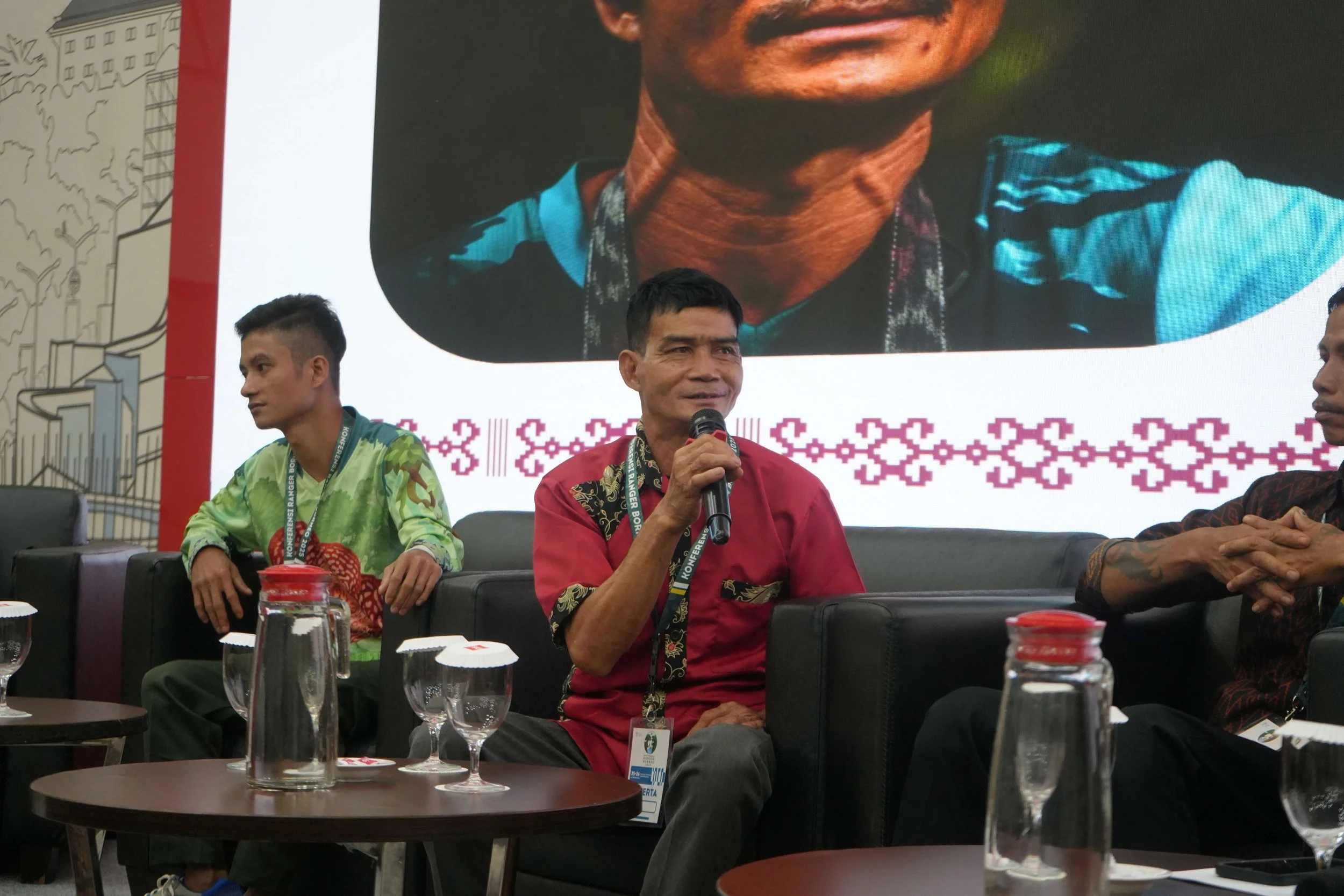
Itusius speaks about community efforts to protect Tagong (Helmeted Hornbill) during a discussion session at the Borneo Ranger Conference.
One inspiring ranger, Itusius, is a member of the SMART Patrol Team in Tauk Village, Bengkayang District. He spoke about his pride in taking part in wildlife protection and conservation, and about the importance of wildlife in maintaining balance within West Kalimantan’s rainforest ecosystems. He has been involved with the SMART Patrol Team since it was first established in 2018.
“I used to be part of the threat to hornbills. Now I am part of the effort to protect the Helmeted Hornbill in the wild. It feels extraordinary,” he said.
His shift was supported by community members and customary leaders. Together, they worked to strengthen customary rules related to biodiversity protection, particularly to reduce hunting and illegal logging. The forest is no longer treated only as a place to extract resources, but as a shared living space that requires collective care.
Bitor
First Encounter with an Orangutan · SMART Patrol Tangkit, Sintang District
Another story comes from Bitor, who has been a member of the SMART Patrol Tangkit Team, Sintang District, since 2020. Initially, he filled an open position on the team. After taking part in patrols and encountering an orangutan in the wild for the first time, he chose to remain involved in patrol work to help protect wildlife and their habitats.
“From that experience, I learned that if we do not start protecting nature now, then when? That awareness became the foundation of my steps to continue being involved in protecting wildlife and forests,” Bitor explained.
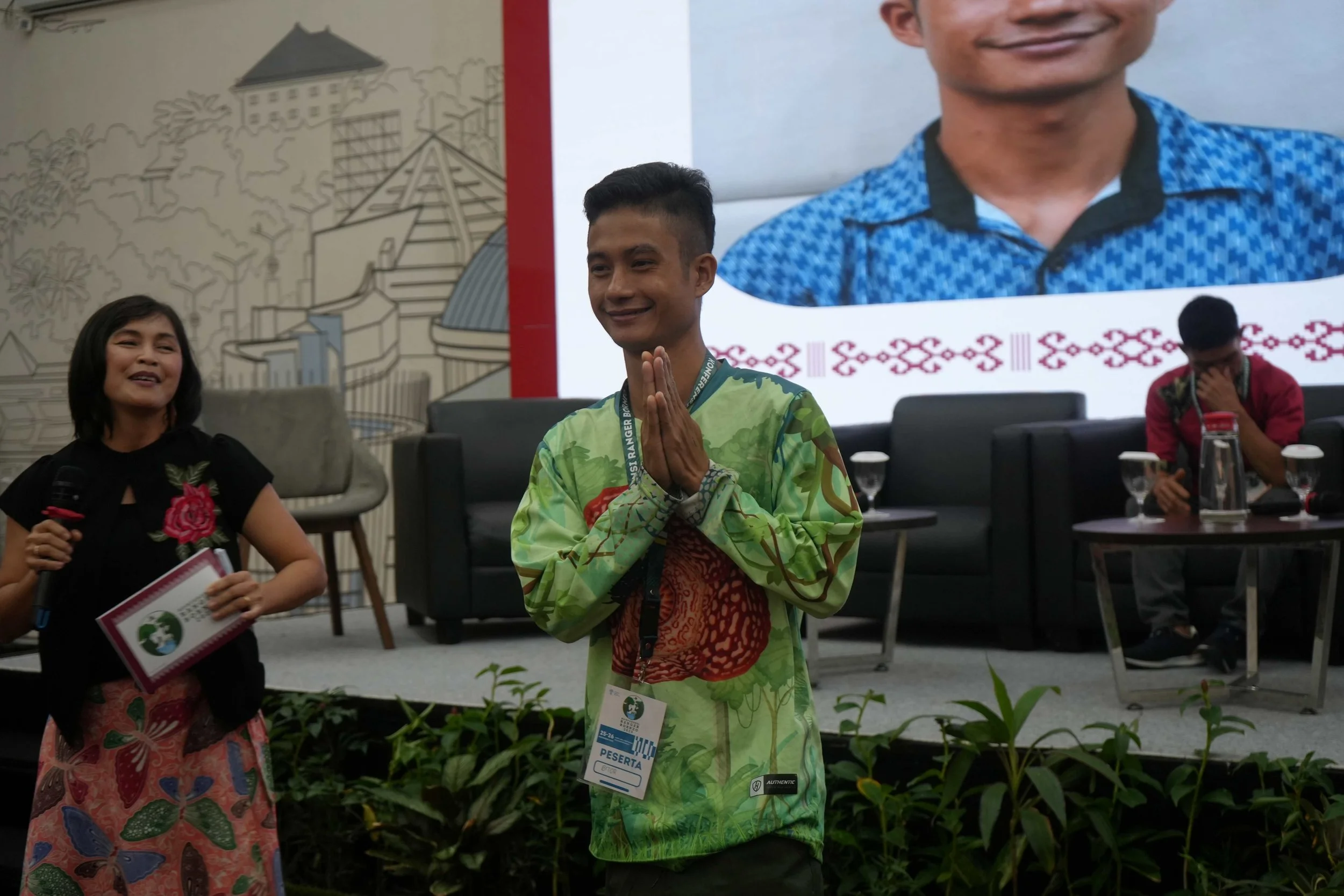
Bitor, a member of the SMART Patrol Tangkit team, shares his experience after his first encounter with an orangutan in the wild.
Bitor also shared a message for younger generations to take part in efforts to protect habitats and wildlife.
“I hope young people can be more involved in conservation work, because the future of forests and wildlife depends on them. Young people bring energy, courage, and the ability to adapt quickly. Their role is needed to pass on knowledge, support change, and encourage more careful treatment of nature,” he said.
From Exploitation to Conservation: Changes in Coastal Community Practices
Agus Liani
Protecting Coastal and Marine Ecosystems · SMART Patrol Betok Jaya, Kayong Utara
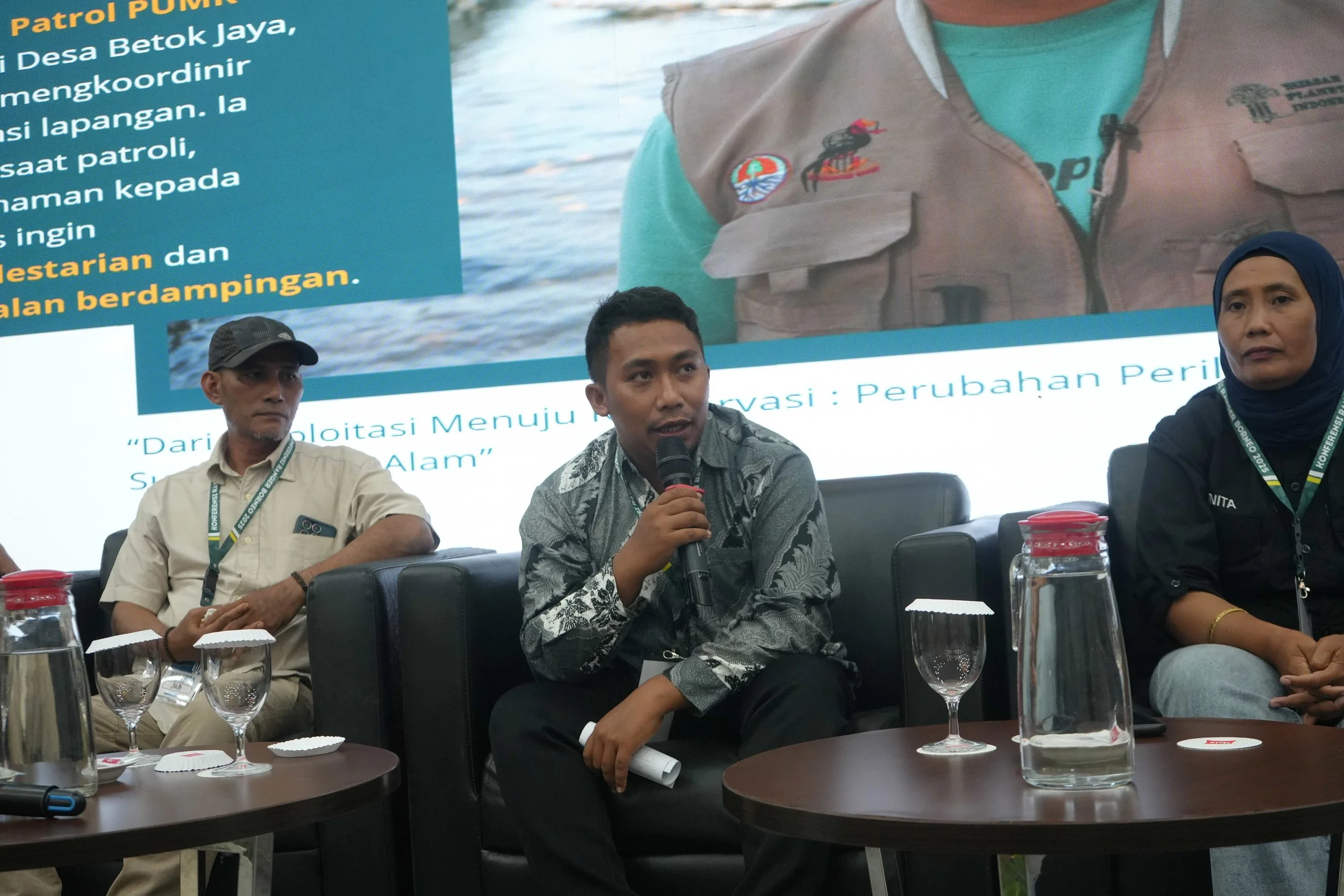
Agus Liani, a fisherman from Betok Jaya Village, speaks about protecting coastal and marine areas in the Karimata Nature Reserve through community patrols and monitoring.
Agus Liani, a fisherman from Betok Jaya Village, West Kalimantan, is someone who has dedicated himself to protecting the sea and coastal environment within the Karimata Nature Reserve. Agus works as part of the SMART Patrol Working Group under the Betok Mensiban Jaya community governance body (PUMK), in coordination with the West Kalimantan Natural Resources Conservation Agency (BKSDA Kalbar), focusing on preventing illegal fishing and other activities that threaten marine ecosystems in Betok Jaya.
“I feel proud to be part of efforts to protect the sea and biodiversity in Betok Jaya. I believe that meaningful change begins with small steps,” Agus said.
Agus noted changes in how coastal communities manage natural resources. In several villages, community members have become more actively involved in protecting marine environments, including through sea turtle monitoring activities.
“SMART Patrol conservation work began in 2022, and changes are starting to be seen as marine conditions gradually improve. Community response has been positive, with strong support for patrol activities and direct involvement in protecting turtles and their habitats,” he said.
Jamaluddin
Community-Led Marine Monitoring · Community-Based Fisheries Monitoring Group (POKMASWAS) Bina Lestari Sungai Nibung, Kubu Raya
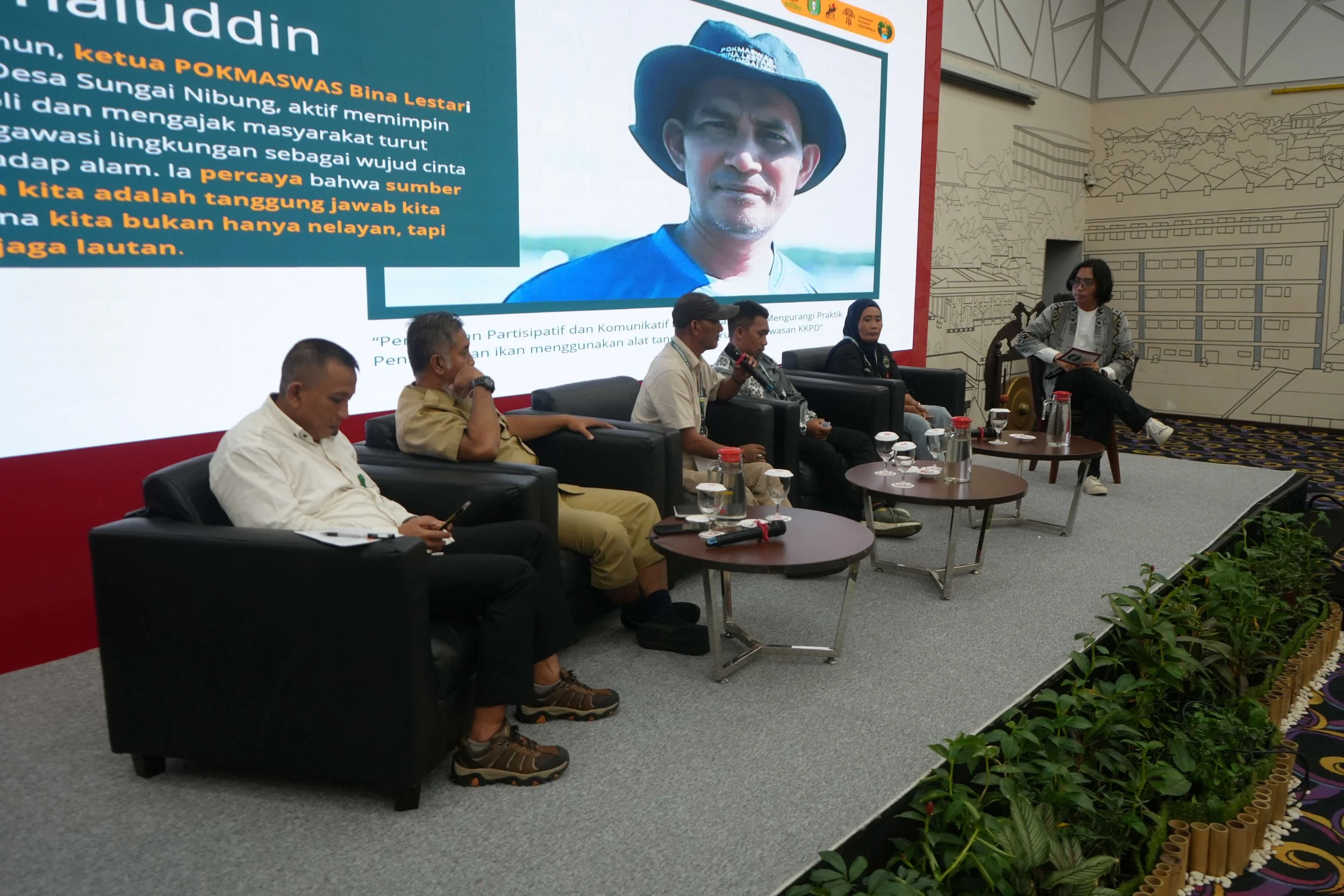
Jamaluddin, head of the Bina Lestari community monitoring group, shares observations on growing community awareness in Kubu Raya to reduce destructive fishing practices and protect marine ecosystems.
Collective awareness to protect coastal and marine areas in Kubu Raya has grown within communities, alongside increasing understanding that unsustainable fishing practices, such as repeatedly catching undersized fish or using destructive fishing gear, can damage coral reefs, accelerate coastal erosion, and reduce marine wildlife populations.
Seeing dolphins at sea often brings excitement to coastal communities. Their presence is widely understood as a sign of healthy marine conditions and is commonly associated with productive fishing seasons
“I personally believe that conservation efforts not only contribute to protecting marine ecosystems but also support local economic well-being. Changes in community behaviour, from extractive practices toward conservation, reflect the development of a more balanced relationship between marine wildlife protection, environmental sustainability, and the lives of coastal communities,” he explained.
Yunita
Women on the Frontline of Proboscis Monkey Conservation and Ecosystem Restoration · Srikandi Bekantan Patrol Team, Kubu Raya
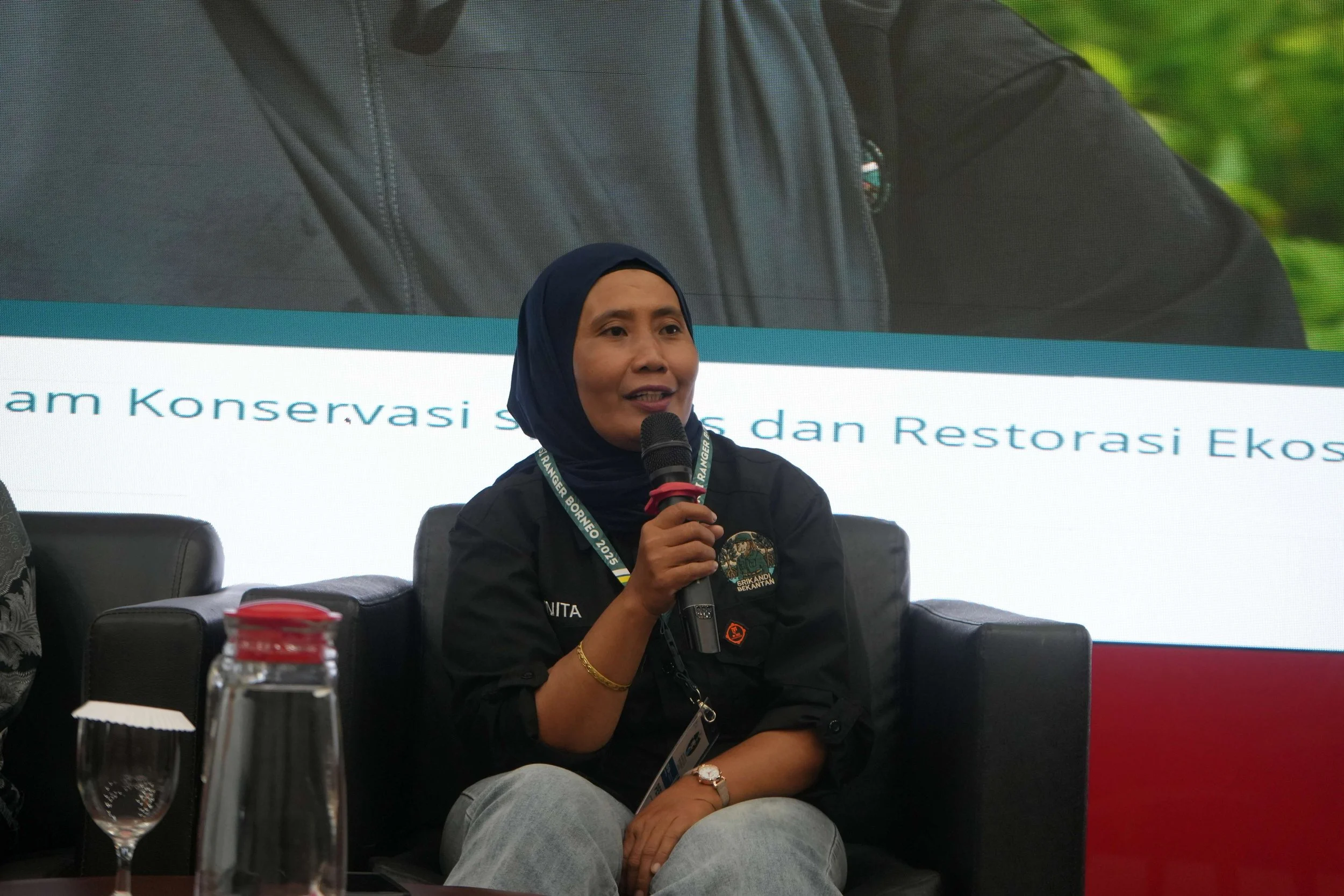
Yunita, head of the Srikandi Bekantan Patrol Team in Kubu Raya, speaks about women-led monitoring of proboscis monkey habitats following the team’s establishment in July 2025.
The Srikandi Bekantan Patrol Team was established on 2 July 2025 and is made up of six members. The name “Srikandi” refers to a figure from Javanese stories associated with courage and perseverance in carrying out demanding roles.
During proboscis monkey patrols, the team conducts direct monitoring in the species’ natural habitat using various methods, ranging from motorised transport to travelling on foot, in order to ensure the well-being of the animals and the continued health of the forest.
“What we are doing now, and all of the efforts involved, are directed toward a long-term goal: ensuring the sustainability of proboscis monkeys and their ecosystems for future generations. This reflects our shared spirit and commitment, and also shows the active role of women in conservation and environmental management,” said Yunita.
During the conference, rangers shared experiences and challenges from the field. At sea, patrols contend with unpredictable conditions. In forest areas, patrols often involve long distances covered on foot over several days.
Closing the Conference with Shared Conviction
Before participants returned to their respective villages, coastal and marine areas, and forest regions, the conference served as a reminder that rangers are guardians of their own homes. Threats remain, and challenges continue, but conservation work is carried forward by those operating on the frontline.
When rangers lead work in the field, and Yayasan Planet Indonesia stands alongside them, there is nothing that cannot be achieved. Participants returned home not only with new knowledge but also with confidence in their ability to protect West Kalimantan’s ecosystems for future generations.
Yayasan Planet Indonesia acknowledges all patrol team members, the West Kalimantan Natural Resources Conservation Agency (BKSDA), the Provincial Environment and Forestry Office (DLHK), and the Provincial Marine and Fisheries Office (DKP) for their collaboration in supporting community-based conservation.
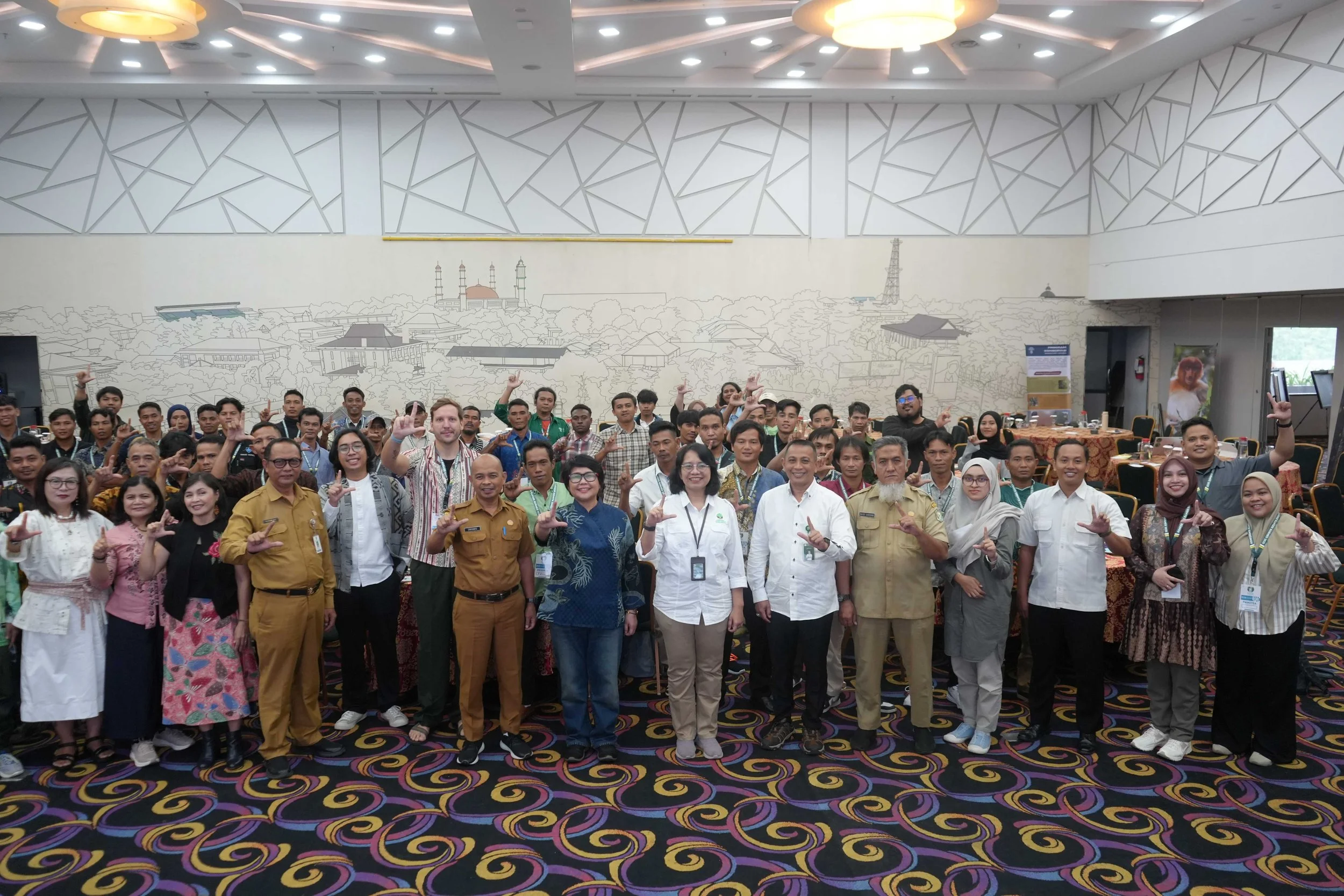
Participants and invited guests gather at the close of the Borneo Ranger Conference, reflecting shared commitment to collaboration and community-led conservation.
If you have any questions please reach out via admin@planetindonesia.org. Sign up for our newsletter and follow us on our social media Facebook here, Instagram here, and LinkedIn here to get timely updates on our activities, an insider’s look into the lives of front-line conservationists, and ongoing programs.