
When a Community Institution Becomes Common Ground
How a village festival in coastal Kubu Raya brought two community governance bodies together and moved them closer to self-reliance.
By Lia Syafitri, Ridwan, and Aurore Maxey
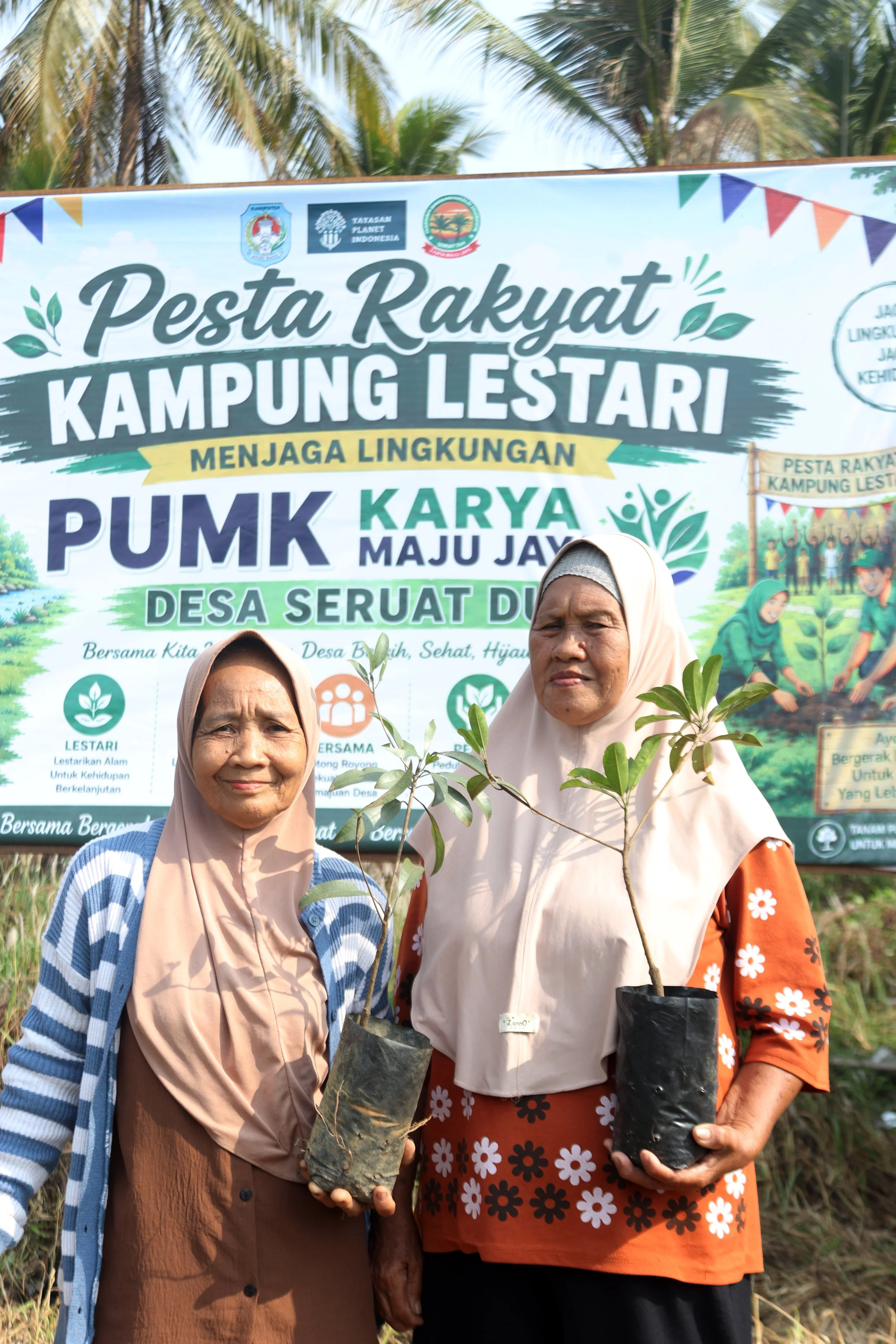
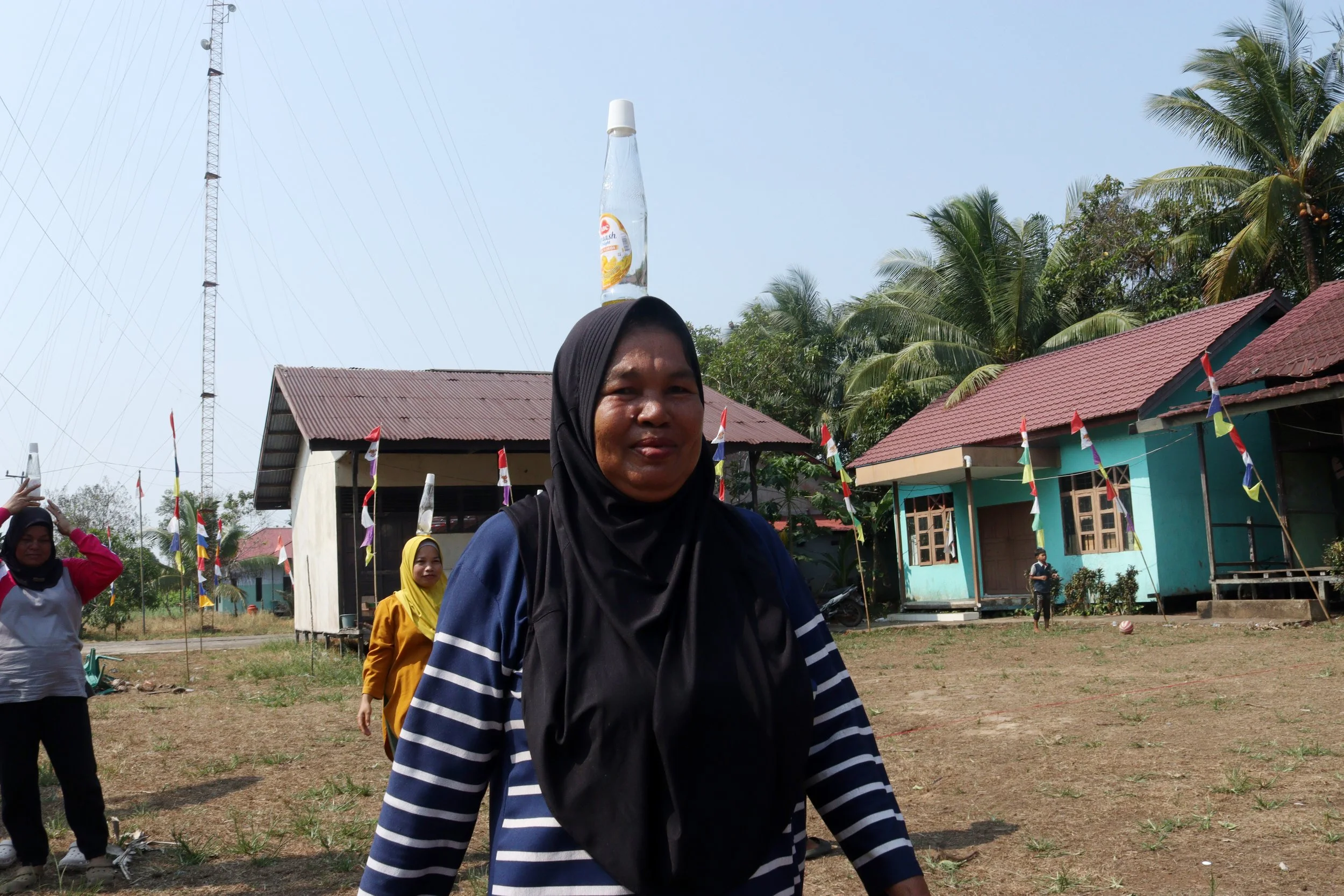
Residents take part in the Pesta Rakyat Kampung Lestari in Seruat Dua.
In Seruat Dua village, two community governance bodies known locally as PUMK (Pelayanan Usaha Masyarakat Konservasi) decided to do something together. They combined their plans, brought residents from across the village together, and used funding from the Collective Governance Fund (CGF) to organize a two-day village festival. Behind the games, performances, and celebrations was a larger purpose: helping people understand that the PUMK belonged to them.
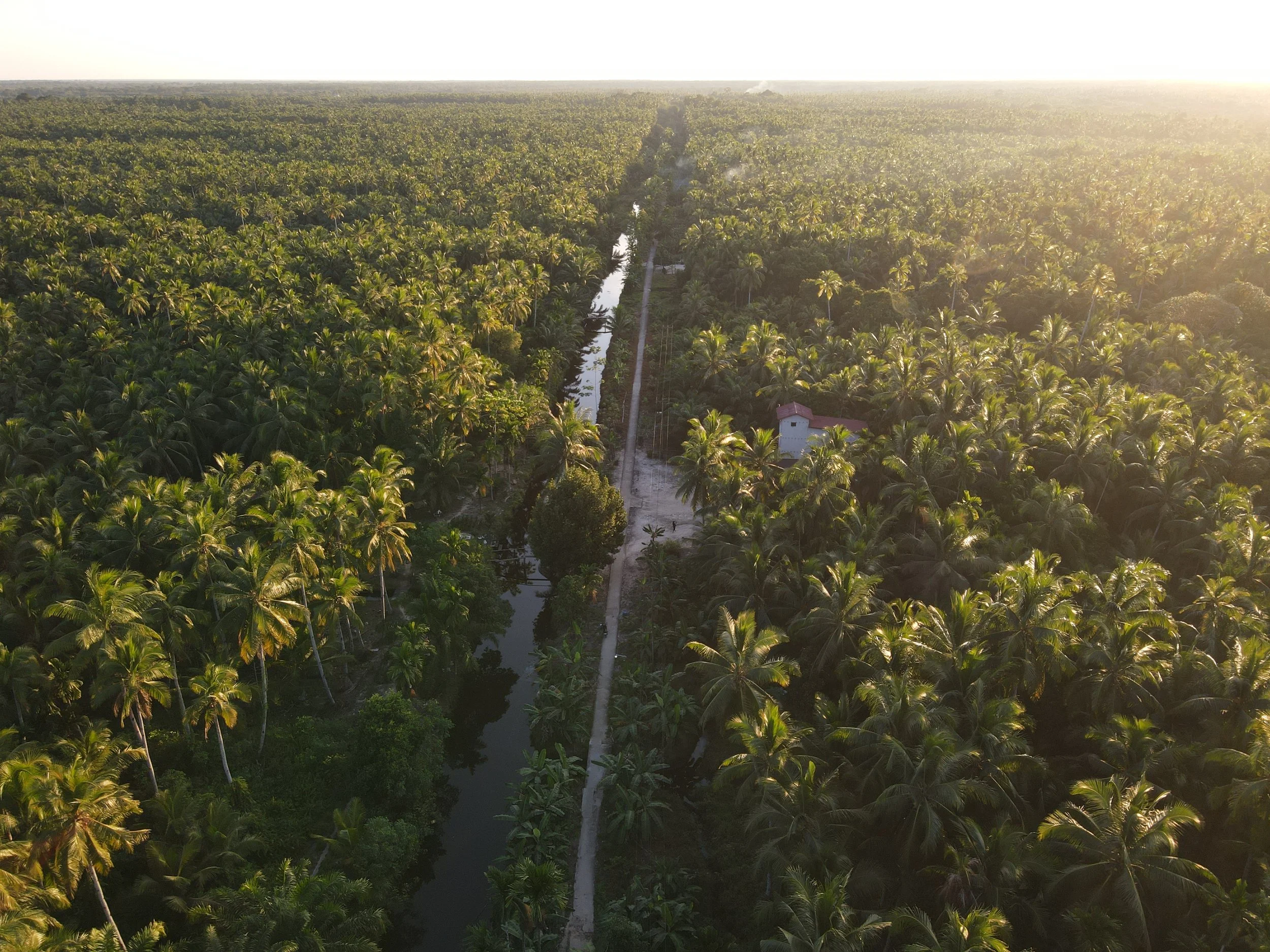
On 15–16 August 2026, Seruat Dua was busier than usual. The village sits in Kubu Raya Regency, on the mangrove-lined coast of West Kalimantan in Indonesian Borneo. With Indonesia's 81st Independence Day approaching, residents from the hamlets of Karya Makmur, Fajar Karya, and Karya Maju gathered for the Pesta Rakyat Kampung Lestari Seruat Dua, a pesta rakyat (people’s festival) themed around a kampung lestari, or sustainable village, and held as part of the Independence Day celebrations.
There was a fun walk, community aerobics, games and competitions, live entertainment, a night market with stalls run by local small businesses, activities for children, and plant seedlings to take home. But the festival also gave residents a chance to get to know PUMK again.
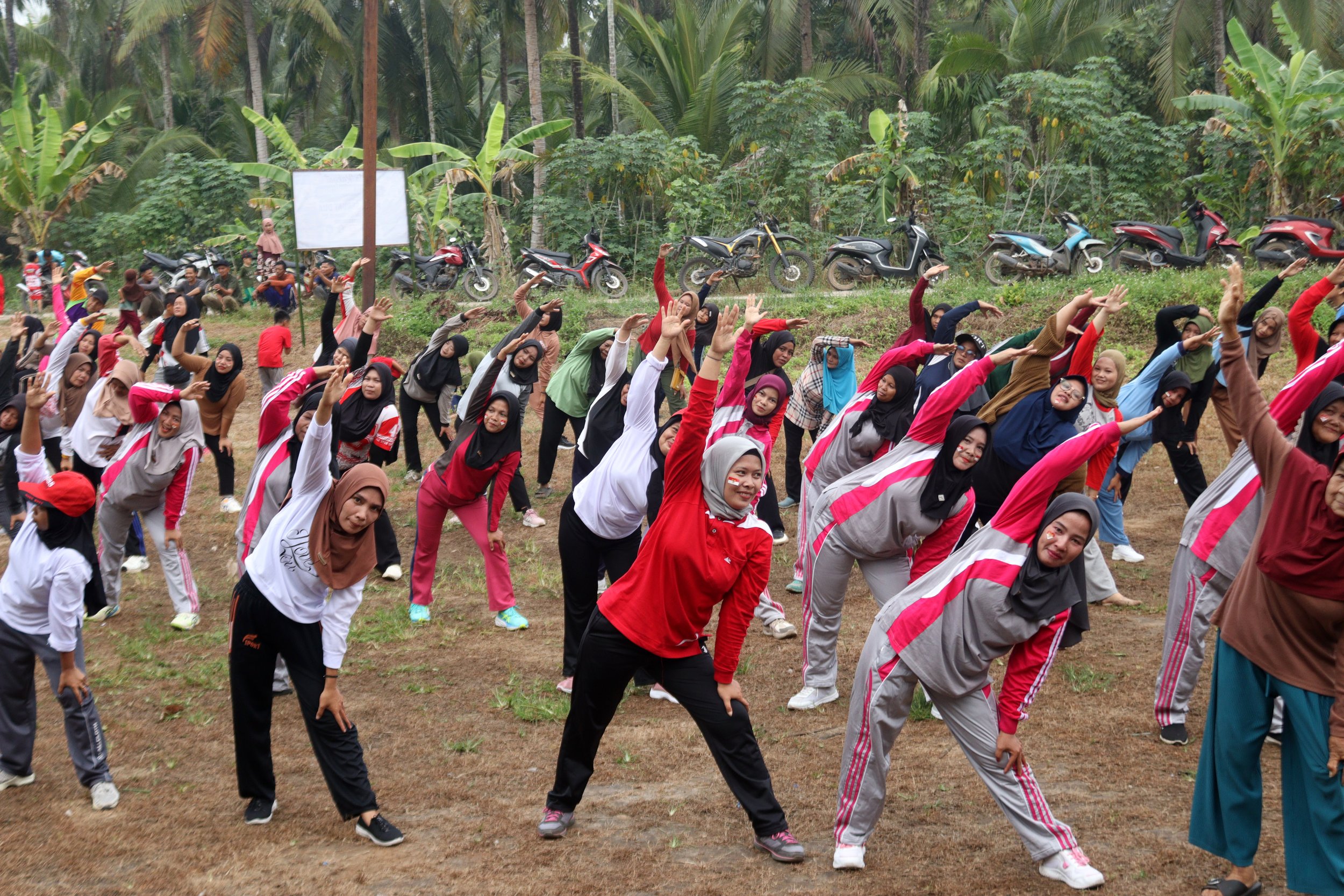
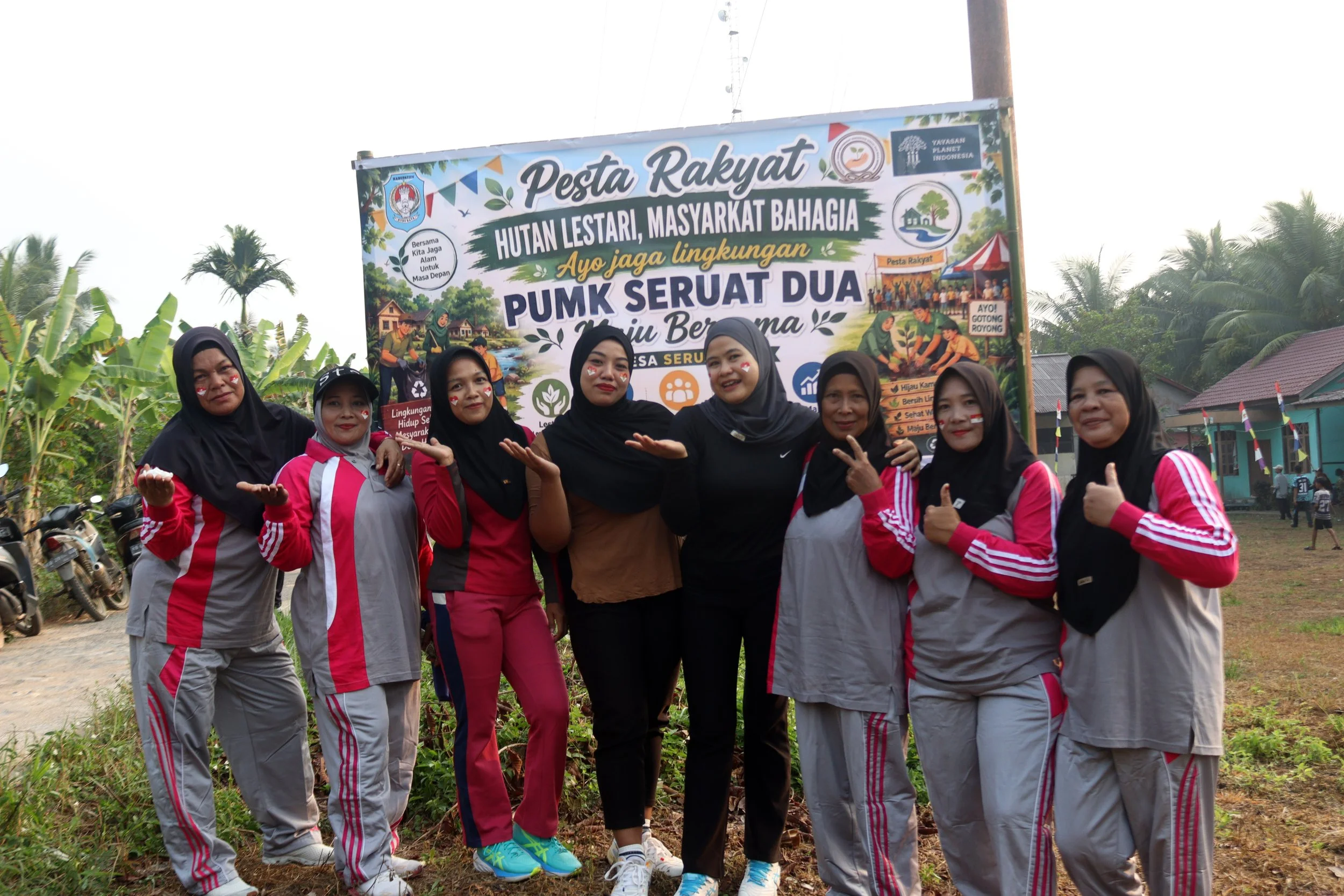
Community aerobics with PUMK Seruat Dua Maju Bersama.
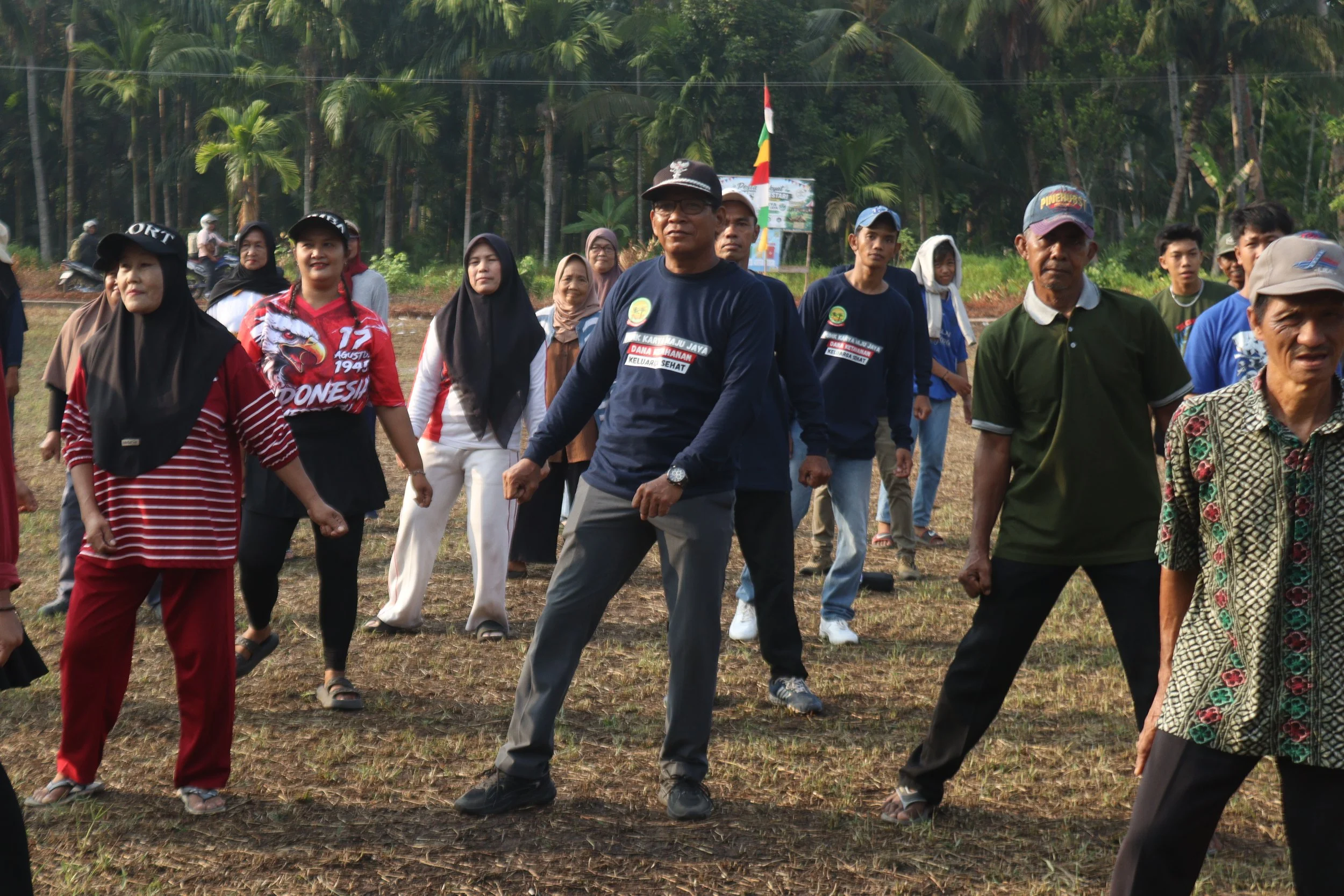
Community aerobics with PUMK Karya Maju Jaya, joined by the head of Seruat Dua village.
PUMK are community-run institutions that manage programs decided locally. In Seruat Dua, this includes savings and loans as well as social and environmental activities. The festival brought together the village's two PUMK: Seruat Dua Maju Bersama (SDMB) and Karya Maju Jaya (KMJ). SDMB was established in 2018 and works in Karya Makmur hamlet. KMJ was established in 2021 and works in Fajar Karya and Karya Maju.
A Community Institution That Needed to Be Reintroduced
SDMB has worked alongside Yayasan Planet Indonesia (YPI) since 2018, and its growth has not always been smooth. In 2021, misinformation began circulating about the PUMK. A rumor spread that residents would be barred from using natural resources, particularly nipa palm leaves and mangroves, which many coastal households use in everyday life. SDMB responded by meeting with residents, answering questions, and trying to clear up the misunderstanding. That process rebuilt trust and eventually led to the creation of a second PUMK, Karya Maju Jaya, serving Fajar Karya and Karya Maju.
But some of that confusion remained. For some residents, the PUMK was still mainly known as a place to save or borrow money. Its broader role, and the fact that the community created and ran it, was less well understood.
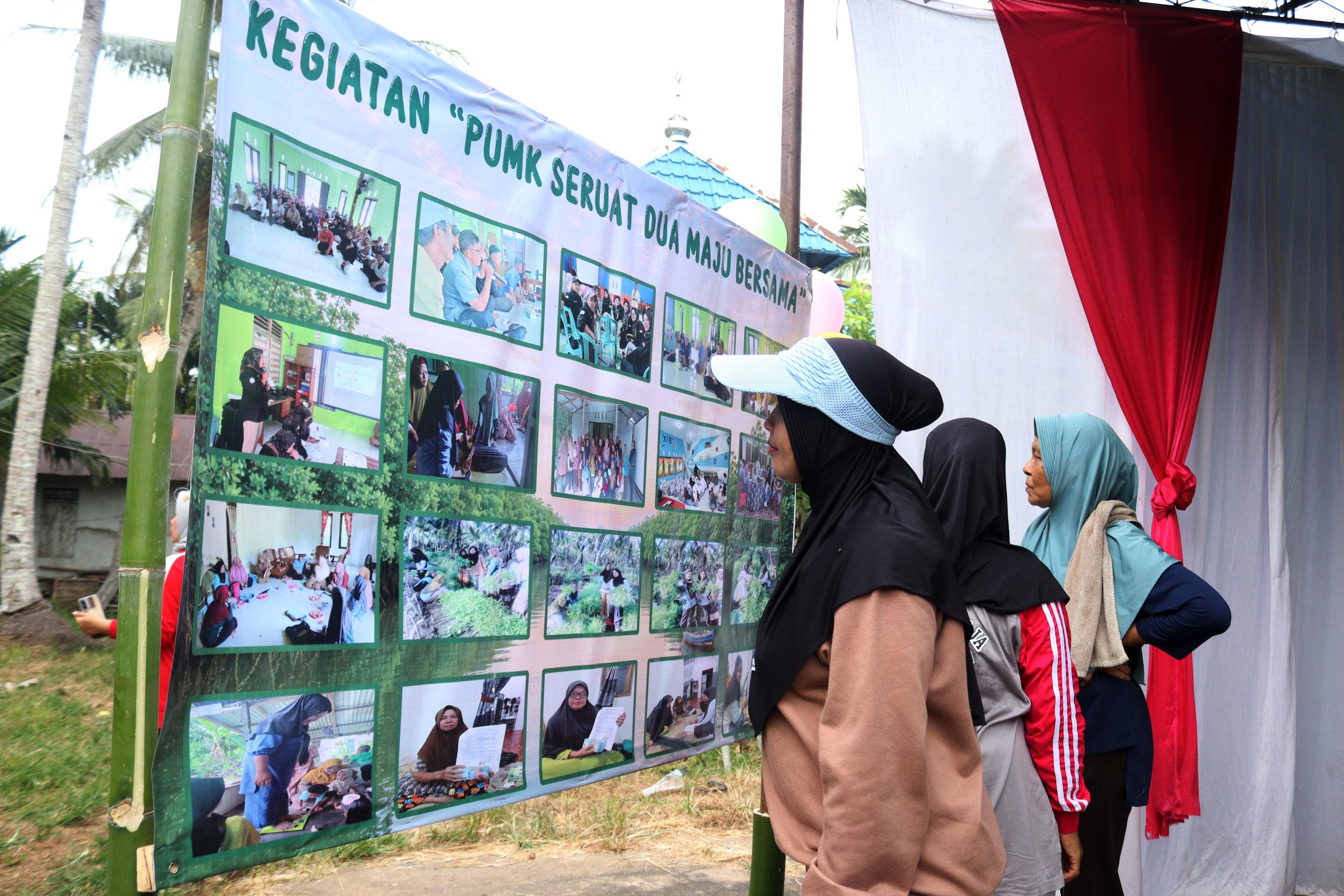
Residents learn about the PUMK’s programs and activities from banners at the festival.
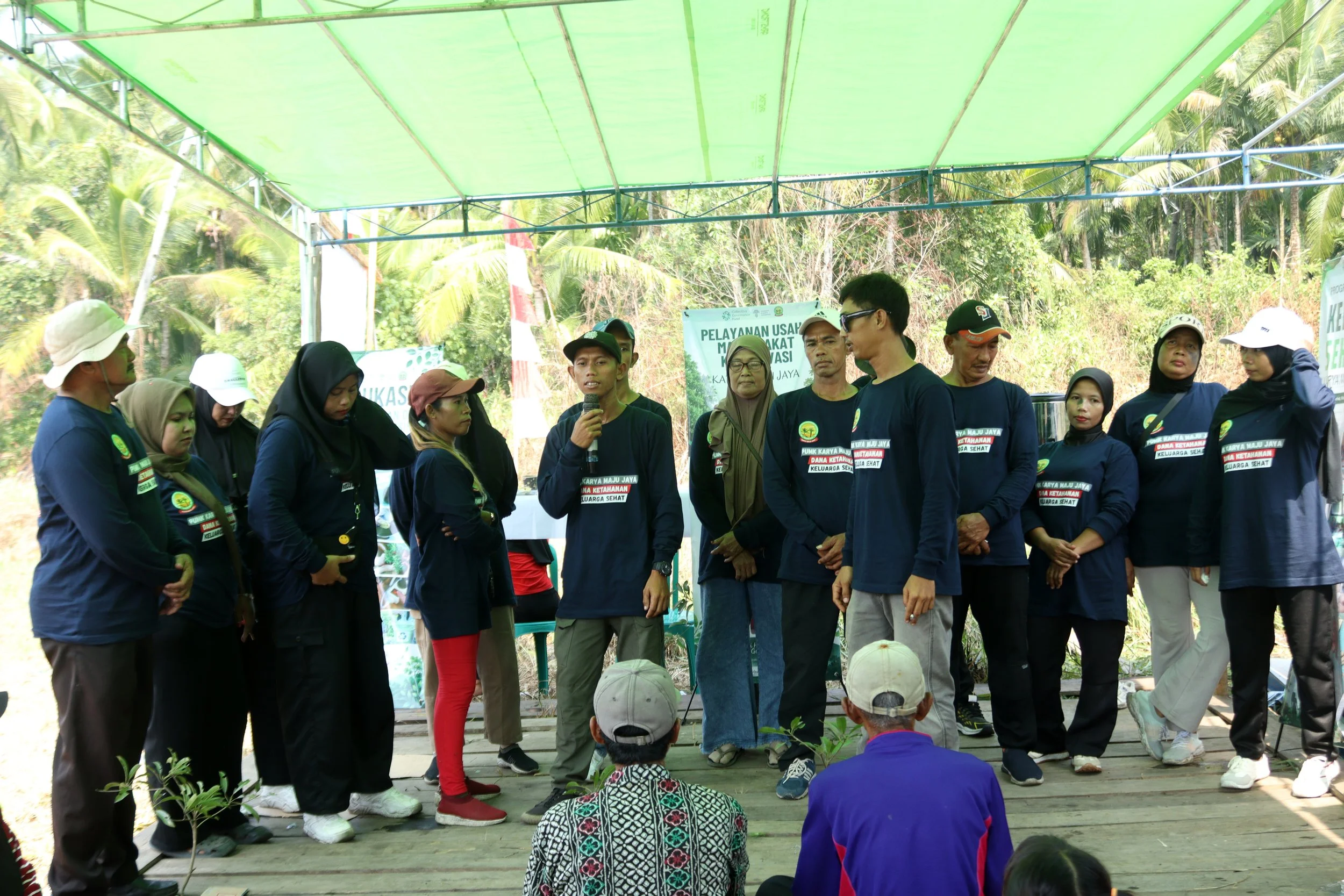
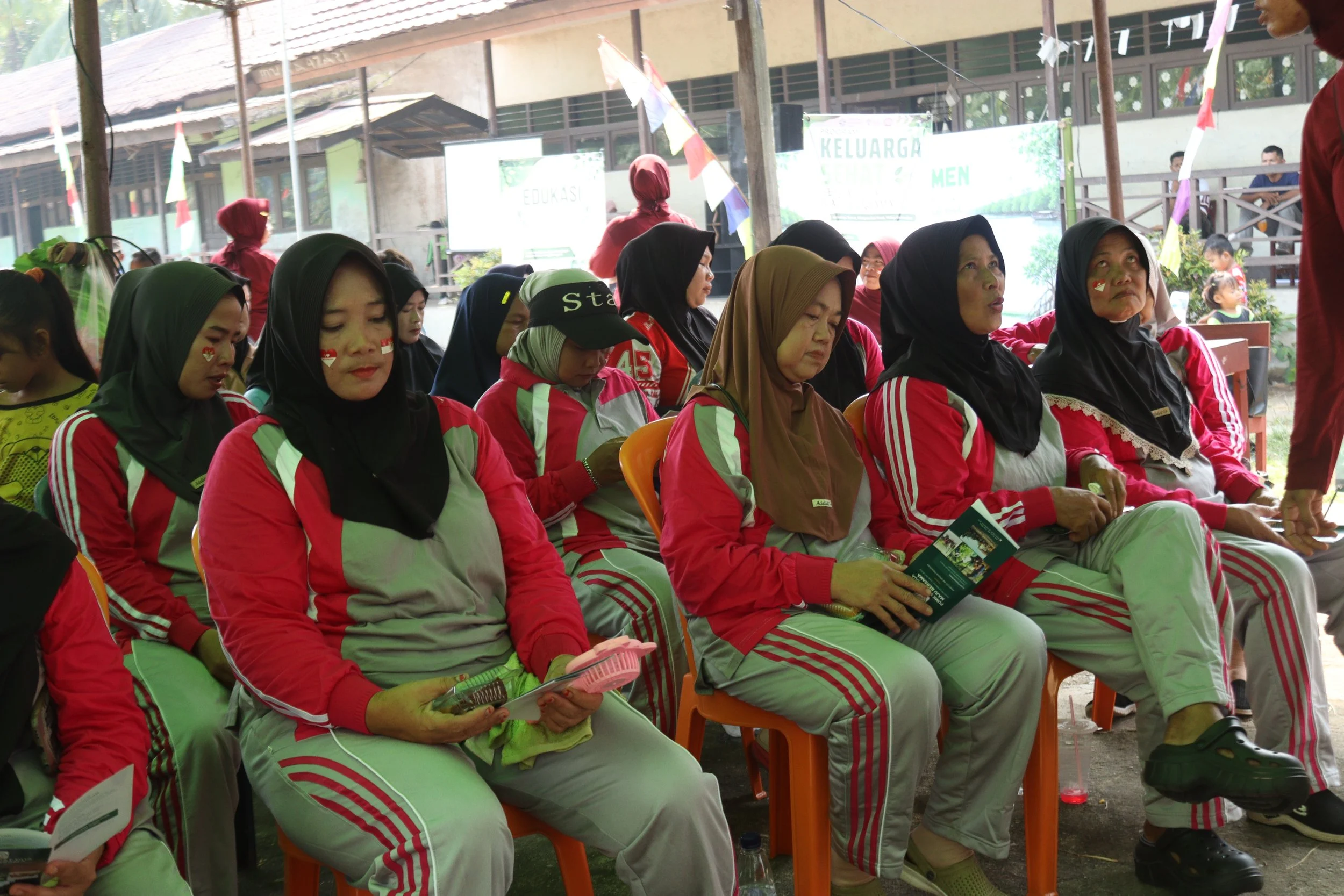
The Pesta Rakyat was a way to change that. Alongside the celebrations, residents could learn what the PUMK does, ask questions about its programs, and find out how to get involved. The PUMK also used the information sessions to introduce their Healthy Family Program, encouraging residents to take part in future health check-ups and health talks.
PUMK Karya Maju Jaya board members present the PUMK to residents in Karya Maju.
From Two Proposals to One Festival
The Pesta Rakyat was not originally planned as one large event. PUMK Seruat Dua Maju Bersama and PUMK Karya Maju Jaya each submitted their own proposal to the Collective Governance Fund, which channels funding directly to community governance bodies for activities they plan themselves. PUMK Seruat Dua Maju Bersama proposed a community aerobics event, while PUMK Karya Maju Jaya proposed a fun walk. The activities were different, but their purpose was the same: to expand membership and reach residents who did not yet fully understand the PUMK.
YPI field facilitator Ridwan discusses festival preparations with PUMK board members.
Ridwan, YPI's field facilitator in the village, suggested combining the two activities. He discussed the idea with both boards, and they agreed to make the Pesta Rakyat Kampung Lestari Seruat Dua a joint event. Their decision showed that both PUMK could look beyond their respective areas of work. Rather than each running its own event, they chose to pool their resources and reach more people across Seruat Dua.
Seruat Dua covers around 1,313 hectares and consists of four hamlets: Karya Makmur, Fajar Karya, Karya Maju and Karya Bersama. If all the activities had been held in one location, some residents would have had to travel a considerable distance. The activities therefore remained within each PUMK's area: Karya Makmur for PUMK Seruat Dua Maju Bersama and the Karya Maju hamlet for PUMK Karya Maju Jaya. Both events shared one framework and one goal, with activities adapted to each hamlet's needs.
It reminded us that working together doesn't always mean being in the same place. What matters is moving toward the same goal.
YPI field facilitator Ridwan discusses festival preparations with PUMK board members.
From Governance to the Ability to Act
For YPI, strengthening governance is about more than forming groups or putting rules in place. A strong governance body creates space for communities to manage resources, set priorities, make decisions, and carry those decisions out. That is what the two PUMK in Seruat Dua did. They brought their plans together to address a shared need: reintroducing the PUMK so more people could benefit, rebuilding a sense of ownership, and creating more opportunities for residents to get involved.
Access to CGF funding allowed them to turn those plans into action. The CGF is a direct funding mechanism for local governance bodies, supporting them in managing and taking responsibility for their social, economic, and ecological resources.
In this way, the CGF acts as a bridge, helping community institutions move from making decisions to acting on them.
When Support Goes Beyond Membership
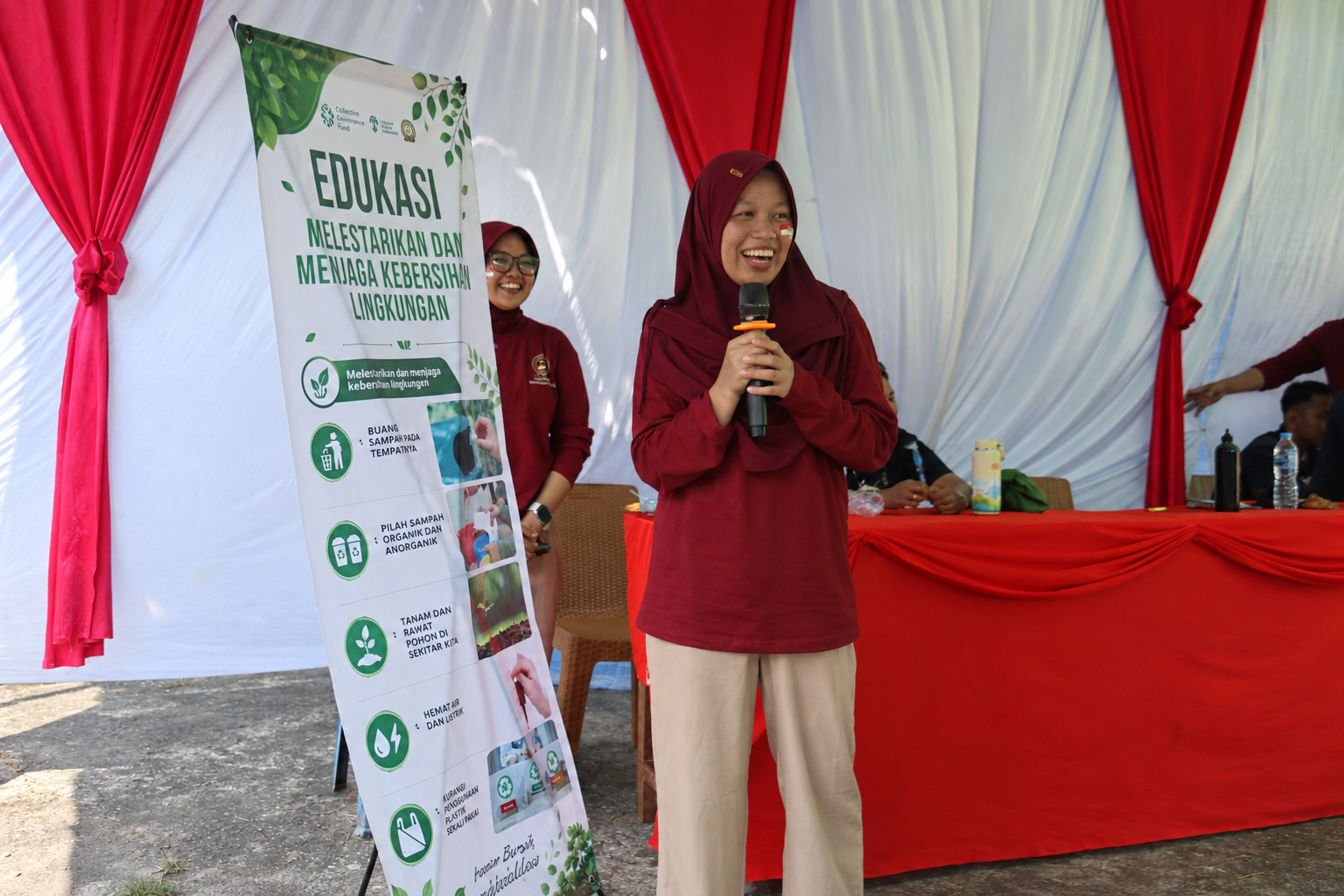
An information session on the PUMK’s programs.
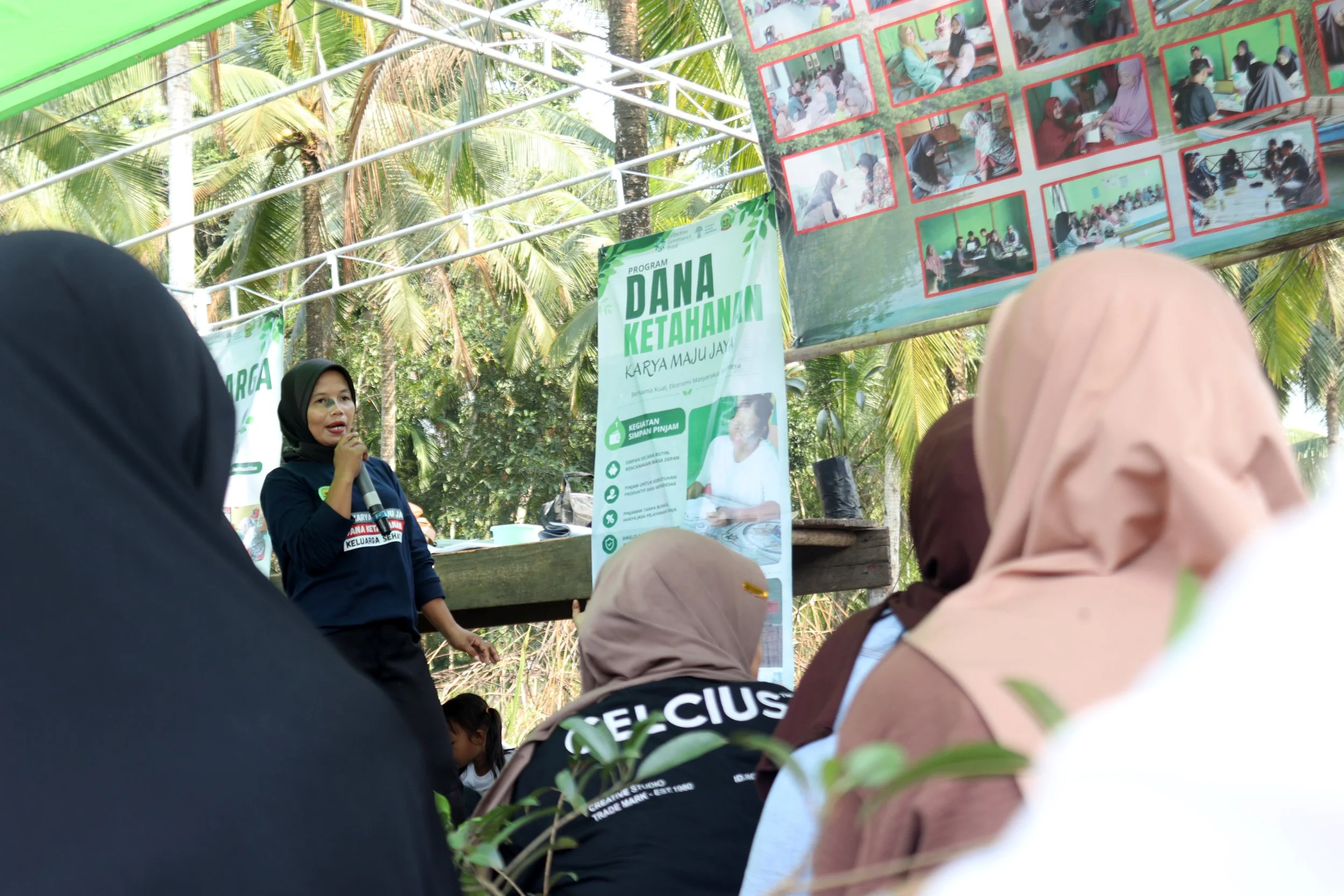
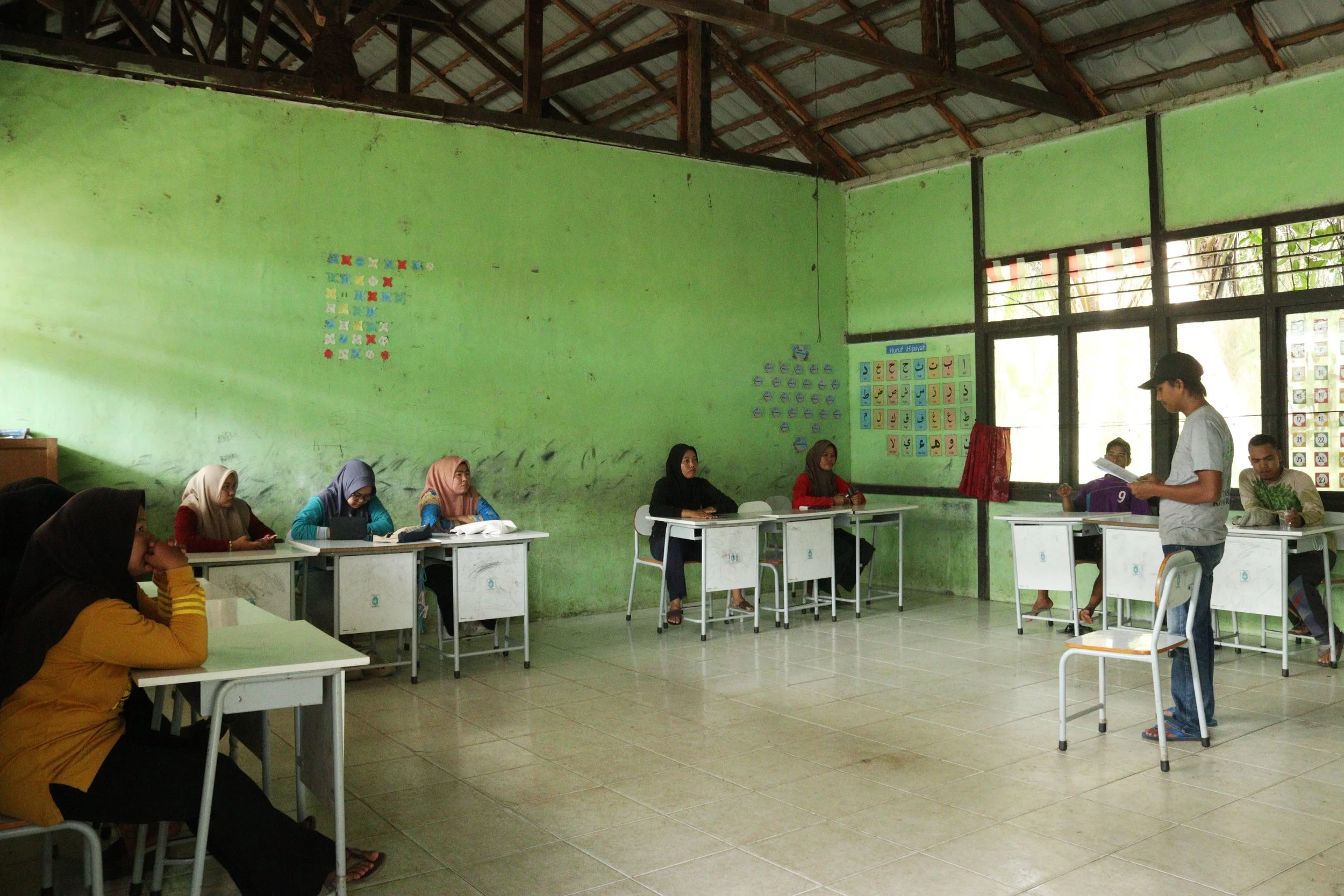
During preparations, each PUMK divided roles and responsibilities among its board members. The team held three meetings with the field facilitator to agree on what the event needed: invitations, coordination with the village government, equipment, tents, a sound system, information materials, an environmental pledge committing residents to conservation and cleanliness, and a system for registering new members.
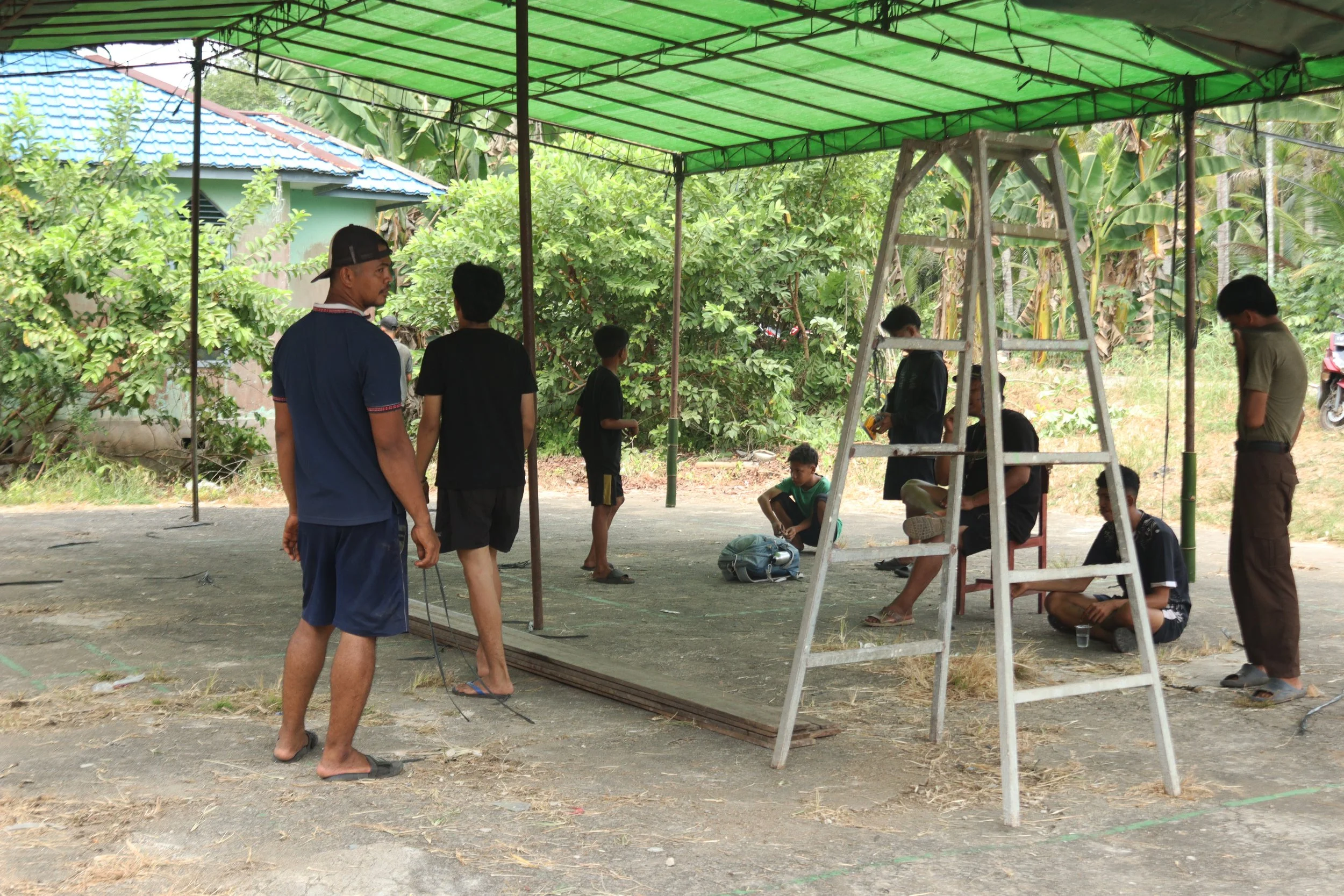
Residents work together to set up tents for the festival.
Everyone in both PUMK took part: the board, the supervisory board, the members, and the working groups (Pokja) that run the PUMK's programs. Support also came from people outside the PUMK. Residents who were not members helped prepare the sites, build the stage, put up tents, and spread information about the event. The Seruat Dua village government and local residents also contributed Rp17.2 million (about US$1,000) in voluntary donations. What began as activities organized by two PUMK became something that belonged to the wider community of Seruat Dua.
From the Stage to the Environment: The PUMKs Show What They Do
The festival's two main days moved between the hamlets: the first in Karya Makmur with PUMK Seruat Dua Maju Bersama, and the second in Karya Maju with PUMK Karya Maju Jaya. The program combined entertainment with social, economic, and environmental activities. Around 200 people took part in the activities across the two days, in a village of roughly 1,600.
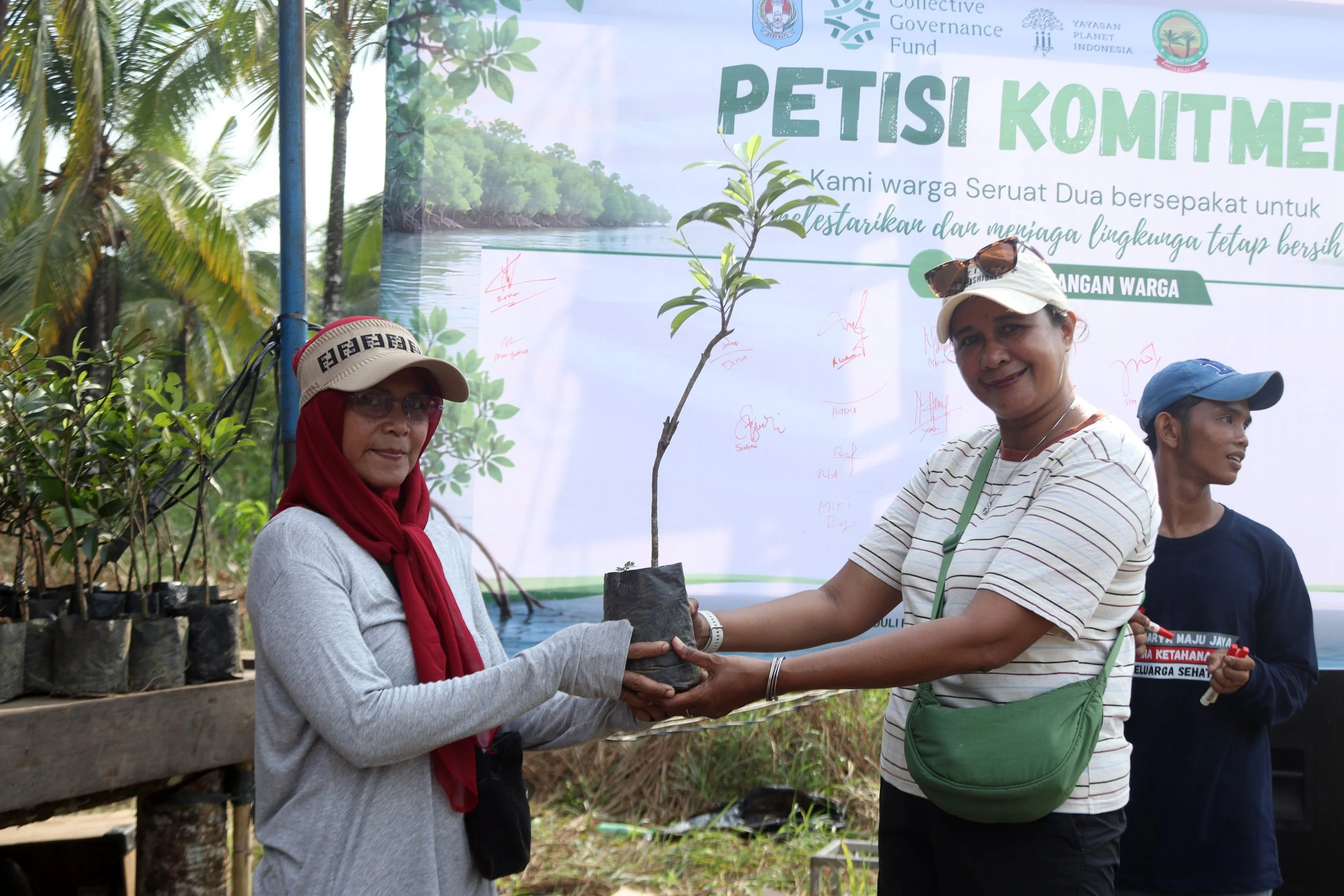
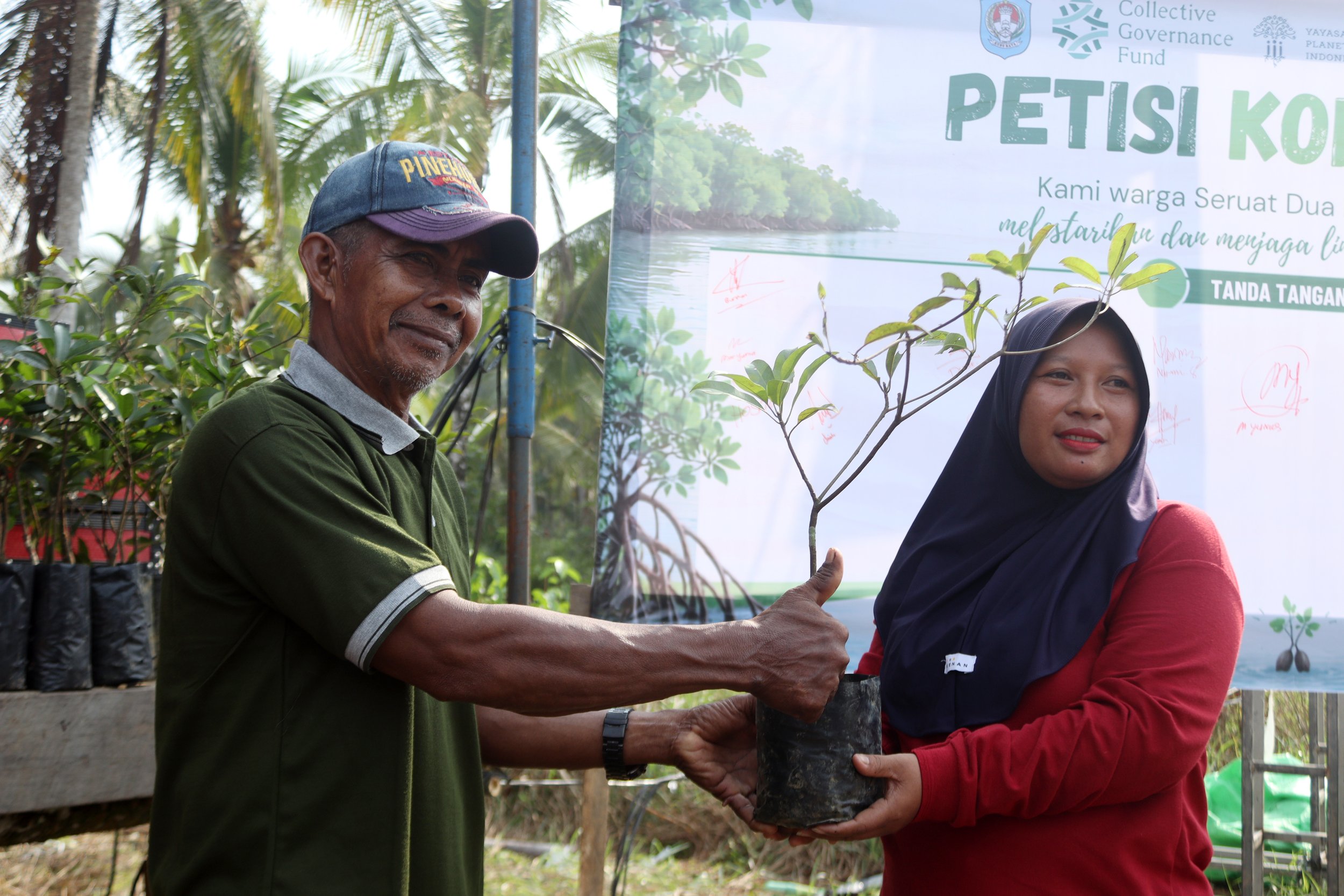
YPI’s Kubu Raya area manager, hands over seedlings during the festival.
In the PUMK Karya Maju Jaya area, competitions began around ten days before the main event. These included football for children, women, and men, panjat pinang, the traditional pole-climbing competition commonly held during Indonesian Independence Day celebrations, and various children's competitions. PUMK Seruat Dua Maju Bersama also organized competitions and children's performances. Both PUMK helped bring the night market and local small-business activities to life.
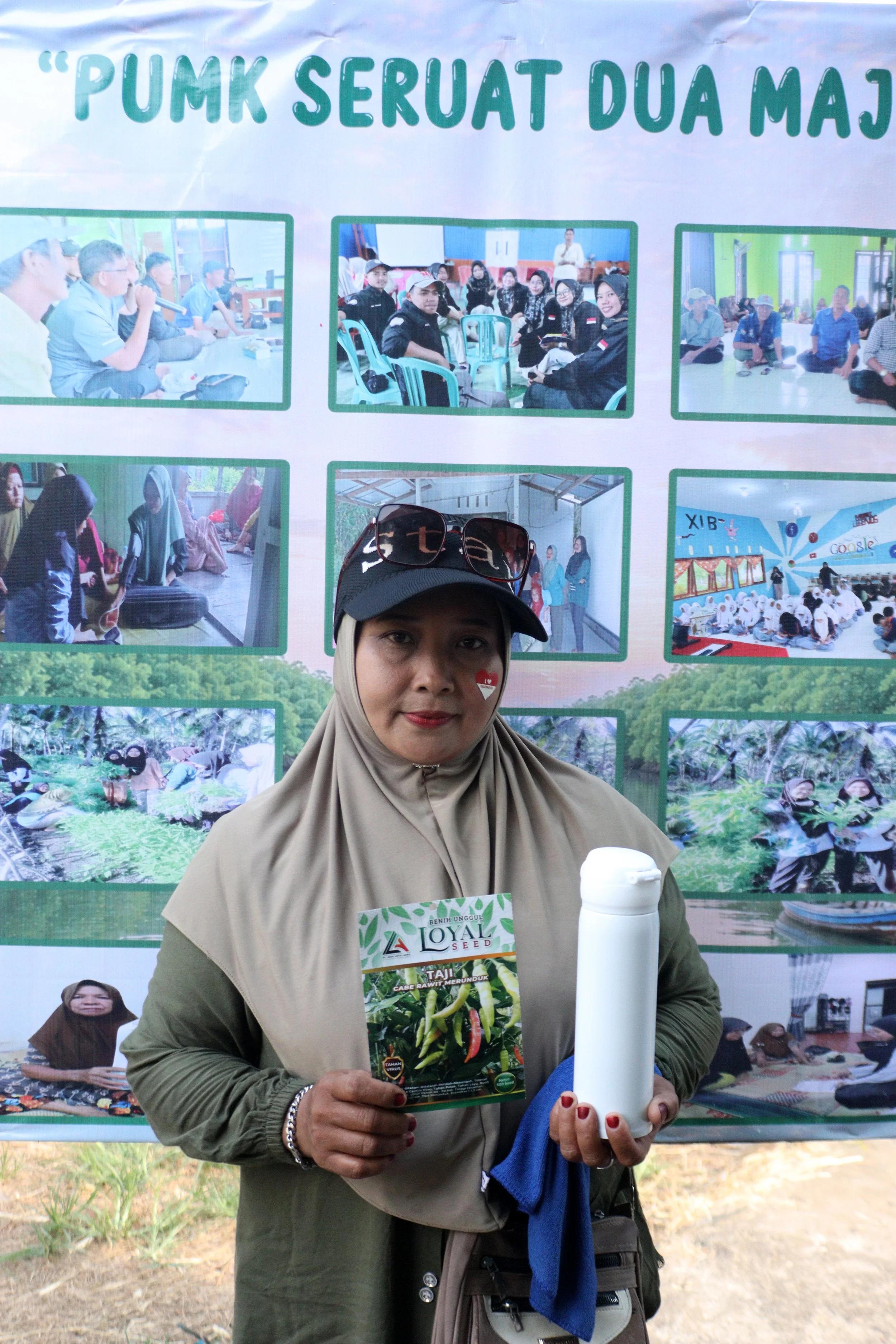
Reusable water bottles given out to encourage residents to cut down on single-use plastic.
But some activities also carried a broader message. PUMK Seruat Dua Maju Bersama distributed reusable water bottles to reduce single-use plastic, along with 100 chili seedlings chosen by its Healthy Family volunteers to revive an earlier plan for household vegetable gardens. PUMK Karya Maju Jaya distributed 81 sapodilla seedlings. Recipients were asked to plant them, with the PUMK Supervisory Board monitoring the planting afterward. The activities also showed that PUMK works to sustain the resources people depend on, rather than restricting access to them, as some residents had previously feared.
For children, PUMK Seruat Dua Maju Bersama organized a quiz about keeping the environment clean, while PUMK Karya Maju Jaya held a mangrove coloring and drawing competition. In total, 63 pupils from two local primary schools, SD Negeri 021 and SD Negeri 04 Kubu, took part
The idea was simple: children can start learning about the environment at an early age. The activities gave children a chance to learn more about an environment that is already part of their everyday lives. They learned about mangroves through play, drawing, and interactive question-and-answer sessions. The hope was that what they learned would not stay at the festival, but would become something they could take home and share with their families.
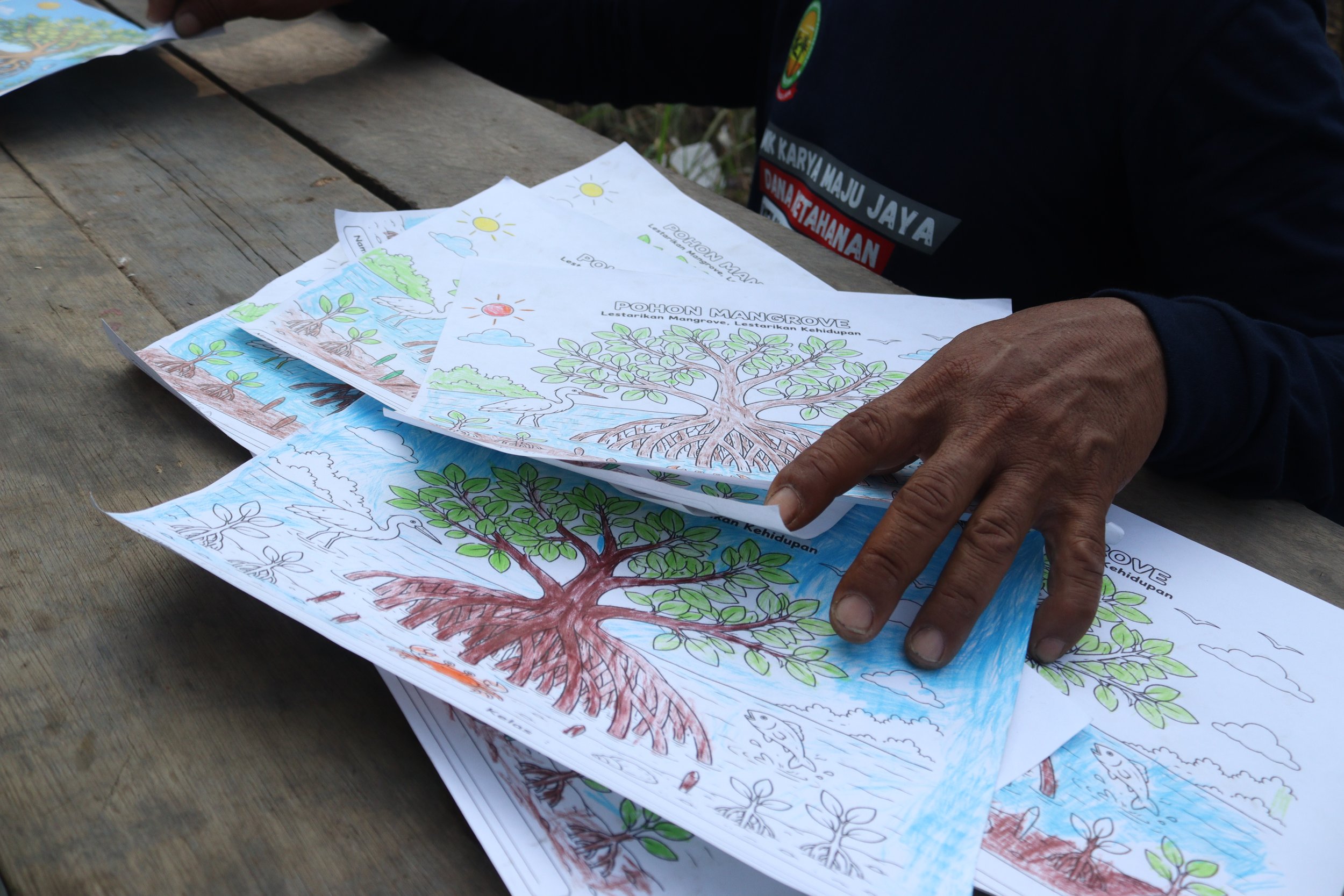
Mangrove drawings by primary school pupils from the coloring and drawing competition held by PUMK Karya Maju Jaya.
Hermansyah, Chair of PUMK Karya Maju Jaya, saw the number of questions residents asked during the information sessions as significant.
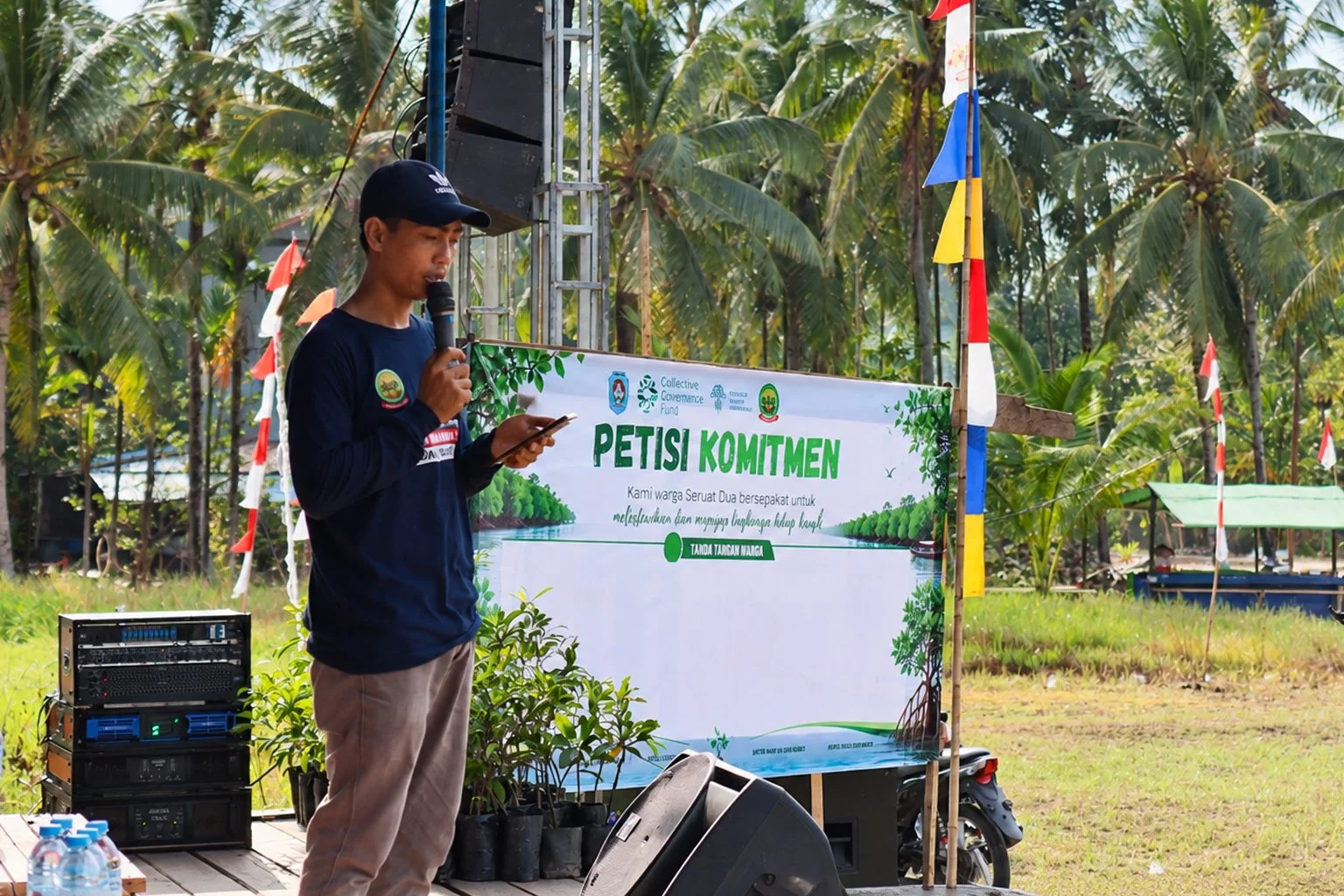
Hermansyah, Chair of PUMK Karya Maju Jaya.
“We are very happy that the Pesta Rakyat became the first large event of its kind held in Seruat Dua and created a space to broaden people’s understanding of the PUMK. During the information session, many residents asked questions about the PUMK, including its programs and activities. For us, all those questions show that people are becoming interested and want to know more about the PUMK.”
Hermansyah, Chair of PUMK Karya Maju Jaya
"The PUMK Belongs to All of Us"
The same message was emphasized in speeches from the stage. Budiman, Chair of PUMK Seruat Dua Maju Bersama, put it simply:
“The PUMK belongs to all of us. It belongs to the people of Seruat Dua, not to YPI. YPI is here to support us and help us develop, but we, as the community, are the ones who run the PUMK and decide its direction.”
Budiman, Chair of PUMK Seruat Dua Maju Bersama
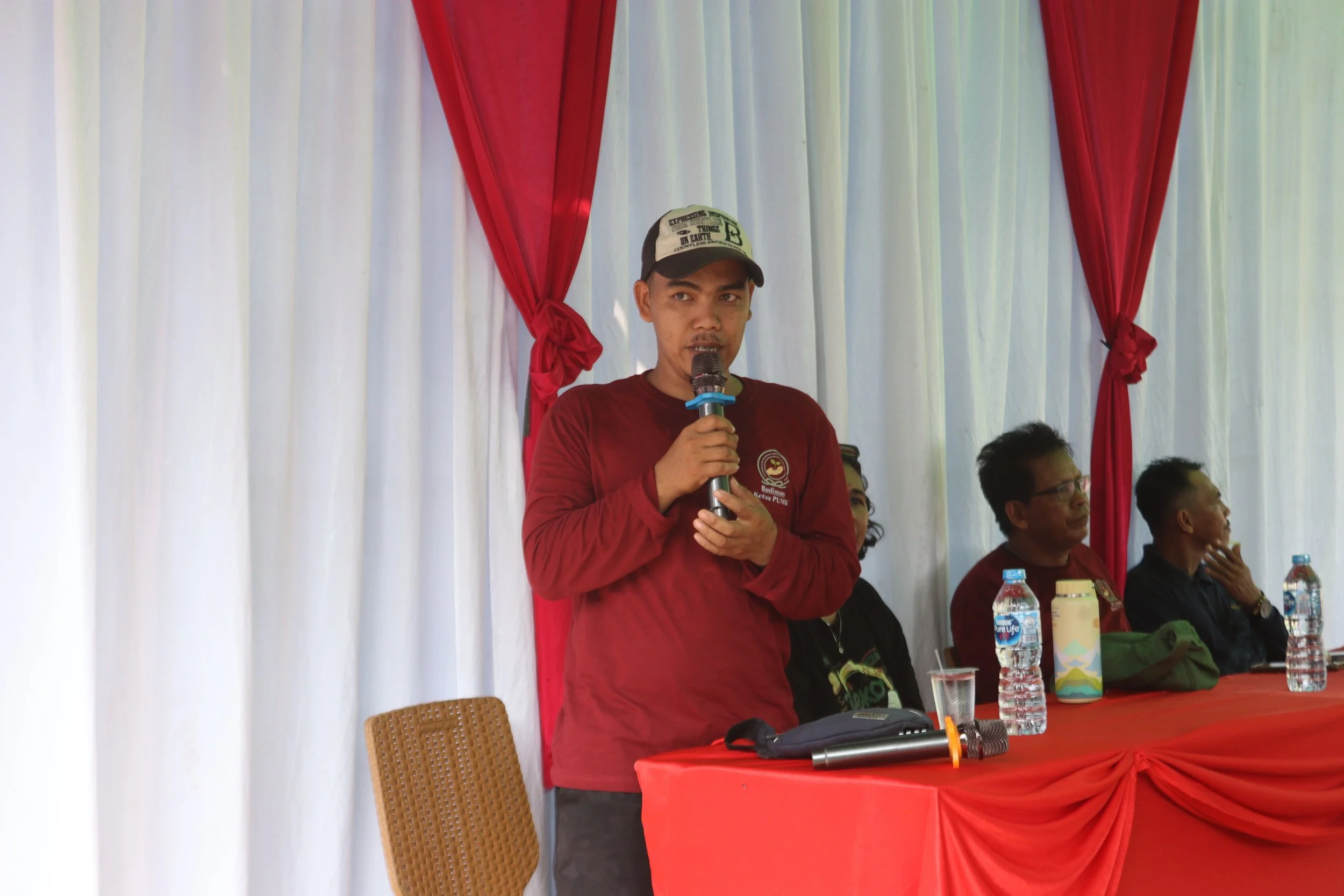
Budiman, Chair of PUMK Seruat Dua Maju Bersama.
His words speak to one of the changes the event hoped to encourage: a shift from simply knowing about the PUMK to feeling a sense of ownership over it.
Women's involvement reflected this, too. Women serving on both PUMK boards were not simply participants; they helped prepare and run the event.
“For me, the Pesta Rakyat is not just an event for the community to come together. It is also an opportunity for us as women on the board to get involved and play our part. From preparation to the event itself, we worked alongside the other board members and learned a lot. I hope that in the future we’ll become more confident and contribute even more to the PUMK and the community.”
A board member, PUMK Seruat Dua Maju Bersama
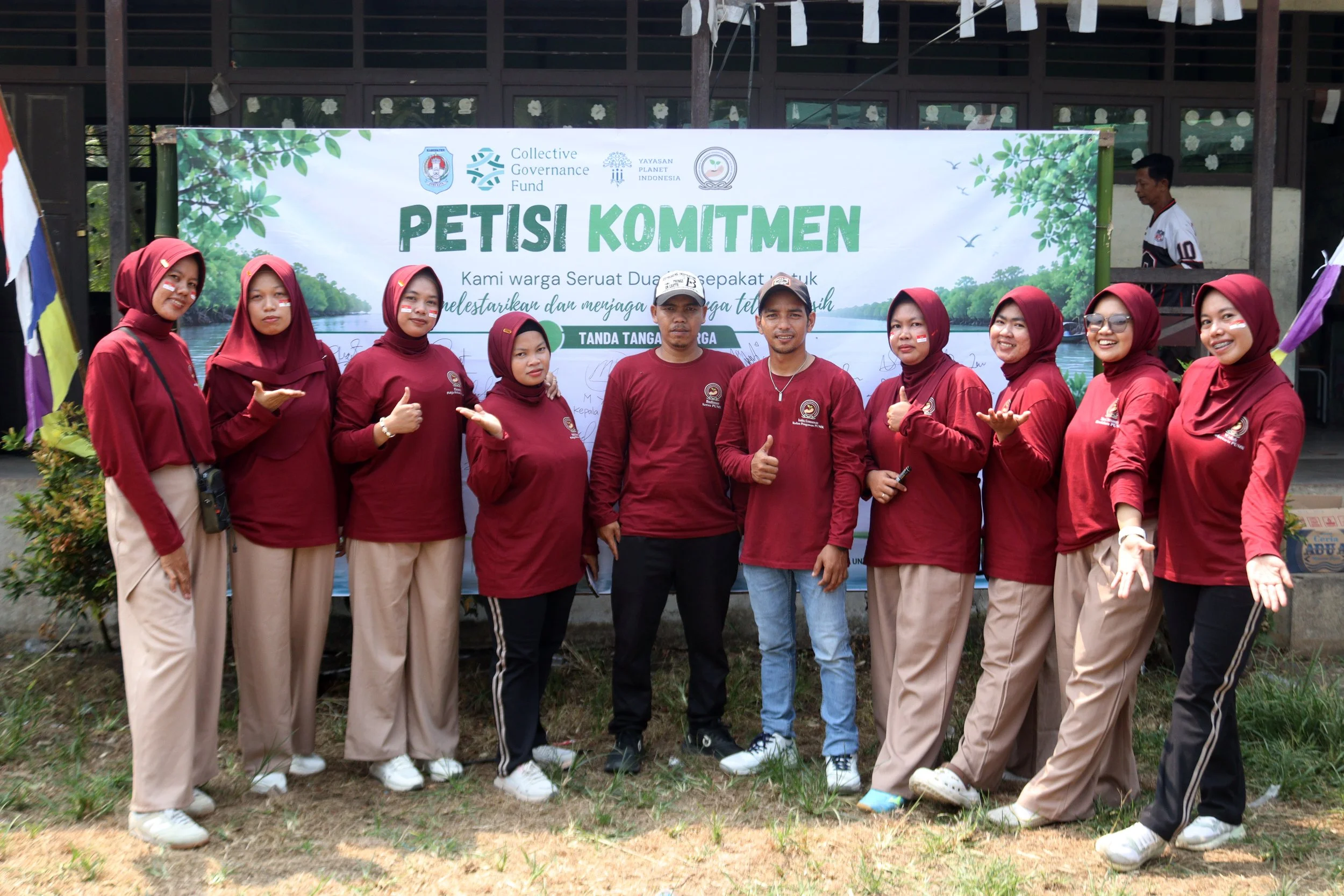
Board members of PUMK Seruat Dua Maju Bersama.
For the village government, the PUMK is also a partner that can help strengthen residents' involvement in the village's social, economic, and environmental life.
Muhammad Yunus, Head of Seruat Dua village, saw the Pesta Rakyat as an opportunity to strengthen that relationship:
“For the village government, activities like this are also an opportunity to further strengthen our cooperation with the PUMK. As a partner to the village and an institution that has grown from the community, the PUMK has an important role in encouraging community participation, including in economic, social, and environmental activities in Seruat Dua.”
Muhammad Yunus, Head of Seruat Dua village
Muhlas, Chair of the Seruat Dua Village Forest Management Agency (LPHD), also saw empowerment in broader terms:
“For us, empowerment isn’t only about improving the economy and people’s well-being. It’s also about communities working together to protect the environment and the natural resources that are part of our lives.”
Muhlas, Chair of the Seruat Dua Village Forest Management Agency (LPHD)
Voices and Hopes from the Community
“Before, I only knew the name PUMK, but I didn’t really understand what it did.”
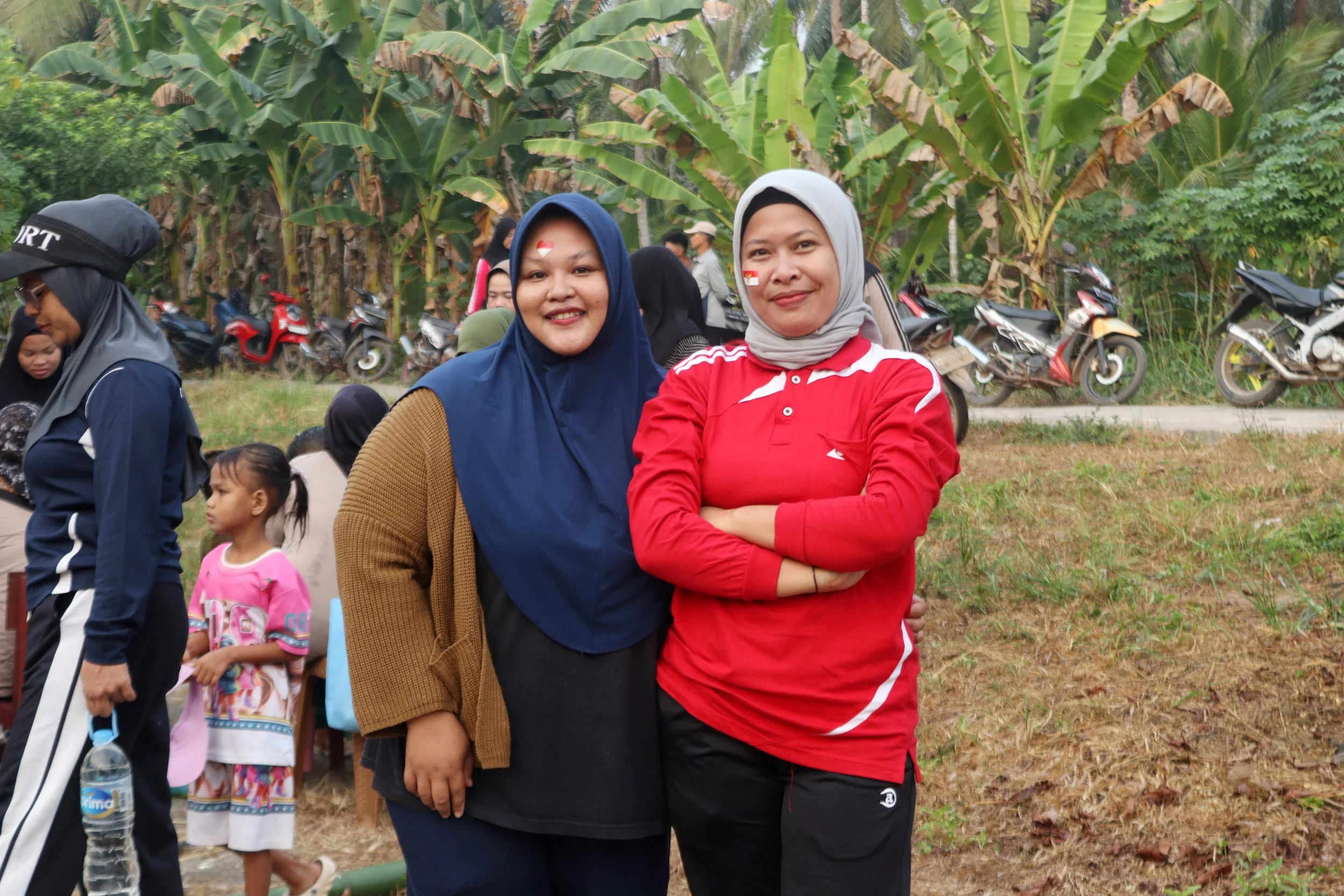
“What made it so lively was that the event was for everyone, not only PUMK members.”
“Because of the PUMK, we know more and can get involved in different activities in our hamlet and village. We can also help look after the environment. For me, the savings activities have been very useful because they help us learn to put money aside for future needs.”
“Thank you to the PUMK for organizing the Pesta Rakyat in Seruat Dua. I hope it can happen again next year and be even bigger.”
Residents of Seruat Dua
From Attending to Becoming a Member
Fifty-three residents registered as new PUMK members: 21 joined PUMK Seruat Dua Maju Bersama, and 32 joined PUMK Karya Maju Jaya. The 53 new members are an easy result to count. But the significance of the Pesta Rakyat goes beyond that number. In addition, 143 people signed a shared commitment to protect the environment and keep it clean, while 126 people received chili seedlings or reusable water bottles, and 74 received sapodilla seedlings.
In PUMK Seruat Dua Maju Bersama’s area, several residents who had previously chosen not to join eventually registered as members. Some former members who had left also decided to return.
In the Karya Maju Jaya area, most of the 32 new members came from neighborhood unit RT 04 in the Karya Maju hamlet. One community figure who had previously known little more than the PUMK's name said that, after listening to the explanation, he understood for the first time that the PUMK belonged to the community and ran programs such as the Dana Ketahanan (Resilience Fund), the PUMK's savings and loan program. He then registered as a member and committed to sharing what he had learned with his family.
The boards didn’t wait for people to come to them, either. Registration was open right from the stage during the festival and afterward the boards planned to visit residents at home to explain the PUMK and sign up new members, an approach known locally as jemput bola, or “going to get the ball”.
Just as important was what happened behind the numbers. The two PUMK were able to develop a joint plan, divide responsibilities, mobilize members and non-members, coordinate with the village government and schools, manage the activities, explain their programs, and evaluate how the event had gone.
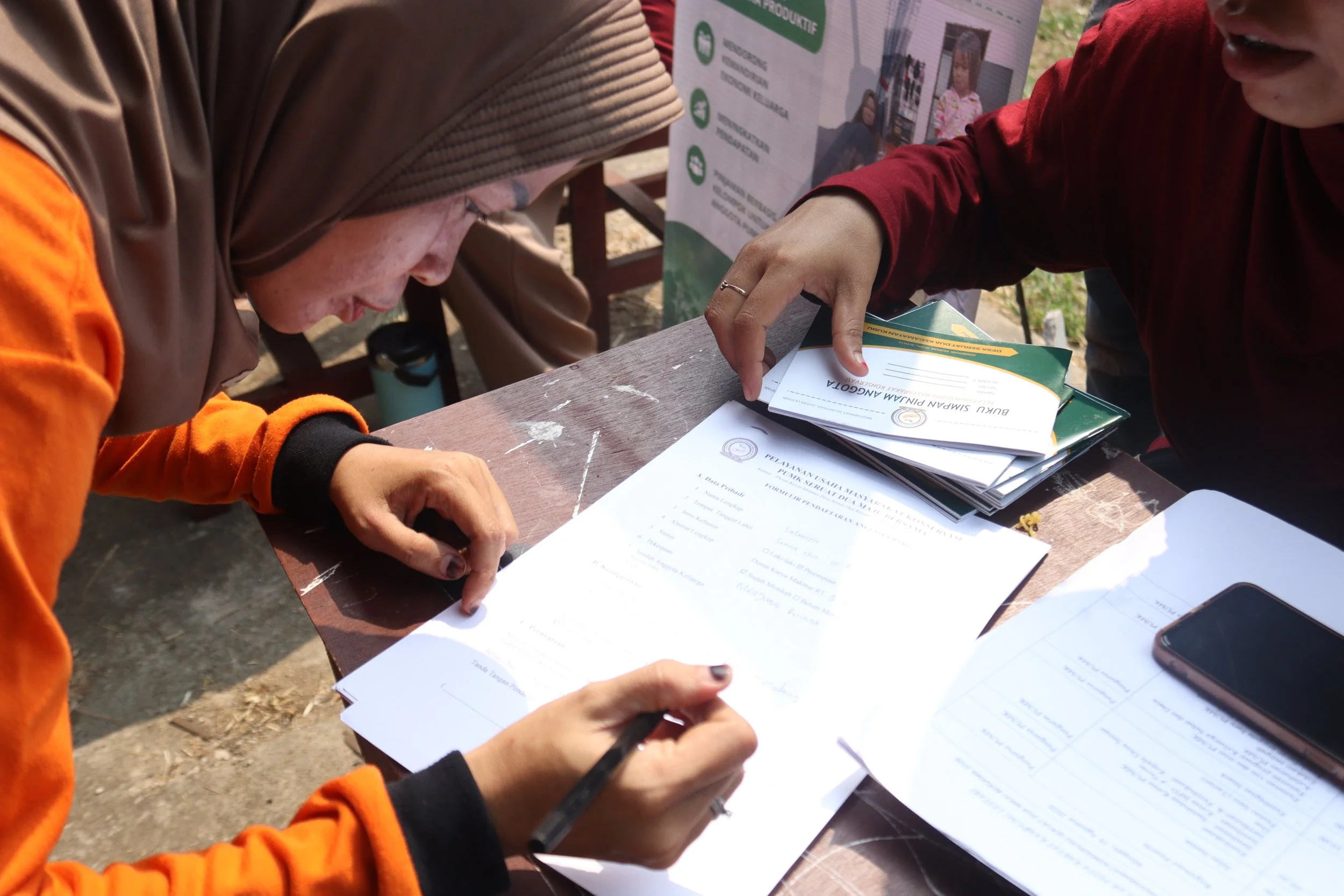
New members register with the PUMK during the festival.
What Seruat Dua Shows About Participation
Community governance only works when people take part. But bringing people in is hard, and many conservation programs rely on payments or other material incentives to do it.
Research by Planet Indonesia and partners across nine villages in West Kalimantan found that people who weren’t involved in community governance institutions weren’t necessarily uninterested. More often, they didn’t have the time, didn’t fully understand what the institutions did, or simply didn’t know they were welcome to join. [Read the research on our Learning Center.]
The Pesta Rakyat in Seruat Dua helped address these barriers. By bringing the festival to each hamlet and holding it during celebrations people were already attending, residents didn’t have to make a separate trip. Board members explained what the PUMK did, answered questions, and gave people the chance to register on the spot.
As one resident put it: “I only just found out that we can join the PUMK and take part in its activities. It turns out it isn’t only for certain people.”
No one was paid to join. There were seedlings and water bottles given away as door prizes, but little else in the way of material incentives. Still, 53 people signed up, and some former members returned.
For Seruat Dua, making participation easier, explaining what the PUMK does, and making people feel welcome was enough to bring more people in.
Learning from What Wasn't Perfect
The PUMK boards themselves identified several areas that still need improvement. Technical planning for activities such as the fun walk and community aerobics needs to be more thorough. The registration system needs better organization. Coordination with schools and communication with residents can also be improved and expanded.
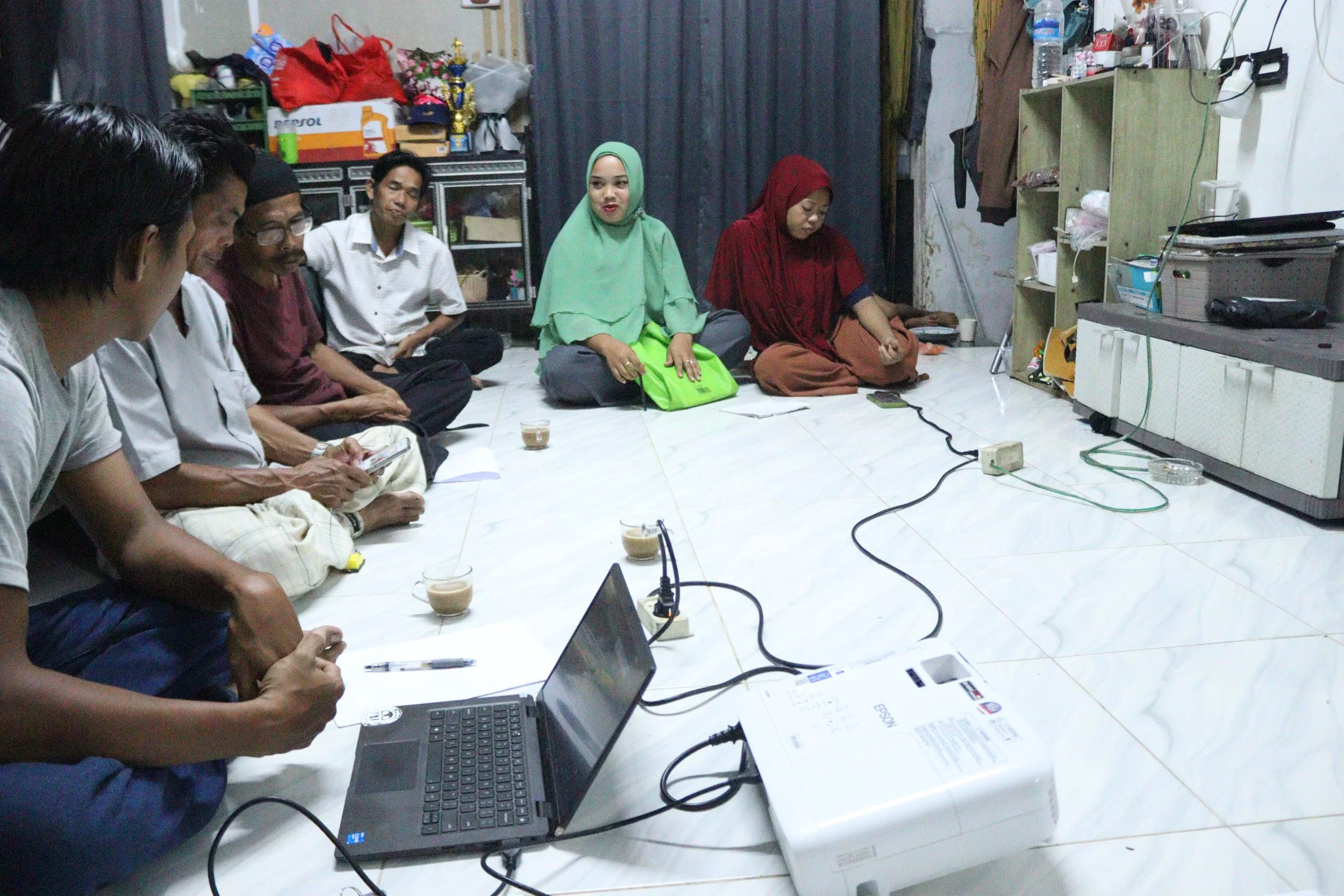
Board members of both PUMK review how the festival went and identify what to improve next time
The biggest challenge during preparations was building board members' confidence to speak in front of the community. They understood the material, but some were still nervous, particularly when explaining the PUMK's vision and mission, the Resilience Fund, and the Healthy Family Program. To prepare, they practiced and used everyday language that residents could understand. In the end, they stepped forward and explained the programs that they themselves run and manage.
This is an important part of building stronger community institutions. Self-reliance does not mean never facing difficulties. It means having the space to try, face challenges, learn, and make improvements on your own.
An institution's strength shows in how it uses that process to learn, improve how it works, and take greater responsibility for its decisions. Through the Pesta Rakyat, both PUMK learned a great deal and came out stronger.
After the Festival
When the tents came down and the sites became quiet again, the PUMK's work was not over.
The hope is that new members will not stop at registering, but will have space to get to know the organization, take part in decisions, understand and participate in its programs, get involved in social and environmental activities, and come to see the PUMK as part of their everyday lives.
If you have any questions, please reach out via admin@planetindonesia.org. Sign up for our newsletter and follow us on our social media Facebook here, Instagram here, and LinkedIn here to get timely updates on our activities, an insider’s look into the lives of front-line conservationists, and ongoing programs.