
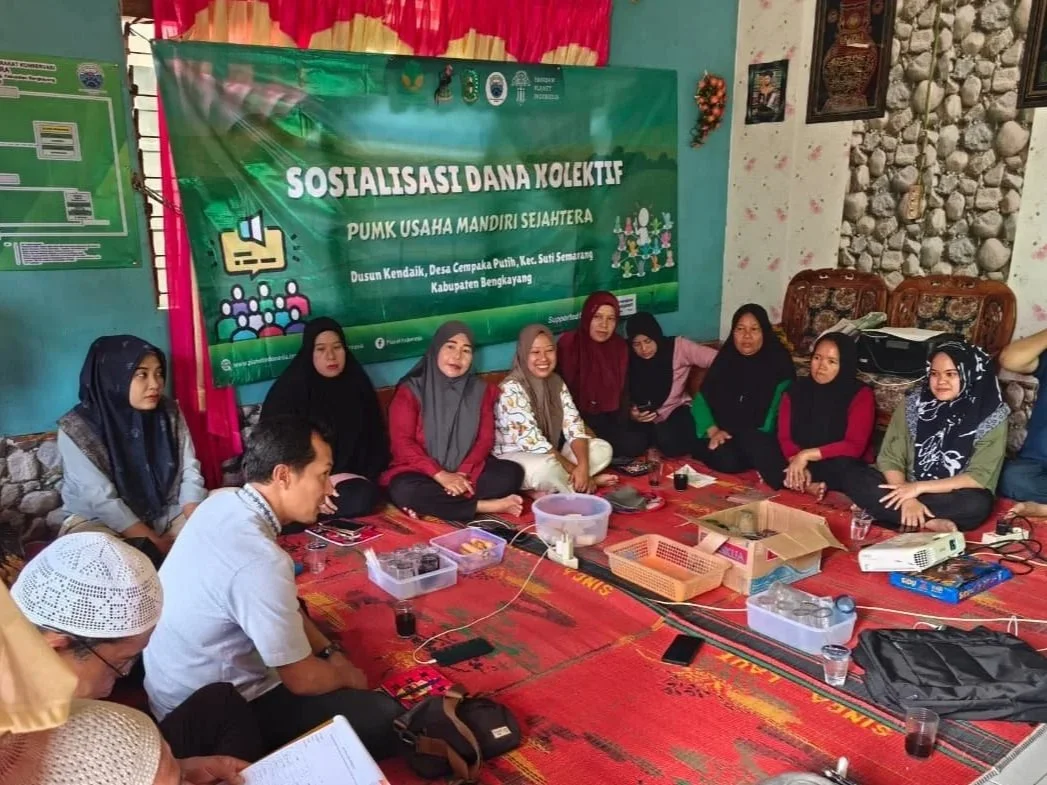
"Recognize local CSOs as equal partners rather than mere beneficiaries."
- National CSO based in Western Indonesia
Reflecting upon the From Transactional to Relational – Guidelines for Equitable Intermediaries in Indonesia Report , Menjadi, Saraswati and Planet Indonesia hosted a discussion on what it means to move from transactional to relational ways of working.
The session brought together voices from across the funding ecosystem, a funder, an intermediary, and a civil society organization (CSO), to share candid reflections on what trust, flexibility, and shared responsibility can look like in practice.
Watch the recording above.
Dive into the discussion
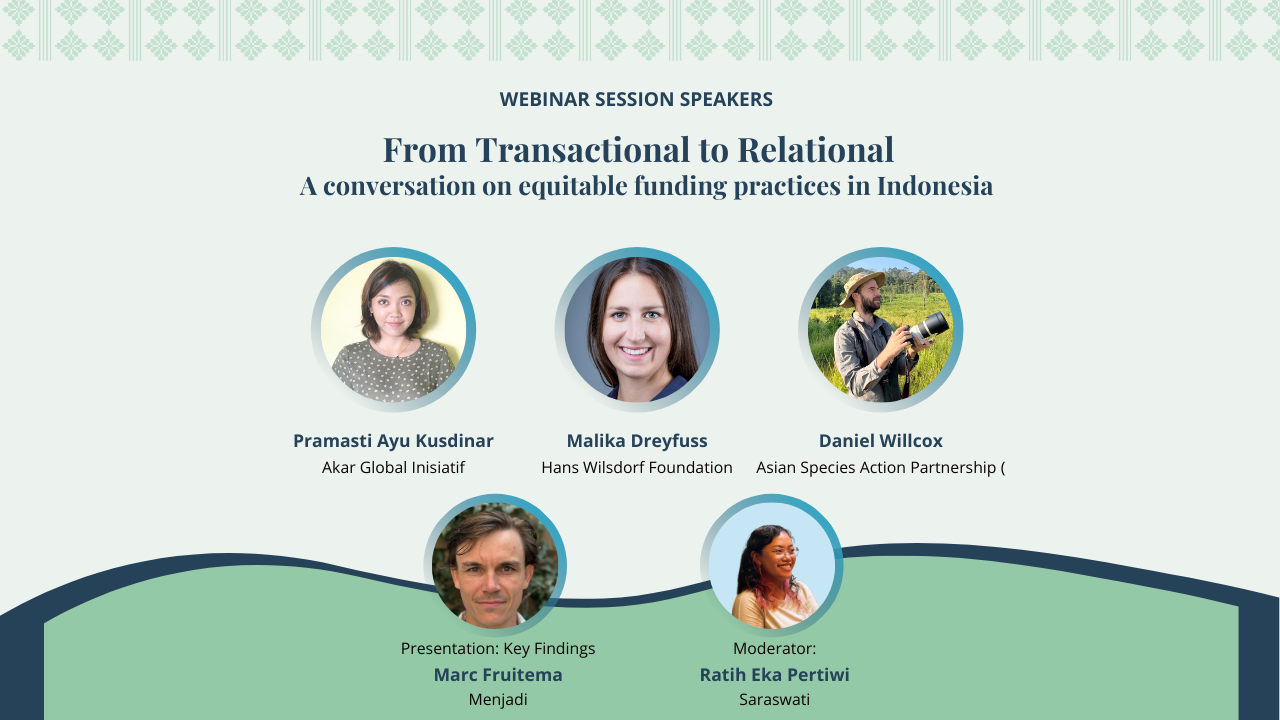
“They do amazing work… but do not have visibility to donors. We need to help them gain traction and visibility with the donor community.” - Daniel Willcox
Q: Do intermediaries need to stay in the middle permanently, or should the goal eventually be direct donor–CSO relationships?
A: Some of the organizations we support now, we definitely want to, within the next few years, be in a position to introduce them directly to donors. They get the funding directly, and if we do have a role, it's much more as a kind of technical advisor… as a supporter. Not to always be that go-between. - Daniel
Q: Are there any donors that have a more flexible approach or policy? Thus, the re-granting organization can be more flexible as well toward the implementing organization. I have seen many top-down donors that creates inequality toward the local organizations.
A: You point to an important factor, which is that intermediaries are sometimes working within the limitations and boundaries of the funding they receive. This is why it is important that this report is seen by all, intermediaries, and donors. It will take changes on everyone's part along the financial chain to shift the power. There are absolutely more flexible donors out there, especially ones who give unrestricted funds and truly embrace trust-based philanthropy. - Planet Indonesia
Q: How can we (re)define accountability as something that strengthens trust and shared purpose, recognizing that being relational does not mean being without accountability?
A: We have seen both sides of this: those who say accountability is a 'dirty word' and those who say accountability is the cornerstone of trust-based philanthropy. Our experience is that it is difficult to get right if the conditions are set from the top down. Donors and intermediaries must listen to the CSOs and experts on the ground. Ultimately, we should all be seeking the same results for social and environmental justice, but it might not look the same way to all. Some practical things we have found are to decide on the shared metrics, who is responsible, and how these will be recorded and communicated early on in a partnership, and then find the right funder who sees that vision and not try to bend CSOs to misaligned or project-specific funder metrics. When it comes to reporting and being accountable, intermediaries should strive to make CSO reporting requirements proportional to funding amounts, avoiding layering in additional reporting requirements. Focus on impact, and if the process changed to reach that impact, communicate that, be clear about the challenges, and why things were done the way they were. Create the conditions for dialogue, transparency, and mutual accountability between funders, intermediaries, and CSOs. - Planet Indonesia
Q: If accountability is not defined by reporting, then what does accountability look like in a relational approach?
A: The classical way can be through reporting, but we can find creative ways. If it’s a conversation, it can be interesting. You can be accountable and still be vulnerable and not know everything and be in a trusting relationship. - Malika
The Indigenous and local community, have the accountability or the capability to become accountable. If we want to support them directly, we need to recognize that village governments in Indonesia already manage significant funds, and communities have experience operating in markets. So it’s not about capacity, it’s about trust.” Pramasti Ayu Kusdinar
A research report and guidelines on how to integrate equity into the roles, relationships and practices of funding intemediaries.